Chia Seeds: What It Is, How to Use It and Substitutes
What are chia seeds?
Chia (Salvia hispanica) belongs to the mint family and to the sage genus. The plant comes from Mexico and Central America. The Aztecs and other peoples of Mesoamerica were growing it long before the Spanish conquest and used the seeds as food and for oil. The name comes from Nahuatl, the language of the Aztecs. After the conquest cultivation collapsed and chia was largely forgotten. Today it is grown in Mexico, Bolivia, Argentina, Peru and Australia, among other places. The seeds are about one to two millimetres long and either grey-speckled or white. They are rich in fibre, protein and fat, with a high share of alpha-linolenic acid, an omega-3 fatty acid. In the EU they were approved as a novel food in 2009, at first only for bread and later for other foods as well.
Flavour and uses
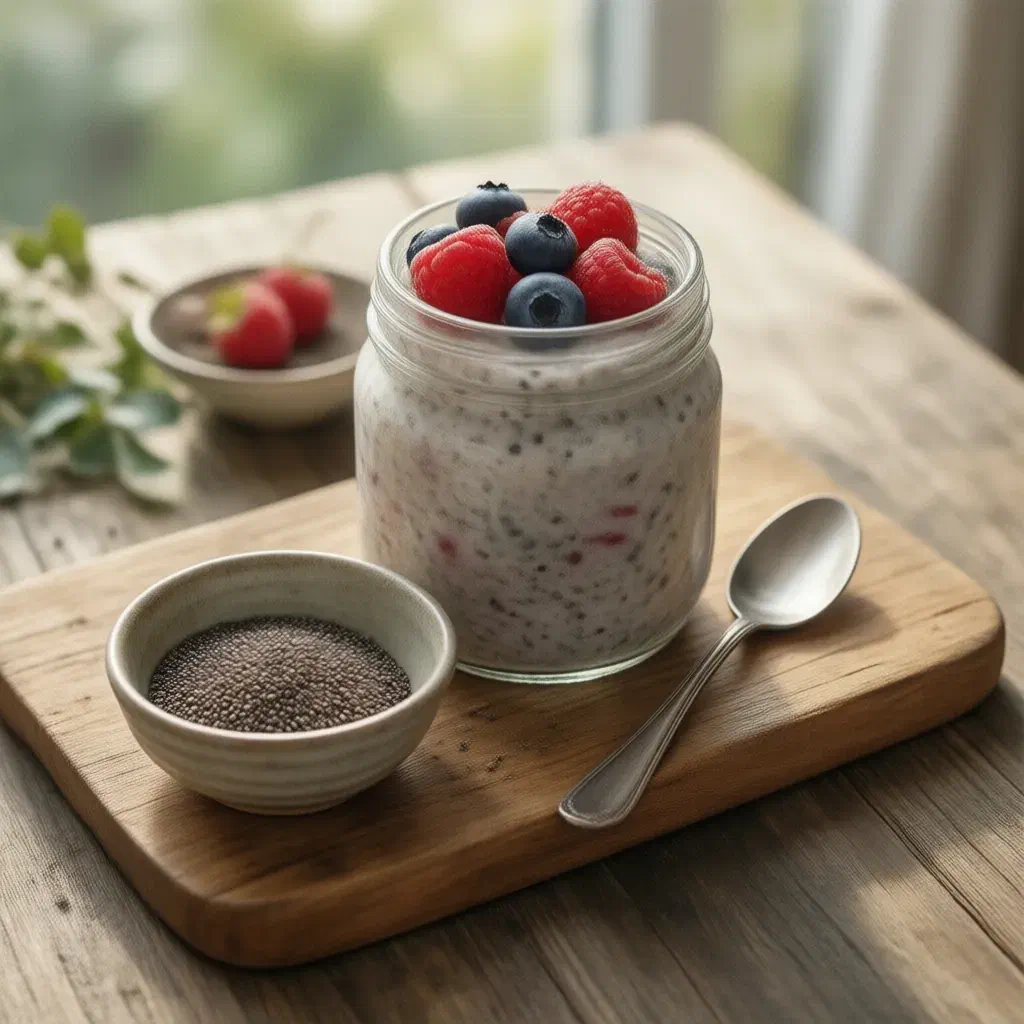
Chia seeds taste of almost nothing, at most slightly nutty. Their value lies in their texture. For chia pudding, stir 3 tbsp of seeds into 200 ml of milk or plant milk, stir again after 10 minutes so no lumps remain, and leave it in the fridge for at least 2 hours to swell. As an egg substitute, mix 1 tbsp of chia seeds with 3 tbsp of water and wait 15 minutes. This binds pancakes, muffins and patties, such as vegan Moroccan fritters. Dry seeds add a little crunch to bread, muesli and yoghurt, and a spoonful also suits Finnish kaurapuuro porridge. In Mexico and Central America they are stirred into lemonade or limeade, a drink called chía fresca. If you eat the seeds dry, drink plenty, because they also swell in your stomach.
Buying chia seeds: what to look for
You can buy chia seeds in supermarkets and health-food shops, usually in bags of 200 to 500 g. Black and white seeds hardly differ in nutritional value, but the white ones are less noticeable in a pale pudding. Good seeds smell neutral and contain no broken pieces or grit. A rancid, oily smell shows that the fat has oxidised. Organic labels and a stated country of origin help when choosing.
Storage and shelf life
Whole, dry chia seeds easily keep for two years in a tightly sealed jar in a cool, dark place. Ground seeds go rancid faster and belong in the fridge. Soaked chia seeds and finished chia pudding keep in the fridge for three to four days.
What can you use instead of chia seeds?
As an egg substitute, ground flaxseed works just as well. Stir 1 tbsp of ground flaxseed with 3 tbsp of water and leave it for 10 minutes. For pudding and overnight oats, psyllium husk is a good option. It binds more strongly, so 1 tsp is enough for 200 ml of liquid. Rolled oats also swell overnight, but give a more porridge-like pudding. In bread or muesli, replace chia seeds with the same amount of sesame seeds or linseed.