Glass Noodles: What It Is, How to Use It and Substitutes
What are glass noodles?
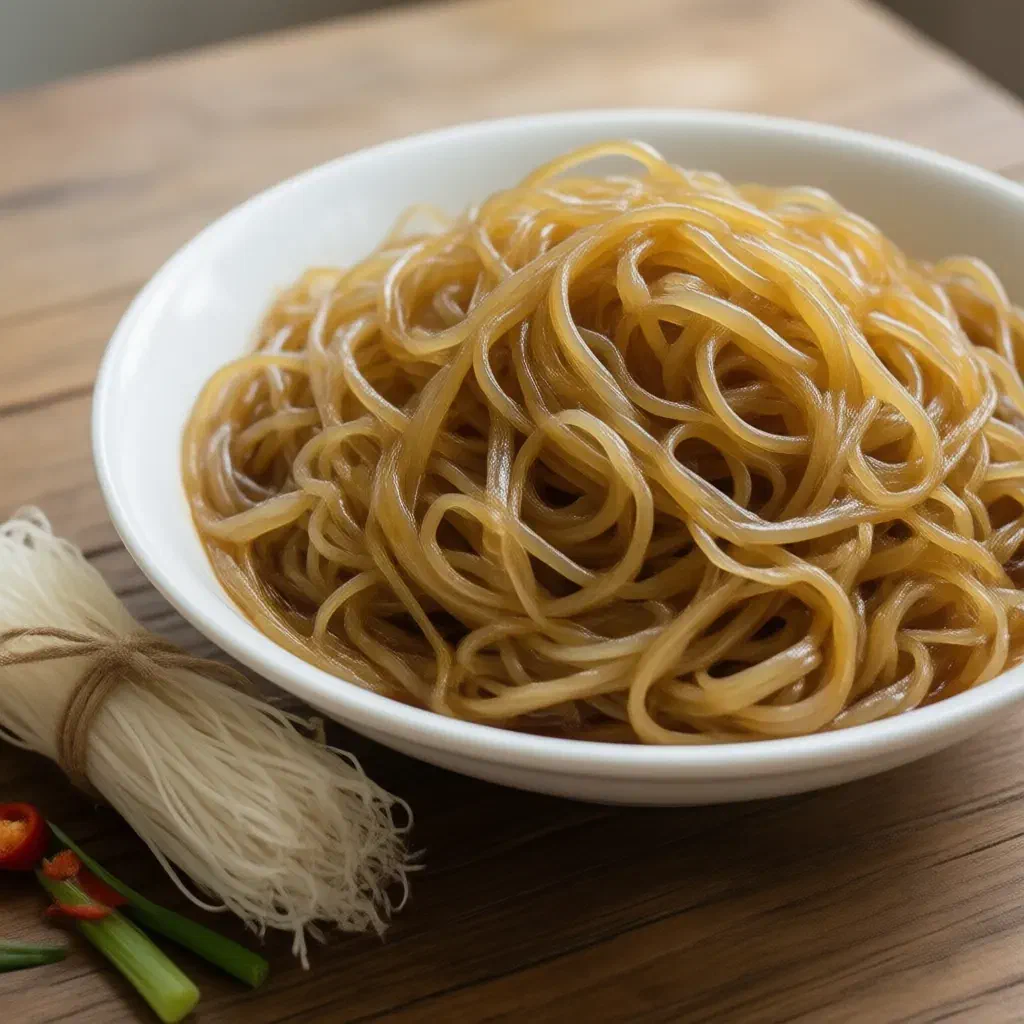
Glass noodles consist of starch and water. The classic kind is made from mung bean starch; in China these noodles are called fensi, in Thailand woon sen. Korean glass noodles (dangmyeon) are made from sweet potato starch and are thicker and chewier. In Vietnam they are called miến. Cheaper kinds add pea or potato starch. The dough is pressed through fine nozzles into boiling water, cooked briefly, cooled and dried. When dry, the noodles are white and opaque. Only in water do they become glassy, hence the name. They swell considerably when soaked. Glass noodles are naturally gluten-free and vegan, with very little flavour of their own and almost no protein.
Flavour and uses
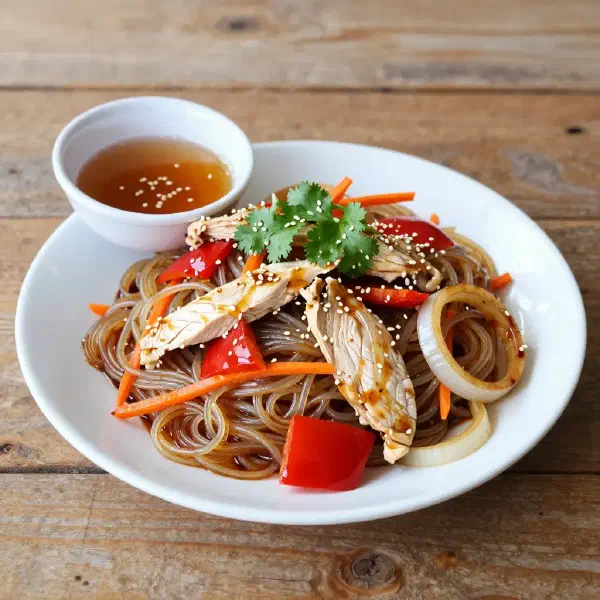
Glass noodles taste neutral and have a smooth, slightly springy texture. In Thailand they go into the hot and sour salad Yum Woon Sen with lime, fish sauce and chilli. For Goong Ob Woon Sen, prawns cook on a bed of glass noodles in a clay pot while the noodles soak up the juices. Korean Japchae is made from sweet potato noodles, vegetables, sesame oil and soy sauce. In the Philippines and Samoa they go into soups and stir-fries. Soak fine mung bean noodles in hot water for ten minutes; Korean dangmyeon need six to seven minutes of boiling. Rinse them in cold water afterwards so they stop cooking. Then cut long noodles a little shorter with scissors.
Buying glass noodles: what to look for
You can get glass noodles in any Asian grocer and in many supermarkets, usually in bundles of 50 or 100 g. One bundle is enough as a side dish for one person. Read the ingredients list. Pure mung bean starch gives the finest noodles, which do not turn mushy when cooked. Soft bundles that crumble in the packet are old. For japchae you specifically need Korean sweet potato noodles, as thin mung bean noodles make the dish too soft.
Storage and shelf life
Dry glass noodles keep for one to two years in an airtight pack in a dry place. Store cooked glass noodles covered in the fridge and use them within two days. They firm up in the cold and stick together. A few drops of oil and a quick pour of hot water make them supple again.
What can you use instead of glass noodles?
The best substitute is thin rice noodles (rice vermicelli). They are white rather than transparent, slightly softer and also gluten-free. Use the same amount, so 100 g of rice noodles for 100 g of glass noodles, and soak them in hot water for five minutes. Shirataki noodles made from konjac are lower in calories and stay firmer. For soups, fine wheat vermicelli will do at a pinch, but then the dish is no longer gluten-free.