
Kombu: What It Is, How to Use It and Substitutes
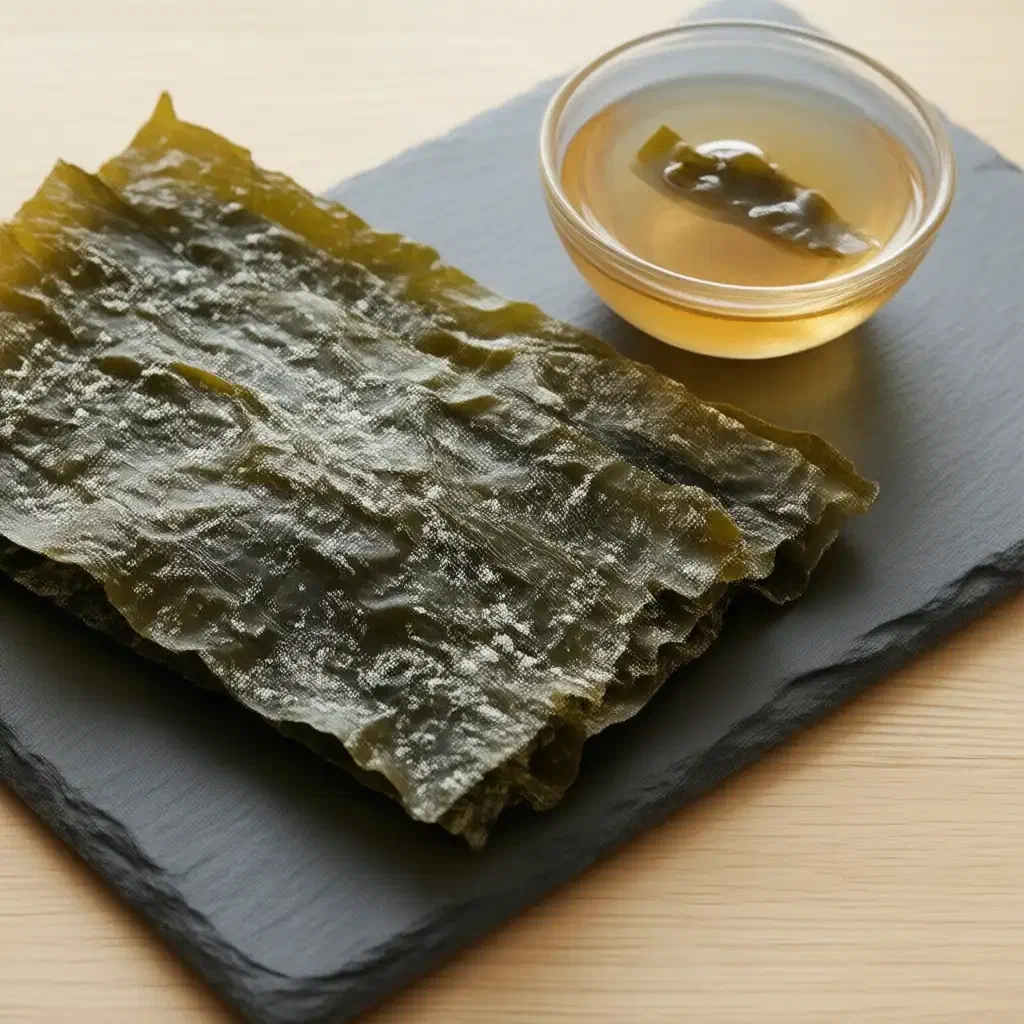
What is kombu?
Kombu is the Japanese name for several species of edible brown seaweed, above all Saccharina japonica. Most of the Japanese harvest comes from Hokkaido, where the kelp grows leathery fronds up to several metres long in the cold sea. After the summer harvest it is dried in the sun and cut into sheets. The best-known varieties are ma-kombu from southern Hokkaido, and rishiri, rausu and hidaka, which are named after their coastlines. Kombu is rich in free glutamic acid. In 1908 the chemist Kikunae Ikeda isolated glutamate from this very seaweed and coined the word umami. The white coating on the sheets is not mould but mannitol, a natural sugar alcohol with a slightly sweet taste. The iodine content of kombu is very high, far higher than that of wakame or nori. Food safety authorities therefore advise caution with dried seaweed that carries no information on its iodine content.
Flavour and uses
Kombu tastes mildly salty and rounded, with a depth you sense more than you can name. For dashi, soak 10 g of kombu in 1 litre of cold water for 30 minutes, heat it slowly and lift the sheet out just before the water boils. If it boils along with the water, the stock turns bitter and slimy. This stock is the backbone of miso soup, Kitsune Udon and the winter stew Oden. Together with bonito flakes it makes classic awase dashi, and with dried shiitake a fully plant-based version. You don’t have to throw away the used kombu. Cut into strips and simmered down with soy sauce, mirin and sugar, it becomes tsukudani, a side dish for rice. Adding a piece of kombu to the cooking water for pulses is also a common kitchen tip, said to make them softer.
Buying kombu: what to look for
You can buy kombu from Asian grocers and health-food shops, usually as sheets in 50 to 100 g bags. Good kombu is thick, dark olive green to blackish brown, and dry. A white, powdery coating is a good sign. Inexpensive hidaka kombu is fine for everyday dashi. Ma-kombu, rishiri and rausu cost more, and ma-kombu and rishiri give a particularly clear stock. Look for information on the iodine content on the pack.
Storage and shelf life
Dried kombu keeps for one to two years, often longer, in an airtight bag or tin stored somewhere dry and dark. Moisture makes it soft and blotchy. Don’t wash off the coating. At most, wipe the sheet with a damp cloth. Finished dashi keeps for two to three days in the fridge and a few weeks in the freezer.
What can you use instead of kombu?
For 1 litre of dashi, replace 10 g of kombu with three dried shiitake mushrooms soaked overnight in cold water. The taste is earthier, but the umami is similar. Dashi powder, used as directed on the pack, is quicker, though it usually contains fish and glutamate. In beans or lentils, a bay leaf helps with seasoning, but it won’t make them softer. Wakame is not a good substitute, as it gives off little flavour and falls apart when cooked.


