Okra: What It Is, How to Use It and Substitutes
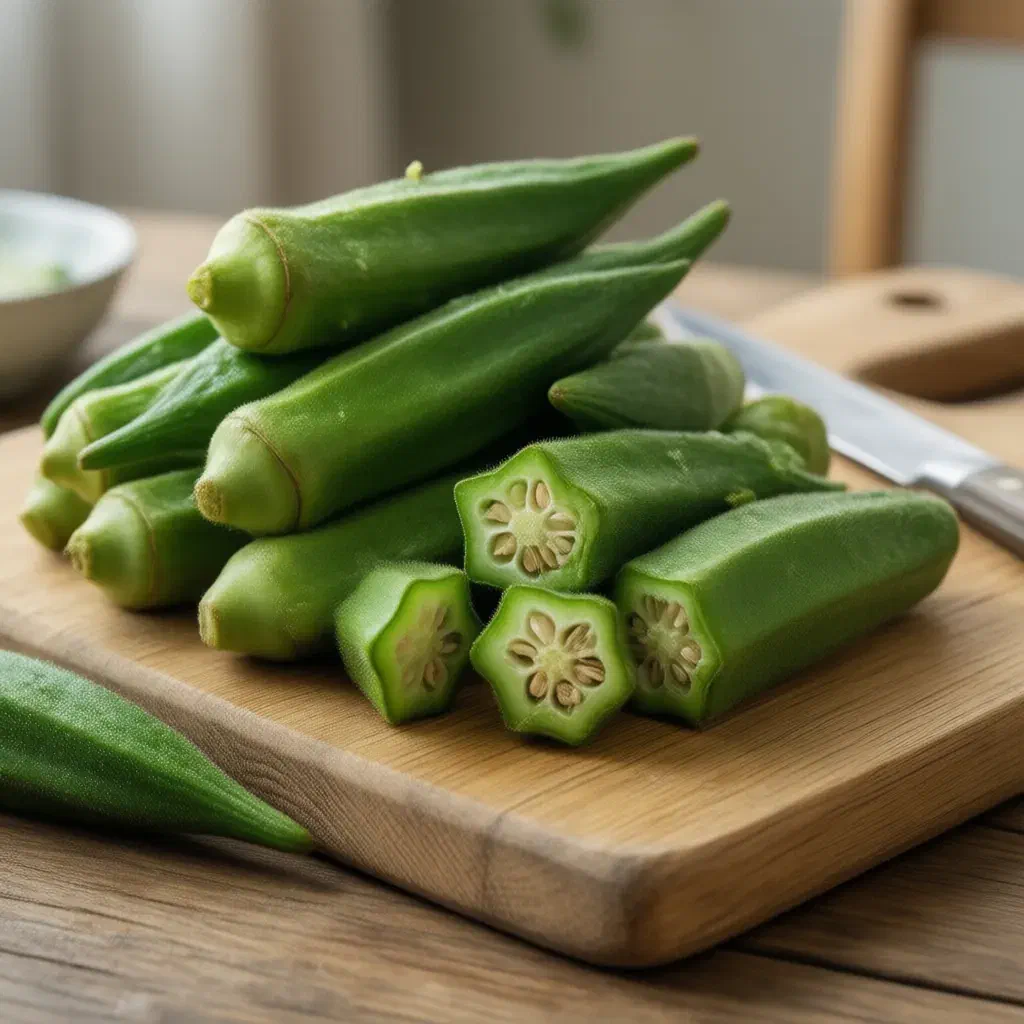
What is okra?
Okra (Abelmoschus esculentus) belongs to the mallow family, like hibiscus and cotton. Whether it was first cultivated in West Africa or in Ethiopia is not certain. An African origin is generally assumed. From there it reached Arabia and India early on. With the slave trade it came to the Caribbean and North America. The pods are harvested unripe, usually 5 to 10 cm long. Inside, white seeds sit in chambers surrounded by tissue that turns into a thick slime when heated. Depending on the country, the vegetable is called bamya, bhindi, gombo or lady’s fingers. The English word gumbo goes back to a name for okra in a Bantu language.
Flavour and uses
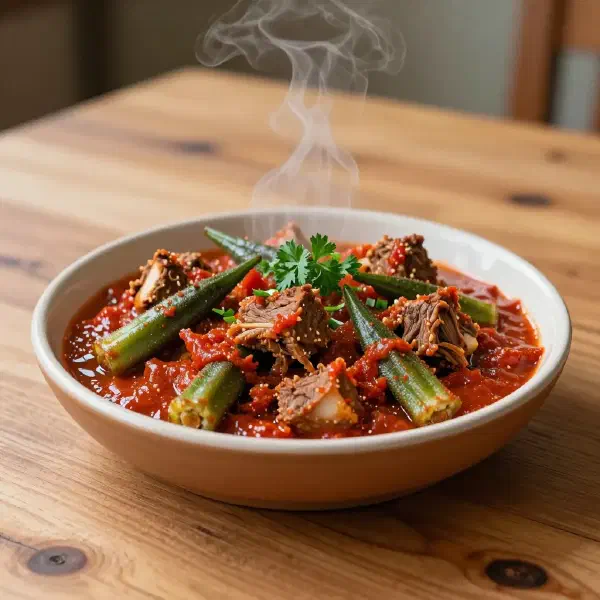
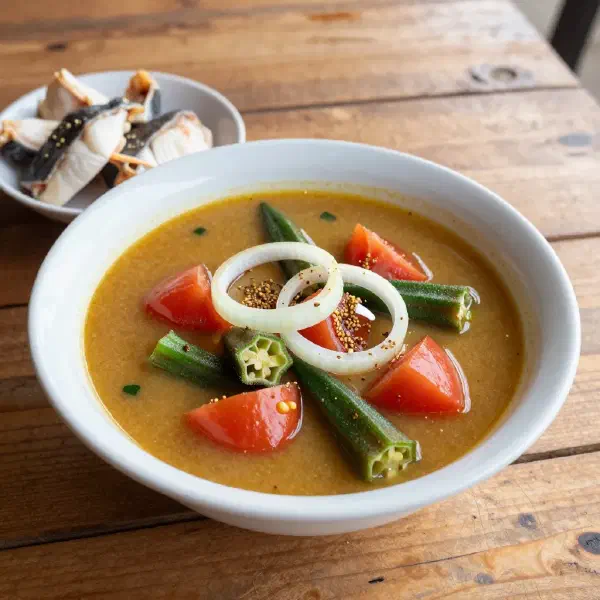
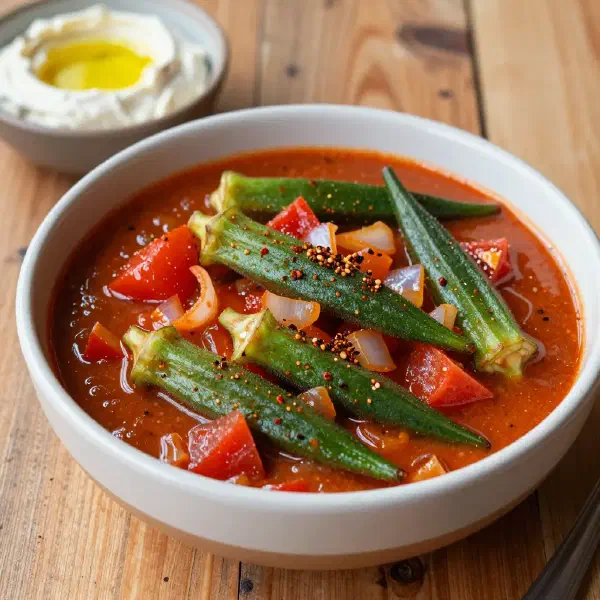
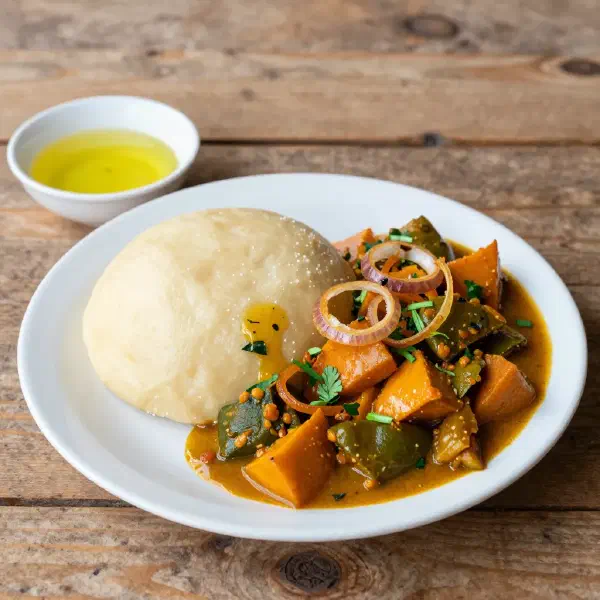
Okra tastes mild and slightly grassy, a little like green beans with a hint of aubergine. The texture matters more than the flavour. In West Africa cooks use the slime on purpose and slice the pods finely, as in the Gambian Okra Soup. In Louisiana, okra thickens Okra Gumbo. In Syria and Iraq, small whole pods are braised with lamb in tomato sauce to make Bamyeh. In India and Bangladesh they are fried dry and spicy, which keeps them almost free of slime. Okra tastes best young and small. If you do not like the thickening effect, leave the pods whole, fry them over high heat or add a little lemon juice or vinegar.
Buying okra: what to look for
You can find fresh okra at Middle Eastern, Turkish, African, Indian and Asian grocers, and sometimes in larger supermarkets. Good pods are bright green, firm and no longer than 10 cm. Large pods become woody. Brown patches and soft tips show that they are old. Frozen okra works well in stews. Turkish and Middle Eastern shops also sell small dried okra threaded on strings, which are soaked before cooking.
Storage and shelf life
Okra spoils quickly. Store the pods unwashed in a paper bag in the vegetable drawer and use them within two to three days. Moisture makes them spotty and slimy, so wash them only just before cooking and dry them well. To freeze, blanch the pods for 2 minutes, refresh them in cold water and freeze them dry.
What can you use instead of okra?
As a vegetable, green beans are the best replacement: 200 g beans for 200 g okra, cut into 2–3 cm pieces. Courgette also suits braised dishes but cooks down faster. Either way, you lose the thickening. In gumbo, a dark roux of 1 tbsp flour and 1 tbsp oil per litre of liquid helps, or 1 tsp filé powder made from sassafras leaves, stirred in only at the end. In West African soups, ground ogbono seeds also thicken the pot.