Rice Paper: What It Is, How to Use It and Substitutes
What is rice paper?
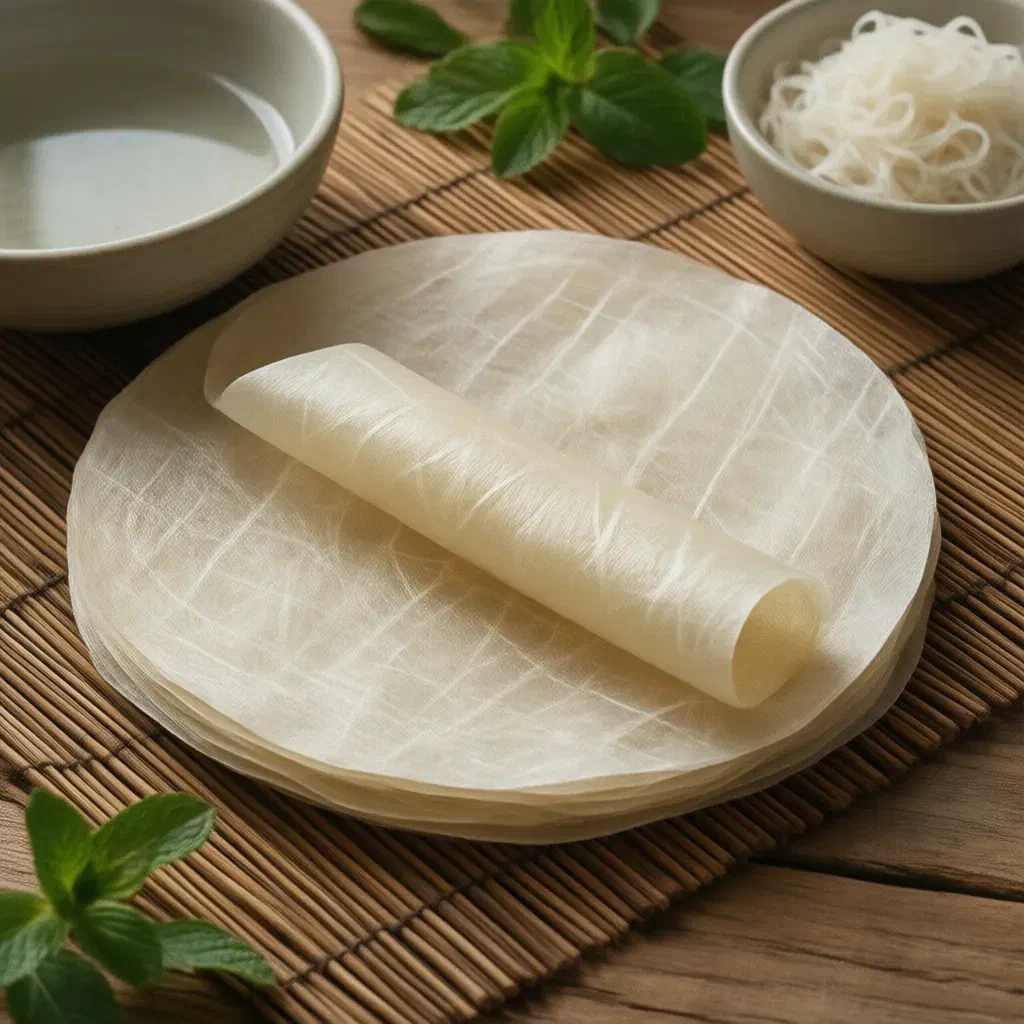
Rice paper comes from Vietnam, where it has been made by hand under the name bánh tráng for generations. For the batter, rice is soaked and ground into a thin slurry, these days usually with some tapioca starch for extra elasticity. In traditional workshops, the batter is spread very thinly over a cloth stretched across a pot of boiling water. After about half a minute the sheet is cooked. It is then laid out on bamboo mats to dry in the sun, which gives many sheets their typical crosshatch pattern. Finished rice paper contains no fat and no wheat. It is naturally gluten-free and vegan. Round sheets usually measure 16 or 22 cm across, and you can also find square sheets and narrow strips.
Flavour and uses
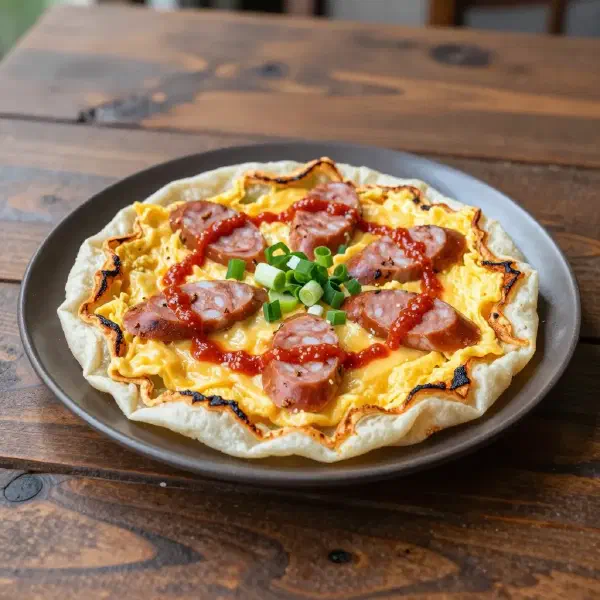
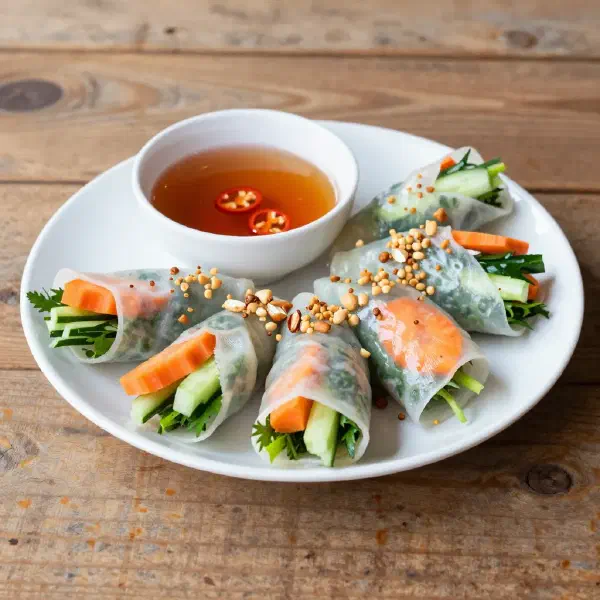
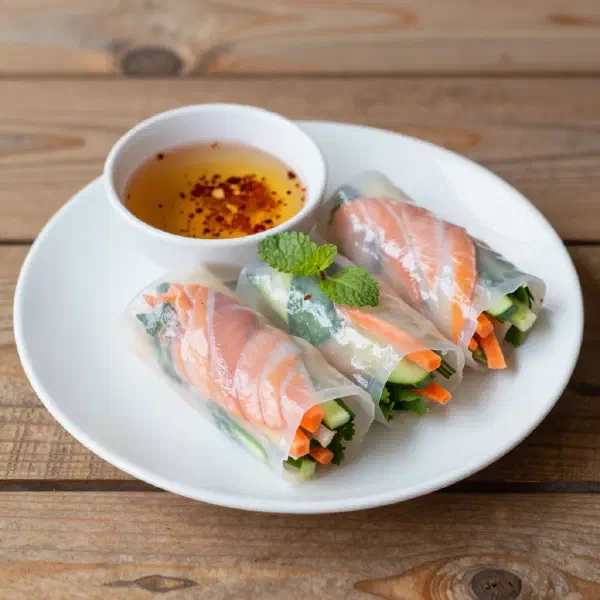
Rice paper tastes almost neutral, faintly of rice, and relies on its filling. Its best-known use is fresh Goi Cuon with prawns, rice noodles, lettuce and mint. For Cha Gio, the filled sheet is deep-fried and develops a blistered, very crisp surface. At street markets in Da Lat it is grilled over charcoal with egg and spring onions as Banh Trang Nuong. To soften it, lukewarm water and a count of three to five seconds are enough. The sheet will still feel a little firm, but it softens completely on the board within half a minute. Soak it too long and it will tear as you roll.
Buying rice paper: what to look for
Every Asian grocer sells rice paper, and many supermarkets now stock it in their Asian or world foods section. It is worth checking the ingredients. Sheets with tapioca starch are more elastic and tear less often, while pure rice paper is firmer and good for frying. For summer rolls, use the 22 cm sheets, and for small fried rolls the 16 cm ones. The sheets should be whole and not stuck together. Lots of broken pieces in the packet suggest the product has been too dry or roughly handled.
Storage and shelf life
Dry rice paper keeps for one to two years well sealed in a dry place; the best-before date is on the packet. Moisture makes the sheets wavy and brittle, so put opened packets in a freezer bag. Rolled summer rolls taste best fresh. Under a damp cloth they keep for two to three hours, but in the fridge the rice paper turns chewy.
What can you use instead of rice paper?
There is no true equivalent. For fried rolls, wheat-based spring roll wrappers work, but they are not gluten-free. For fresh rolls, large lettuce leaves or nori sheets are suitable. You can also make thin rice pancakes yourself. Whisk 50 g rice flour, 20 g tapioca starch, 150 ml water and a pinch of salt, then cook very thin pancakes in a non-stick pan. They are softer than shop-bought rice paper and can be filled straight away.