National Dish Angola: Salada de Atum (Recipe)
In this article
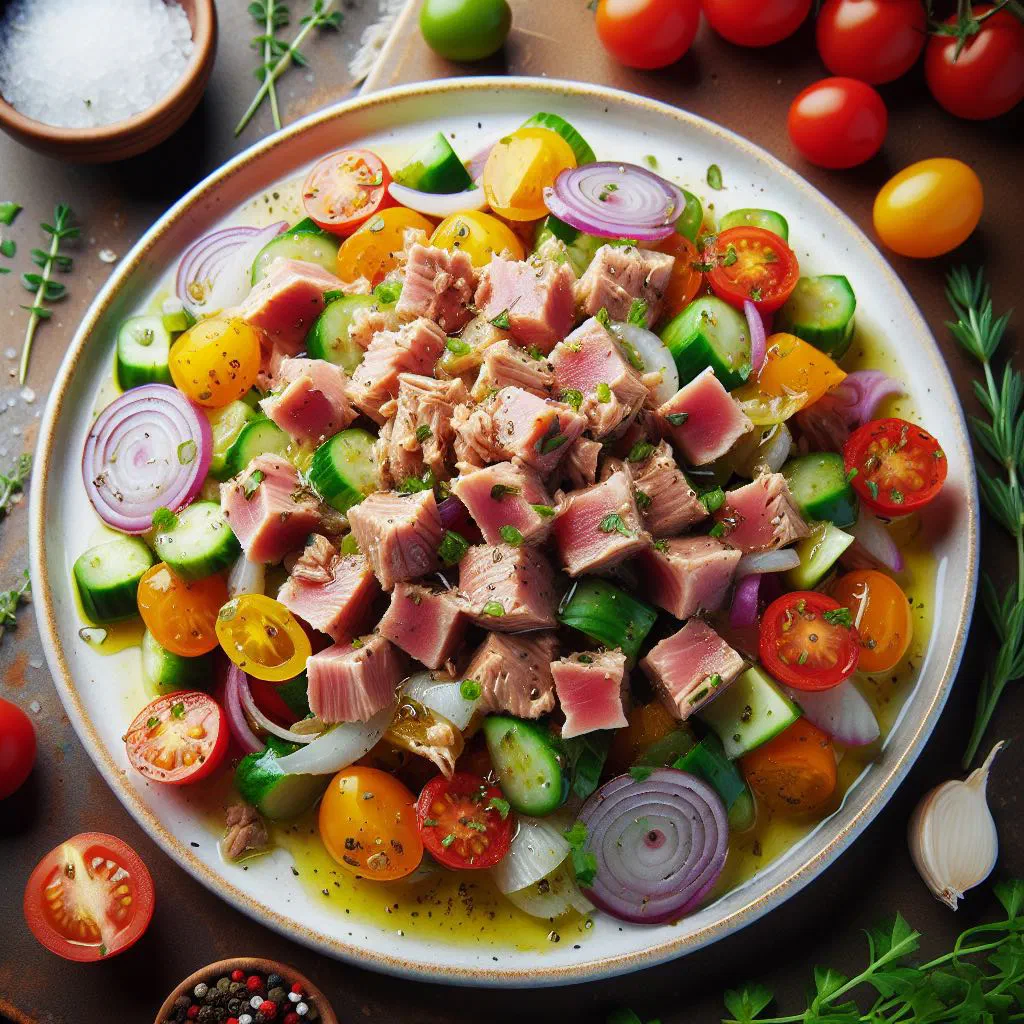
Meet Salada de Atum, Angola’s bright and breezy tuna salad. Flaked tuna meets sun-ripe tomatoes, crunchy peppers and sharp onion, all lifted by good olive oil and a splash of vinegar. It comes together in minutes, needs no cooking beyond a couple of boiled eggs, and tastes best on a warm day with something cold in the glass. Simple, colourful and endlessly satisfying.
About Salada de Atum
Salada de Atum is one of Angola’s best-loved everyday dishes, striking a perfect balance between fresh produce and hearty, savoury flavour. This tuna salad is not only quick to put together but genuinely nourishing, which is why it turns up so often as a starter or a light main course. It is at its finest in hot weather, when nobody wants to stand over a stove. With its layers of aroma and texture, Salada de Atum is guaranteed to win over your guests.
Ingredients (serves 1–2)
- 200 g tuna (in oil or water, drained)
- 2 medium tomatoes, diced
- 1 pepper (whichever colour you prefer), diced
- 1 small onion, finely chopped
- 2 eggs, hard-boiled and sliced
- A handful of olives (black or green, to taste)
- Fresh parsley or coriander, chopped
- Olive oil, vinegar, salt and pepper, to season
Shopping for the ingredients
The ingredients for Salada de Atum are easy to find in almost any supermarket. Head to a local market or a well-stocked grocer for the freshest vegetables, since they carry the whole dish. Choose a good-quality tuna. It makes a noticeable difference to the finished flavour. If you are after a lighter version, pick tuna packed in water rather than oil, much as you would when shopping for Tofu de Peixe.
Preparing the dish
Before you start assembling Salada de Atum, wash and prepare everything thoroughly. Dice the tomatoes and pepper, chop the onion finely and hard-boil the eggs until the yolks are just set. It is worth roughly chopping the parsley or coriander at this stage too, so the fresh, herbal note goes in at the right moment. With every component ready and waiting, the salad comes together in a matter of minutes.
Step-by-step instructions
- Lightly crush the drained tuna with a fork in a large bowl.
- Add the tomatoes, pepper, onion and the chopped herbs.
- Carefully slice the hard-boiled eggs and fold them through.
- Season with olive oil, vinegar, salt and pepper, then stir well.
- Arrange on a handsome plate and garnish with olives and fresh herbs.
Gluten-free / lactose-free version
Salada de Atum is naturally gluten-free and lactose-free, which makes it an excellent choice for anyone with food intolerances. Do check that every ingredient you use is certified gluten-free, the oil and vinegar in particular are worth a quick look for possible cross-contamination. Beyond that, you can tuck in without a second thought, confident that the dish suits a wide range of diets.
Tips for vegans and vegetarians
Turning Salada de Atum vegan or vegetarian takes only a couple of easy swaps. Replace the tuna with chickpeas or mashed avocado for a comparable texture and a similar richness. Extra vegetables such as carrot or celery add crunch and nutrients, and the egg can simply be left out. The result is a fresh new flavour profile in the spirit of Salada de Grao de Bico.
More tips and tricks
A few small tricks make Salada de Atum considerably easier. Ready-boiled eggs, sold in many shops, save you a good ten minutes on a busy day. Play around with different dressings to steer the flavour where you want it. A squeeze of lemon or a small spoonful of mustard gives the salad a refreshing edge that keeps it from tasting flat.
Adapting the recipe to your taste
Salada de Atum adapts readily to personal preference. If you like heat, stir in chopped jalapeños or a little piri piri, the same fiery note that defines Piri Piri Chicken. For a sweeter contrast, scatter over a few sweetcorn kernels. Different herbs are worth trying too: chives or basil will take the salad in an entirely new direction.
Ingredient substitutions
If you are missing one or two ingredients for Salada de Atum, do not worry. Tuna can be swapped for another fish such as salmon, and the vegetables can shift with the seasons. Instead of eggs, pan-fried tofu cubes make the dish protein-rich without changing its character. Raid your vegetable drawer and let what you have on hand give the salad a personal stamp.
Drink pairing ideas
The ideal partners for Salada de Atum are light, refreshing drinks. A cold glass of white wine or a crisp rosé suits it beautifully. Homemade lemonades and iced teas infused with fresh herbs work just as well, especially for a family table. A little mint or lemon in the glass echoes the freshness of the salad perfectly.
Serving and presentation ideas
Presentation adds a great deal to the pleasure of eating Salada de Atum. Serve it in a large bowl decorated with fresh herbs, or portion it into small glasses for an appetising individual serving. A final flourish of edible flowers looks striking and costs almost nothing. Colourful sides on a wide platter turn the salad into a proper spread.
A bit of history
Salada de Atum has its roots in Angolan cuisine and reflects the sheer variety of produce found along the coast. Angola is known for its fresh seafood and regional ingredients, both of which fit naturally into this dish. Historically it was served at celebrations and family gatherings, where simple, nourishing food brought people together, much as Mufete de Peixe still does today. Its popularity has never waned, and it remains a meaningful symbol of Angolan food culture.
More recipe ideas
Summary: Salada de Atum
In short, Salada de Atum is not only easy to make but a genuine pleasure to eat. It marries the freshness of raw vegetables with the savoury depth of tuna, and every mouthful benefits from that contrast. A starter or a snack, the dish is versatile and thoroughly tasty. Let the colours and aromas of this Angolan speciality draw you in and rediscover the simple joy of cooking.