National Dish Antigua and Barbuda: Curry Crab (Recipe)
In this article
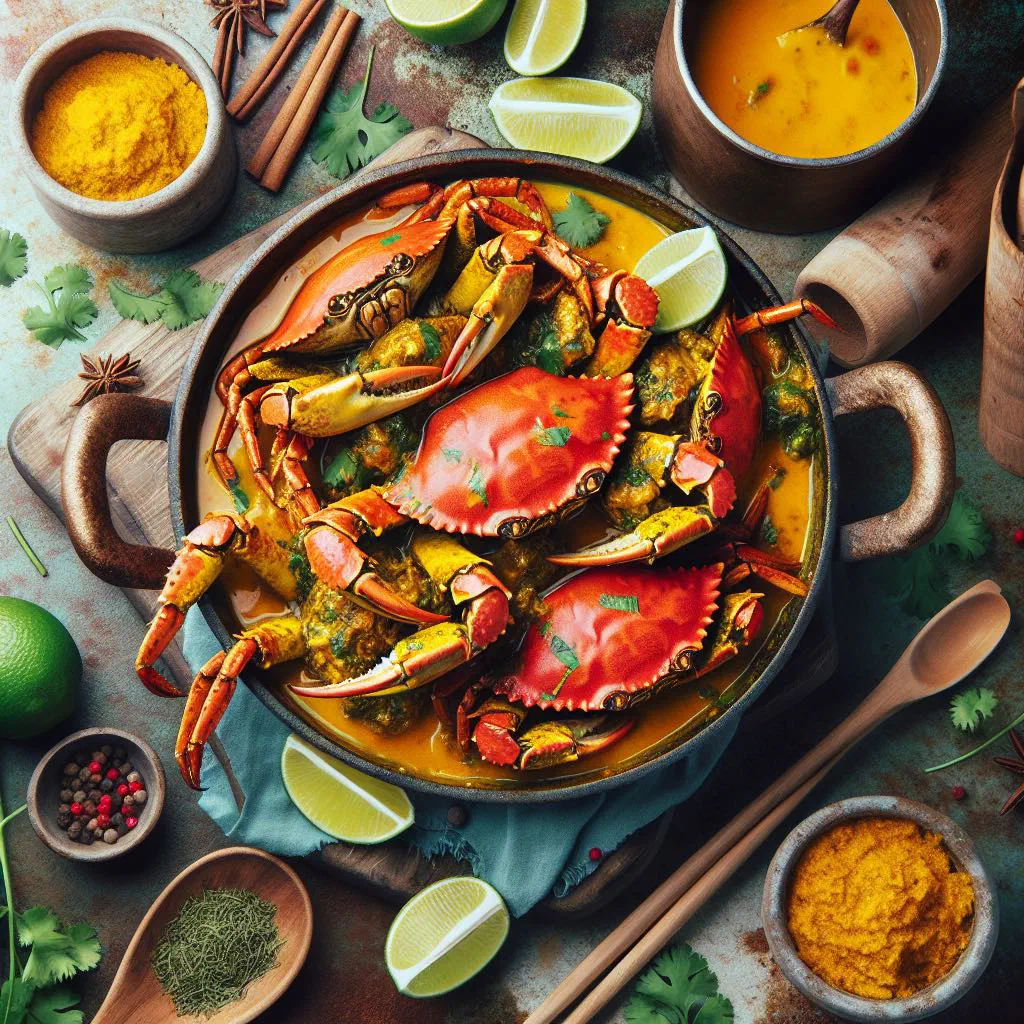
Few dishes capture the warmth of the Caribbean quite like Curry Crab. Sweet, tender crab meat simmers in a golden, gently spiced coconut sauce, lifted by fresh herbs and a generous squeeze of lime. It tastes like a celebration, the sort of thing brought to the table when family gathers, yet it comes together in well under an hour, which makes it a rewarding place for a nervous cook to start.
About Curry Crab
Curry Crab is a fragrant, deeply satisfying dish from the Caribbean kitchen, and its appeal lies in the contrast at its heart: delicate crab meat against a bold, spiced sauce. Soft onions and peppers melt into rich coconut milk, the curry powder blooms in the hot oil, and fresh herbs cut through at the very end. It brings not only the flavour of Antigua to your plate but something of the islands’ easy, sociable atmosphere too. Ideal for festive occasions or a special dinner, it is quick and straightforward enough that beginners can enjoy making it.
Ingredients (serves 1–2)
- 300 g fresh crab meat
- 2 tablespoons vegetable oil
- 1 small onion, diced
- 2 cloves garlic, chopped
- 1 red pepper, diced
- 2 teaspoons curry powder
- 1 tin coconut milk (400 ml)
- Fresh herbs (parsley or coriander)
- Salt and pepper to taste
- Juice of one lime
Shopping for the ingredients
Good curry crab starts at the fishmonger’s counter. Buy fresh crab meat wherever you can, ideally straight from a market, since freshness makes far more difference here than any amount of seasoning. The remaining ingredients, coconut milk, curry powder, a ripe red pepper, should be of similarly good quality, as there is nowhere for a tired spice blend to hide in so simple a sauce. Many supermarkets now stock Caribbean and Asian ranges, which is where you are most likely to find a well-balanced curry powder. The same shopping trip will set you up nicely for a Curry Lobster another evening.
Preparing the dish
Preparation is refreshingly simple and takes only a few steps. Begin by rinsing the crab meat thoroughly and leaving it to drain properly, so no excess water thins the sauce later. While it drains, chop all your vegetables and set them within easy reach of the hob. Measuring out the spices and opening the coconut milk in advance is worth the minute it takes, once the pan is hot, this dish moves quickly. A well-prepared kitchen makes the cooking not merely easier but altogether more pleasant.
Step-by-step instructions
- Heat the oil in a deep frying pan over a medium heat.
- Add the diced onion and fry until translucent.
- Add the chopped garlic and red pepper and cook for a few minutes.
- Scatter the curry powder over the vegetables and stir well.
- Pour in the coconut milk and bring everything to a gentle simmer.
- After a few minutes, add the crab meat and stir carefully.
- Season with salt, pepper and a few squeezes of lime juice.
- Simmer the curry for about 10 minutes, until the crab is cooked through.
- Scatter over the fresh herbs and serve.
Gluten-free / lactose-free version
Curry crab is naturally gluten-free and lactose-free, since it rests almost entirely on fresh crab meat and coconut milk. You can serve it with confidence to anyone managing either intolerance. Do check the labels on your curry powder and any stock you use, however, as some blends carry gluten-based stabilisers or milk powder as bulking agents. With those two boxes ticked, the dish can be enjoyed in full without a second thought.
Tips for vegans and vegetarians
For a vegan or vegetarian version, swap the crab for mushrooms or young jackfruit, both of which mimic that flaky, meaty texture convincingly. They soak up the curry’s flavours beautifully and produce a dish that stands on its own rather than feeling like a compromise. Coconut milk is already plant-based, so the sauce needs no adjustment at all, though a splash of plant cream will make it richer still. It is a generous, welcoming meal to put in front of friends and family whatever they eat, as is a hearty Pawpaw Stew.
More tips and tricks
To make the curry more aromatic still, experiment with additional spices such as cumin or ground coriander. These lend the dish real depth and let the Caribbean flavours come through more intensely. A little fresh chilli will raise the heat considerably if you like things fiery, and a Scotch bonnet added whole then removed before serving gives fragrance without ferocity.
Adapting the recipe to your taste
Curry crab is an unusually flexible dish and takes readily to alteration. If you would like more vegetables in the pan, courgette or green beans are excellent choices and need only a few extra minutes. You can also use different types of curry powder depending on how mild or hot you prefer it, from a gentle Madras to something considerably sharper. Any cook with a little curiosity will soon work out which combinations suit them best.
Ingredient substitutions
There is always an alternative in the kitchen, and curry crab is no exception. If you have no coconut milk to hand, almond milk or soya cream will give you a comparable consistency, though the result will be a little less rich. The crab itself can be replaced with freshly caught fish or other seafood without diminishing the dish in the slightest, the same logic that makes a Conch Chowder work so well. Be bold and experiment with different ingredients to create your own version.
Drink pairing ideas
A refreshing drink suits curry crab best, one that complements rather than competes with the spice. A cold, fruity beer or a light white wine such as a Sauvignon Blanc harmonises wonderfully with the warm curry notes. For those avoiding alcohol, a freshly made limeade or a chilled hibiscus tea is an excellent choice, and a Sorrel Drink makes a particularly festive pairing. These drinks help to catch and carry the flavours of the dish.
Serving and presentation ideas
An attractive presentation can improve the whole experience considerably. Serve the dish in a handsome deep bowl and garnish it with fresh herbs and lime wedges. A little extra coconut milk swirled across the top adds a pretty finishing touch. Alongside, jasmine rice or warm flatbread makes a fine accompaniment, and Coconut Rice in particular echoes the sauce beautifully on the table.
A bit of history
The roots of curry crab run deep into Caribbean cooking, a tradition shaped by many cultures over several centuries. Crab and other seafood have been a staple of the diet in Antigua and across the wider region for generations, gathered from mangroves and shallows close to home. The dish reflects the natural abundance and the culinary inventiveness of the islands and is evidence of the sheer variety of their flavours. Curry itself originated in Indian cooking, which explains the fusion at work here and makes the dish a genuinely fascinating example of Antiguan cuisine.
More recipe ideas
Summary: Curry Crab
Curry crab is a delicious and straightforward dish that brings the taste of the Caribbean directly into your kitchen. With fresh crab meat, a spiced curry sauce and crisp vegetables, it is a feast for the senses from the first spoonful. Whether for a special occasion or simply for your own pleasure, this dish promises a memorable meal. Let the flavours of the islands enrich your home and enjoy a piece of this culinary heritage.