National Dish Belarus: Kulesh (Recipe)
In this article
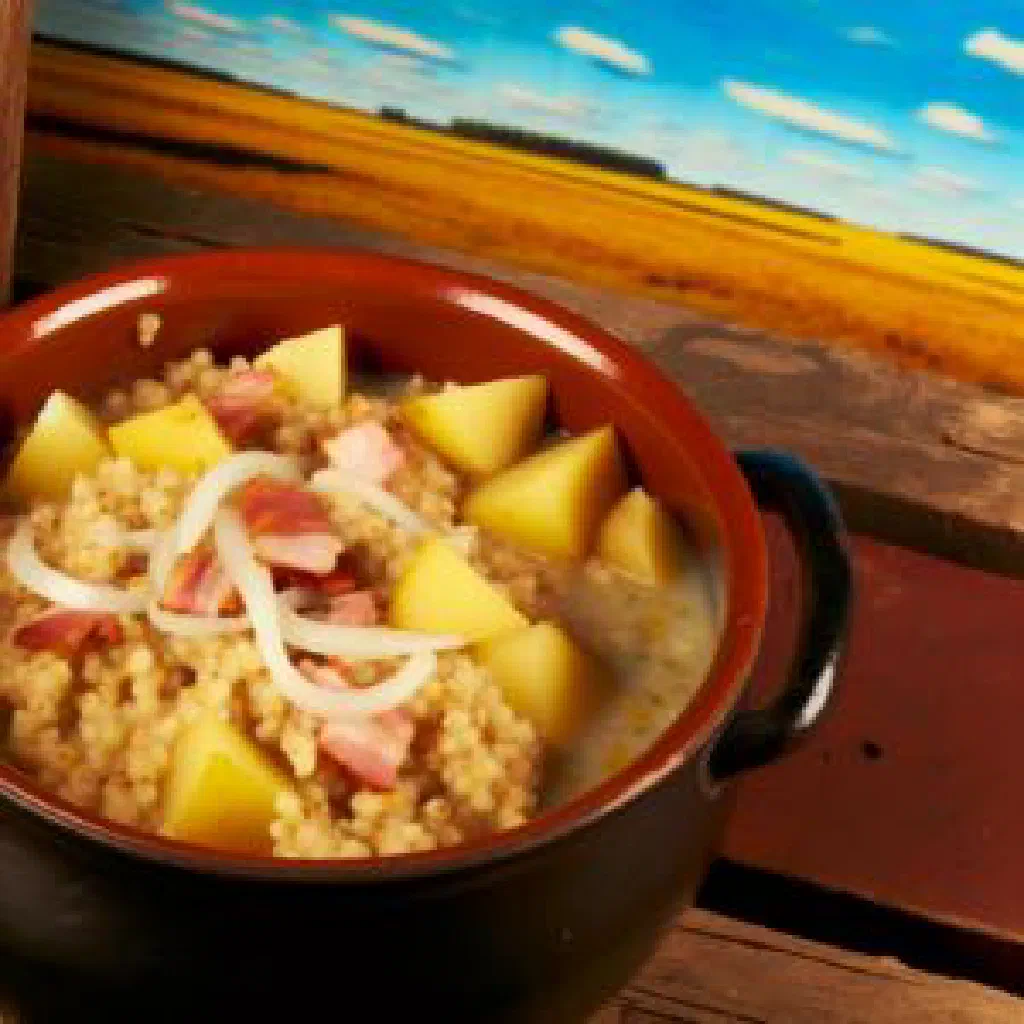
Meet Kulesh, the kind of dish that Belarusian country kitchens have relied on for generations. Nutty buckwheat and soft potatoes simmer together into a thick, warming bowl, lifted by golden onions and a scattering of crisp bacon. It is honest, filling food built for cold days and short winter afternoons, and it comes together with very little fuss and a handful of everyday ingredients.
About Kulesh
Kulesh is a traditional Belarusian dish with its roots firmly in rural cooking. It brings together a satisfying combination of buckwheat and potatoes that makes for a genuinely hearty meal. More often than not it is enriched with bacon or onions, both of which add depth and aroma to the pot. The dish is especially popular when the weather turns cold, because it does more than fill you up. It carries a real sense of warmth and comfort.
Ingredients (serves 1–2)
- 200 g buckwheat
- 300 g potatoes
- 100 g bacon or onions
- Salt and pepper to taste
- 1 tablespoon butter or oil
- Water, as needed
Shopping for the ingredients
The ingredients for kulesh are easy to find in almost any supermarket. Buckwheat usually sits alongside the rice and grains, while potatoes and bacon are in the produce and meat aisles respectively. When picking onions, look for firm bulbs with no soft or bruised spots. That is the surest sign of quality. Fresh butter or vegetable oil matters too, since it carries much of the flavour in the finished dish.
Preparing the dish
Getting kulesh ready is refreshingly straightforward. Start by peeling the potatoes and cutting them into small, even cubes so they cook through at the same rate. Give the buckwheat a quick rinse before using it to wash away any dust or grit. If you are cooking with bacon, cut it into small pieces as well so it renders and crisps up nicely in the pan.
Step-by-step instructions
- Cook the buckwheat in a pan of boiling water for about 15 minutes, until tender.
- Meanwhile, boil the potatoes in a separate pan of salted water until soft.
- In a frying pan, fry the bacon or onions in butter or oil until golden brown.
- Add the cooked potatoes and buckwheat to the pan and mix everything together well.
- Season with salt and pepper and serve piping hot.
Gluten-free / lactose-free version
Kulesh is naturally gluten-free, provided the buckwheat you buy has not been cross-contaminated with gluten during processing. For a lactose-free version, simply swap the butter for a plant oil, the flavour stays true and the dish remains easy to adapt. Just check that any other products you cook with are lactose-free as well.
Tips for vegans and vegetarians
Vegans and vegetarians can adapt kulesh without any trouble by replacing the bacon with plant oils or vegan bacon. Onions and garlic bring plenty of savoury depth of their own. Instead of butter, reach for vegan margarine, which enriches the dish just as effectively. Fresh vegetables such as carrots or peppers add extra flavour and nutrients, the same generous approach that works so well in Zatirukha.
More tips and tricks
Experiment with different herbs and spices to give your kulesh a personal signature. Parsley or chives are excellent additions that improve both the taste and the look of the bowl. The dish also portions and keeps beautifully for the days ahead, which makes it ideal for meal prep. Another trick worth trying is baking the kulesh in an ovenproof dish to build up a crisp golden crust on top.
Adapting the recipe to your taste
Kulesh is a versatile dish and takes easily to personal preference. If you like heat, add chilli or hot paprika. For a creamier consistency, stir in a splash of cream or a plant-based drink. Bringing in different vegetables such as broccoli or cauliflower keeps things interesting from one plate to the next. Give your imagination free rein and play with your favourite ingredients.
Ingredient substitutions
If you are not keen on onions or would rather leave them out, spring onions make a milder stand-in. For a nuttier character, quinoa works well in place of buckwheat. Roasted vegetables bring extra texture and flavour into the mix, much as they do in a plate of Zharkoe. Oils such as olive oil or coconut oil can just as easily take the place of butter for frying.
Drink pairing ideas
Kulesh pairs happily with a wide range of drinks. A robust red wine complements the earthy flavours of the dish perfectly. A cold beer is another good match, cutting neatly through the richness. For something alcohol-free, try fruit smoothies, homemade lemonade or a glass of tangy Kvas for a genuinely local refreshment.
Serving and presentation ideas
Presentation plays its part in the enjoyment of kulesh. Serve it in attractive bowls or on well-chosen plates that show off the warm colours of the dish. A garnish of fresh herbs or toasted nuts adds a flavour kick and makes the bowl look far more appealing. Set it out on a properly laid table to create a welcoming atmosphere.
A bit of history
Kulesh has a long tradition in Belarusian cooking and is closely tied to rural life. It was frequently prepared as a nourishing meal for farm labourers who needed something substantial to see them through a working day. Its flavours and ingredients reflect the local produce that was readily available in the early days of Belarusian cuisine. Today kulesh is a symbol of Belarusian cultural identity, linking old traditions with modern culinary influences.
More recipe ideas
Summary: Kulesh
Kulesh is a wonderful example of Belarusian cooking, defined by its simple ingredients and deeply savoury flavour. With onions, or in a fully vegan version, the possibilities are plentiful. It brings warmth on cold days and satisfaction to any table. Let Belarusian culinary tradition inspire you and give kulesh a try for yourself.