National Dish Belarus: Solyanka (Recipe)
In this article
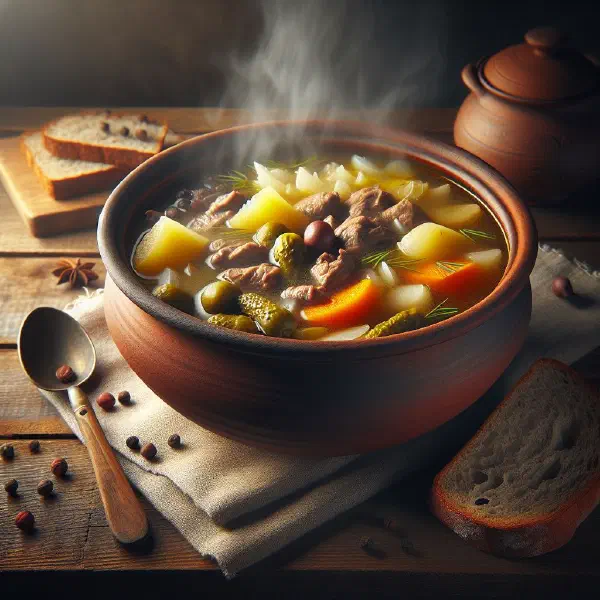
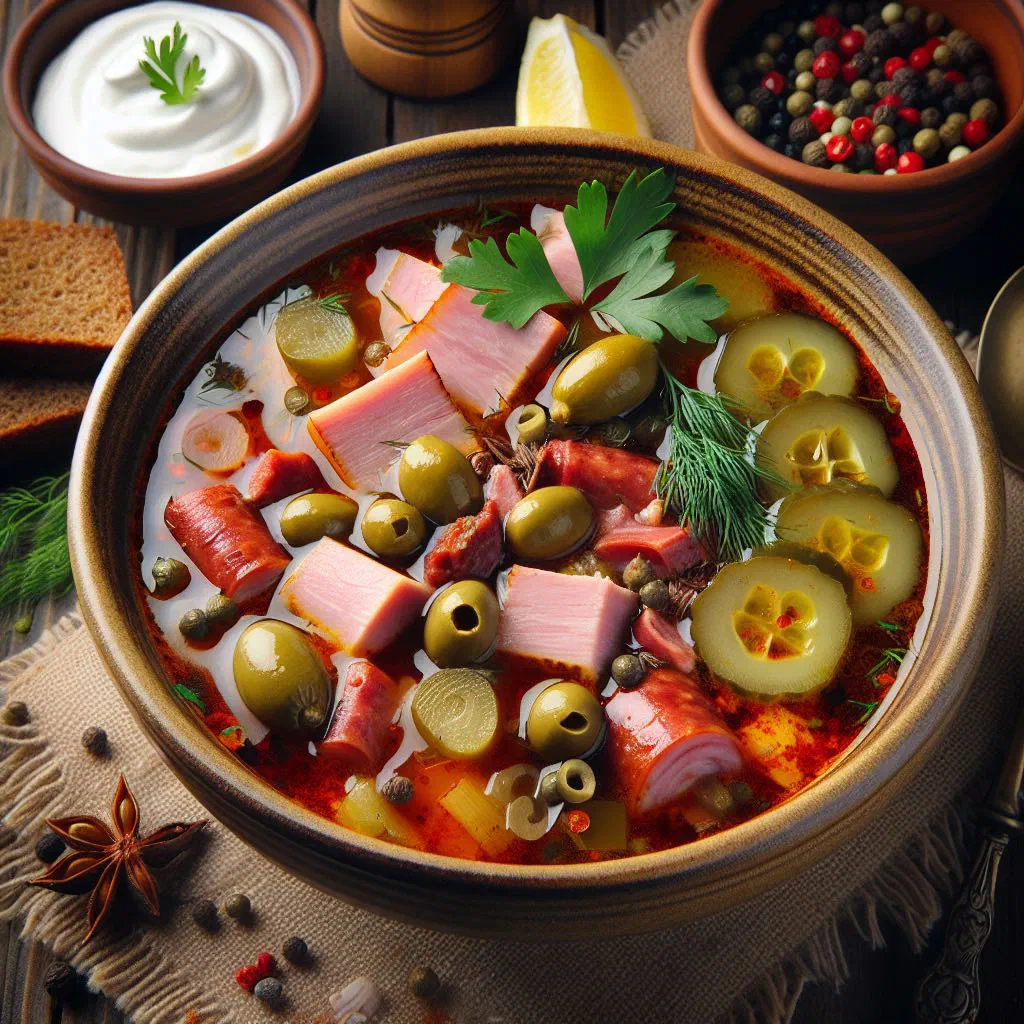
Discover Solyanka, the wonderfully savoury soup that Belarus turns to whenever the weather bites. Layer upon layer of flavour comes from mixed meats, tangy pickled cucumbers and briny olives, all simmered together in a rich, deeply seasoned broth. It is filling, warming and satisfying in a way few soups manage. Bring a little piece of Belarus to your own table with this comforting bowlful.
About Solyanka
Solyanka is a traditional national dish of Belarus, admired for its hearty aromas and its many layered ingredients. This fragrant soup is most often served in the winter months, when a warming meal is exactly what you crave. With a combination of different meats, olives and a generous handful of spices, solyanka is not only delicious but genuinely sustaining. It is a dish that tends to be handed down through families and brought out for festive occasions.
Ingredients (serves 1–2)
- 200 g mixed meat (e.g. beef, pork, poultry)
- 100 g salami or another sausage
- 1 onion
- 1 carrot
- 2–3 pickled cucumbers
- 50 g olives
- 1 litre stock (vegetable or meat)
- 2–3 tablespoons tomato purée
- Basil, pepper and bay leaf, to taste
- Fresh dill, to garnish
Shopping for the ingredients
When shopping for the ingredients for solyanka, it is important to pick out fresh, good-quality produce. For the meat, it pays to combine several kinds so the dish gains more depth and character. Take care to choose good olives, as they account for a significant part of the flavour. The spices should be fresh and aromatic too, so that the soup reaches its full potential, much as they do in a well-made Rasolnik.
Preparing the dish
Preparing the dish is straightforward, though a few basic steps make sure every ingredient is treated properly. Begin by cutting the meat into small cubes and finely chopping the onion and the carrot. The pickled cucumbers should be sliced as well. By having everything ready in advance, the cooking itself becomes far smoother and more relaxed.
Step-by-step instructions
- Heat a large pot and brown the meat in it until lightly coloured.
- Add the onion and carrot and sauté for a few minutes.
- Stir in the tomato purée, mixing well so it is evenly distributed.
- Pour in the stock and bring the mixture to the boil.
- Reduce the heat and let the soup simmer for around 30 minutes.
- Add the diced pickled cucumbers and olives and cook for a further 10 minutes.
- Season to taste with basil, pepper and bay leaf.
- Serve the soup hot, garnished with fresh dill.
Gluten-free / lactose-free version
Making solyanka gluten-free or lactose-free is no trouble at all. Use a gluten-free stock and leave out any ingredients that might contain gluten. Most meats are naturally free from gluten, but do check that the sausage or salami is suitable as well. For a lactose-free version no special adjustments are needed, since the recipe contains no dairy products.
Tips for vegans and vegetarians
Vegans and vegetarians can enjoy solyanka too, simply by replacing the meats with plant-based alternatives. Instead of a stock made from animal ingredients, a rich vegetable stock does the job beautifully. Round the recipe out with extra vegetables such as peppers or courgettes to deepen the flavour. These adjustments preserve the savoury character of the soup while creating a thoroughly plant-based version.
More tips and tricks
A few further tips and tricks make solyanka easier to cook and improve the result. Try different sausages or cuts of meat to discover new flavour combinations, in the same spirit as the grilled skewers of Shashlik. Adding spices such as paprika or caraway can give the soup an interesting twist as well. Now and then, let the soup stand overnight, the flavours are noticeably more intense the following day.
Adapting the recipe to your taste
Adapting the recipe to personal preference is central to cooking solyanka. If you like things hotter, simply add a little chilli or extra pepper. Alternatively, you can lift the broth with a squeeze of lemon for a fresher note. Everyone can create their own version of solyanka, tuned exactly to their own palate.
Ingredient substitutions
If some ingredients prove hard to find, there are alternatives that work just as well in the soup. Pickled courgettes can stand in for pickled cucumbers, or a soured-cream style topping can be used instead. In place of olives, capers give a similar sharp, briny bite. It is genuinely enjoyable to experiment with different ingredients until you find the combination that suits you best.
Drink pairing ideas
Several drinks pair well with solyanka and round out the whole eating experience. A fresh, lightly sparkling mineral water is an excellent choice for balancing the sharpness of the soup. Red wine, particularly something from the region, can be a flavoursome accompaniment. A classic Kvas also suits the soup nicely and adds an authentic touch.
Serving and presentation ideas
The presentation of solyanka can lift the entire meal. Serve the soup in deep bowls and garnish it with fresh dill or a little lemon juice. You might also set out small accompaniments such as fresh bread or baguette to make a complete spread, savoury little pastries like Pirozhki work particularly well here. An attractive presentation makes the meal more enjoyable and invites everyone to linger over it.
A bit of history
Solyanka has an intriguing history stretching back to the 15th century. Originally the soup was cooked from leftover pieces of meat, a way of avoiding waste while still producing something delicious. Over time it grew into a popular dish, valued not only in Belarus but across other Eastern European countries as well. The name itself comes from the Russian word sol, meaning salt, a nod to the salty, briny character that defines Belarusian cuisine at its most robust.
More recipe ideas
Summary: Solyanka
Solyanka is a heart-warming, aromatic dish that honours the traditions of the Belarusian kitchen. With its varied ingredients and its openness to adaptation, it is a perfect choice for any occasion and any season. The sheer range of flavours will win over every palate. Let it inspire you and experience a piece of Belarusian culture through this delicious recipe.