National Dish Belgium: Moules-Frites (Recipe)
In this article
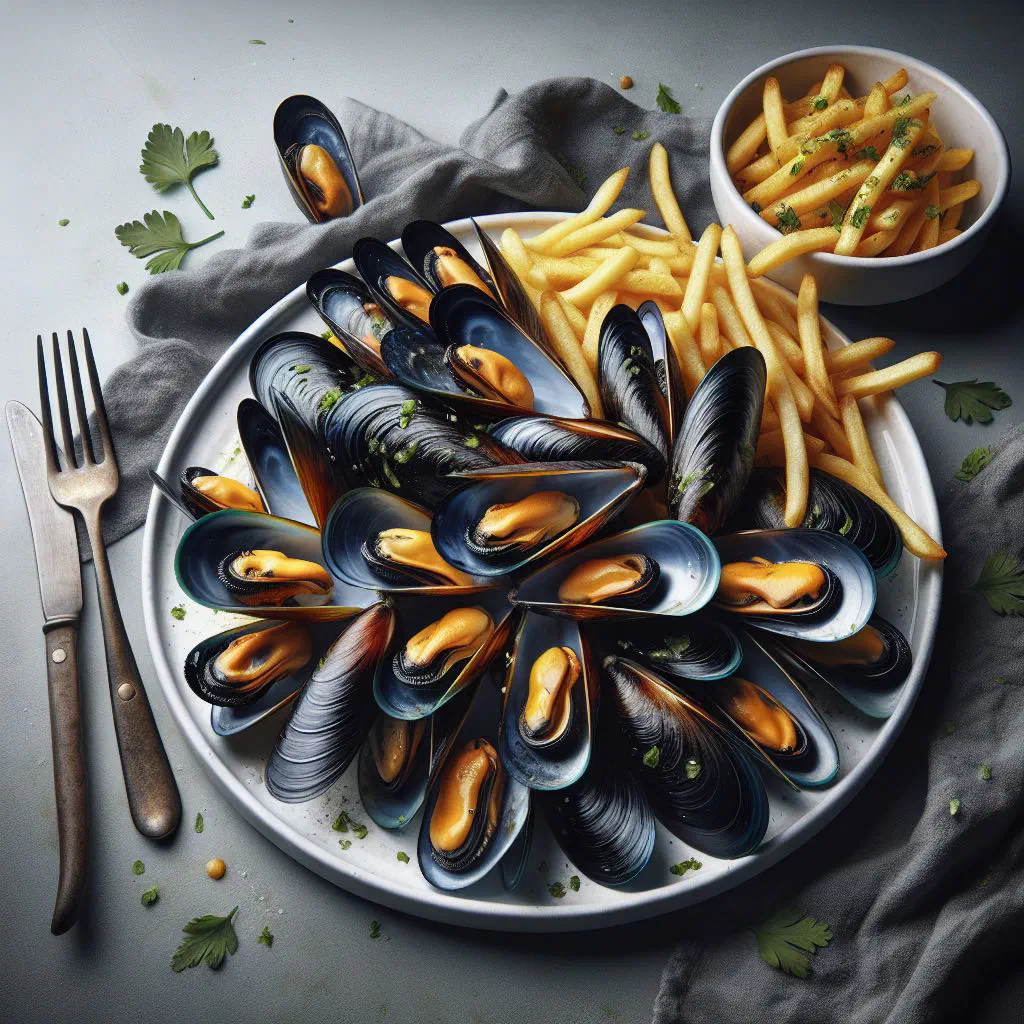
Moules-Frites is mussels steamed in a pot and chips fried alongside, and the Belgian position is that the chips are not a side dish. They are half the dish. Anyone who serves the mussels with bread instead has made something else.
About Moules-Frites
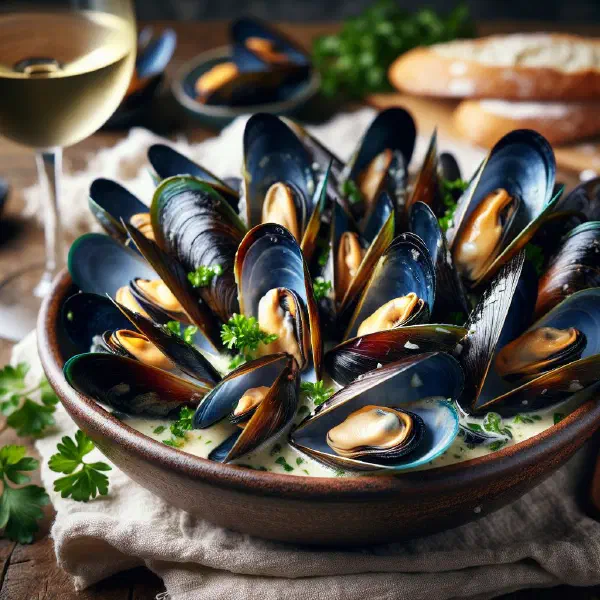
Moules-frites is Belgium’s national dish, eaten in enormous quantities from September onwards when the mussels come into season. The mussels are steamed over aromatics for six or seven minutes until they open, and the liquid left in the pot is as important as the shellfish.
The chips are fried twice, in beef dripping if anyone is being serious about it. Mayonnaise, not ketchup.
Ingredients (serves 1–2)
- 2 kg fresh mussels
- 2 medium onions, finely chopped
- 2 cloves of garlic, chopped
- 1 leek, washed and cut into rings
- 1 bunch of fresh parsley, chopped
- 300 ml dry white wine
- 2 bay leaves
- 1 tablespoon butter
- Salt and freshly ground black pepper
- Oil for deep-frying
- 500 g chips
Shopping for the ingredients
Buy mussels the day you cook them. They should smell of the sea and nothing else, and closed shells should stay closed. Zeeland mussels are what Belgium uses. For the chips, floury potatoes such as Bintje are the Belgian standard, and they need to be fried twice: once at 150°C to cook through, once at 190°C to crisp.
Preparing the dish
Scrub the mussels under cold running water and pull away the beards. Tap any that gape; if they do not close, throw them out. Do the same after cooking with any that stay shut. Cut the chips and soak them in cold water for half an hour, then dry them thoroughly.
Step-by-step instructions
- Melt the butter in a large pot and sweat the onions with the garlic until translucent.
- Add the leek, the bay leaves and about half the parsley, and let them soften.
- Pour in the white wine and simmer the broth for around 5 minutes.
- Add the prepared mussels, put the lid on and cook for 5–7 minutes, until the shells open.
- Shake the pot now and then so all the mussels cook evenly.
- Meanwhile, finish the chips and serve everything straight away.
Gluten-free / lactose-free version
Mussels and chips are naturally gluten-free, provided the chips are fried in oil that has not had battered food through it. For lactose-free, use oil instead of butter to start the pot. Check the mayonnaise.
Tips for vegans and vegetarians
There is no vegetarian moules-frites. What Belgium does offer is the chips themselves, which are a serious food in their own right and are sold from friteries on their own with a choice of a dozen sauces. Fried oyster mushrooms in the same white wine and parsley broth make a decent plate.
More tips and tricks
Do not add liquid beyond the wine. Mussels release a lot of their own and the pot should never be more than a third full of liquid. Shake the pot rather than stirring, so the shells do not break. And fry the chips twice with a rest in between, which is the single thing that separates Belgian chips from everything else.
Adapting the recipe to your taste
Moules à la crème adds cream at the end. Moules au vin blanc is the version above. Beer instead of wine makes moules à la bière, which suits a Belgian table. Celery is a common addition alongside the leek.
Ingredient substitutions
Clams work by the same method with a shorter cooking time. A dry cider replaces the white wine well. Any waxy-to-floury potato will make acceptable chips, though Bintje is the standard.
Drink pairing ideas
Belgian witbier is the classic pairing and its coriander and orange notes suit the shellfish. A dry Muscadet or Picpoul works. Sparkling water with lemon is the plain choice.
Serving and presentation ideas
Bring the pot to the table with the lid on and let people serve themselves. Give everyone an empty bowl for shells and use an empty shell as tongs, which is the correct Belgian technique. The chips come in a separate paper cone or bowl so they do not go soft, with mayonnaise on the side.
A bit of history
Mussels came from the North Sea coast and chips from the potato-growing interior, and the two met in the nineteenth century. Belgium has a long argument with France about who invented the chip, and the Belgian case rests on the Meuse valley, where fried potato is documented from the 1680s. Moules-frites sits at the centre of Belgian cuisine alongside Carbonade Flamande and Waterzooi.
More recipe ideas
Summary: Moules-Frites
Moules-frites is mussels steamed over onion, leek and white wine, served with twice-fried chips and mayonnaise. Buy the mussels fresh, keep the liquid low, and fry the chips twice.