National Dish Belgium: Witloof (Recipe)

In this article
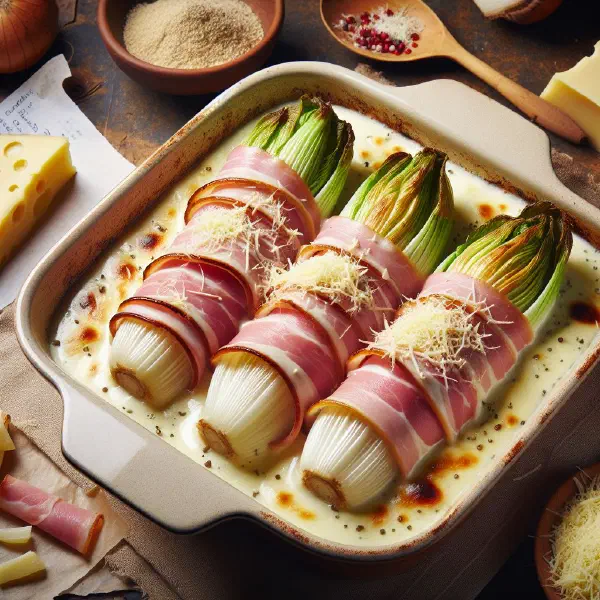
Say hello to Witloof, the pale, elegant chicory that Belgium has claimed as its own. Slim, crisp and pleasantly bitter, it turns into something quite different once it meets a hot pan: mellow, silky and gently sweet. Pair it with ham, a blanket of melting cheese and a splash of cream, and you have a dish that feels both homely and refined. It is light, quick and endlessly adaptable, a proper taste of Belgian cooking for your own kitchen.
About Witloof
Witloof belongs to the chicory family and is a genuinely healthy vegetable, rich in vitamins and minerals. Its high water content keeps it low in calories, which makes it a natural fit for lighter eating. You can enjoy it raw, boiled or pan-fried, and it is this versatility that has earned it a permanent place on Belgian tables. Better still, it is simple to prepare, which suits it equally well to everyday suppers and to more festive occasions.
Ingredients (serves 1–2)
- 2 heads of witloof
- 150 g ham (optional)
- 100 g cheese (Gruyère works beautifully)
- 200 ml cream, or a plant-based alternative
- Salt and pepper, to taste
- Nutmeg, to taste
- Olive oil or butter, for frying
Shopping for the ingredients
To get the best out of witloof, choose fresh, good-quality ingredients. When buying the chicory itself, look for firm, crisp leaves with tightly closed, creamy-white tips and no browning at the edges. The ham and the cheese deserve the same attention, since both do a lot of the flavour work in this dish. Local markets and trusted grocers are usually your best bet for finding produce at its peak.
Preparing the dish
Preparing witloof is refreshingly straightforward and takes only a few steps. Begin by removing the outer leaves and rinsing the heads thoroughly under running water. If the core at the base tastes very sharp, trim out a small cone with a paring knife to soften the bitterness. Have the ham and cheese portioned and within reach so you can add them at the right moment. This little bit of groundwork makes all the difference to both flavour and presentation.
Step-by-step instructions
- Heat the oil or butter in a frying pan.
- Add the witloof and fry for about 5 minutes, turning to colour it evenly.
- Add the ham and continue frying until it turns lightly crisp.
- Pour in the cream and season with salt, pepper and nutmeg.
- Scatter the cheese over the top and simmer gently for 10 minutes, until melted.
Gluten-free / lactose-free version
Making witloof gluten-free and lactose-free is easy. Use gluten-free flour wherever a recipe calls for a thickener, and swap the cream for a plant-based alternative such as coconut milk or soy cream. There are also plenty of good lactose-free cheeses to choose from these days. Do check the ham as well, since some cured products contain gluten-based additives, a certified gluten-free variety keeps the whole dish suitable for everyone at the table.
Tips for vegans and vegetarians
Vegans and vegetarians can adapt witloof with almost no effort by replacing the animal products with plant-based ones. Instead of ham, smoked tofu brings a similar savoury depth, and a splash of vegetable stock adds body to the sauce. For the cheese, reach for a good vegan variety or blend your own topping from ground nuts and nutritional yeast. These swaps keep the dish every bit as satisfying, much like a vegetarian take on Stoemp.
More tips and tricks
Herbs and spices are an easy way to refine the flavour of witloof. Thyme and oregano suit it especially well and lend the vegetable an extra aromatic note. Make sure you pat the washed chicory properly dry before it goes into the pan, surface water steams rather than browns. Dry heads will caramelise nicely and take on that lovely golden edge that makes the dish.
Adapting the recipe to your taste
One of witloof’s best qualities is how obliging it is. If you are missing an ingredient or simply fancy trying something new, feel free to improvise. Add extra vegetables such as carrots or peppers to bring more colour to the plate, or vary the cheese according to what you like, the same freedom you have with a classic Gegratineerde Witloof. Experiment a little and you will soon land on your own favourite version.
Ingredient substitutions
Swapping ingredients in and out of a witloof recipe presents no problem at all. If you avoid certain foods, fried mushrooms or roasted vegetables stand in nicely for the ham. For a gentle sweetness that balances the chicory’s bitterness, try adding carrots or slices of apple to the pan. The cheese, too, can be varied freely, Gruyère is traditional, but a mature Comté or a plant-based alternative both work well.
Drink pairing ideas
The right drink can round the whole plate off. Witloof pairs beautifully with crisp white wines such as a fresh Chablis or a fruity Sauvignon Blanc, both of which sit well against the vegetable’s bitter edge. A light Belgian Witbier is another excellent match. For something alcohol-free, a fruity grape juice or a sharp, sparkling lemonade refreshes the palate and keeps the flavours in balance.
Serving and presentation ideas
A well-plated dish is twice the pleasure. Arrange the witloof on a large platter and garnish it with fresh herbs such as parsley or chives. We eat with our eyes first, and a handsome presentation does wonders for the appetite. The choice of tableware matters too: coloured plates or shallow bowls create a pleasing contrast with the pale vegetable and make the whole thing look far more inviting.
A bit of history
Witloof has a long tradition in Belgian cuisine and is a fine example of how much can be done with a humble regional ingredient. It was first cultivated in Belgium in the 19th century, reputedly by accident, when forgotten chicory roots sprouted pale shoots in a dark cellar, and it quickly found its way into ordinary households. Today it is enjoyed far beyond Belgium’s borders, alongside classics such as Carbonade Flamande and Waterzooi. Its popularity owes much to its nutritional value: plenty of nutrients, very few calories, and an ideal place in a balanced diet.
More recipe ideas
- Chicons au Gratin
- Vlaamse Asperges
- Salade Liégeoise
- Vlaamse Hutsepot
- Roasted witloof with honey and balsamic vinegar
Summary: Witloof
Witloof, known elsewhere as Belgian endive or chicory, is a versatile and thoroughly tasty vegetable that plays a central role in Belgian cooking. With its distinctive flavour and the sheer number of ways it can be prepared, it lends itself to varied, interesting meals. Serve it as a side or toss it raw through a salad, witloof is very likely to win you over. Let these ideas inspire you and enjoy the healthy, delicious side of Belgian cuisine.