National Dish Benin: Dahomey Fish Stew (Recipe)
In this article
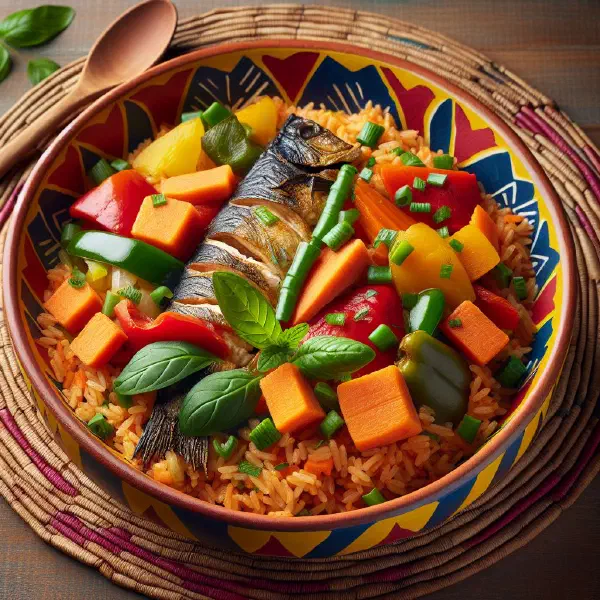
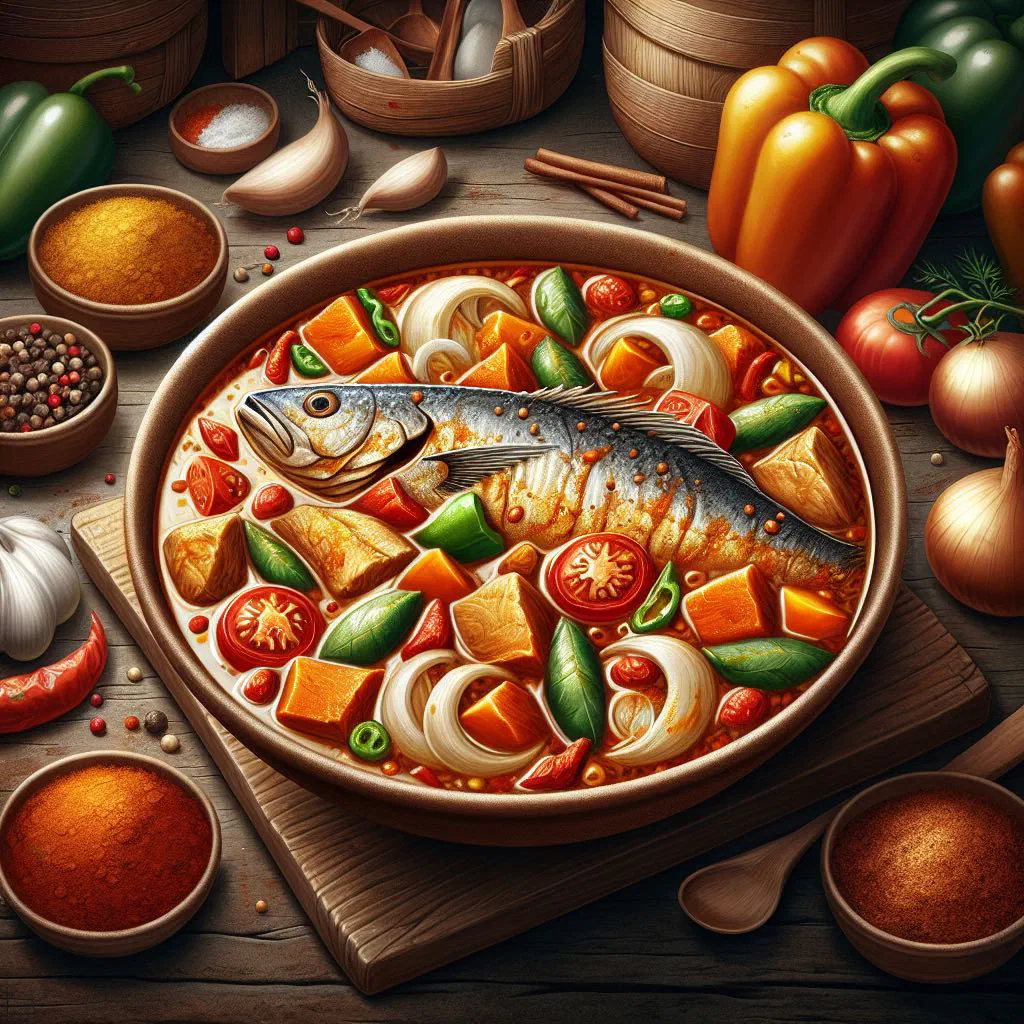
Dahomey Fish Stew takes its name from the kingdom that ruled this coast until 1894. Fish simmers in a base of tomato, onion, ginger and pepper, cooked in palm or groundnut oil. It is quick, it is coastal, and it is served with something starchy to soak it up.
About Dahomey Fish Stew
Benin has a short Atlantic coastline and a long lagoon system behind it, and fish is central to how the south of the country eats. This stew is the everyday treatment: aromatics fried down, tomatoes cooked to a thick base, fish poached in it for ten minutes.
It is named for the Kingdom of Dahomey, whose capital Abomey is now a UNESCO site.
Ingredients (serves 1–2)
- 300 g fresh fish (tilapia or sea bream, for example)
- 2 tablespoons oil (palm oil or groundnut oil)
- 1 onion, chopped
- 2–3 cloves of garlic, crushed
- 1 piece of ginger, grated
- 1 green pepper, diced
- 2 tomatoes, chopped
- 1 teaspoon cumin
- 1 teaspoon paprika
- Salt and pepper to taste
- Fresh herbs (parsley or coriander), to garnish
Shopping for the ingredients
Whole fish gives more flavour than fillets, and tilapia is what is actually eaten in Benin. Red palm oil, sold as zomi when it has been spiced and cooked, is the authentic fat and gives the dish its colour. Groundnut oil is the everyday alternative and perfectly good.
Preparing the dish
Season the fish with salt and a little of the paprika and leave it fifteen minutes. Cook the tomato base down properly before the fish goes in, until the oil separates and floats at the edges. That takes longer than most recipes admit, usually ten to twelve minutes rather than five.
Step-by-step instructions
- Heat the oil in a large pan over a medium heat.
- Add the onions, garlic and ginger and fry until golden brown.
- Stir in the pepper and tomatoes and let everything simmer for about 5 minutes.
- Season the mixture with cumin, paprika, salt and pepper.
- Add the pieces of fish and cook over a low heat for 10–15 minutes, until the fish is cooked through and tender.
- Garnish with fresh herbs and serve hot.
Gluten-free / lactose-free version
The stew contains no gluten and no dairy. Served with fufu or rice rather than bread, the whole meal is suitable without change.
Tips for vegans and vegetarians
The tomato and ginger base works well without fish. Aubergine, mushrooms or black-eyed peas take its place, and a piece of dried seaweed restores some of the marine note. Beninese cooking has plenty of genuinely vegan dishes, including sauce d’arachide.
More tips and tricks
Do not stir once the fish is in. Shake the pan by the handle instead, or the fillets break up. Cook the tomato base until the oil separates, which is the visual sign across West African cooking that a sauce is ready. And use a whole scotch bonnet, pierced once, rather than chopped chilli if you want aroma more than heat.
Adapting the recipe to your taste
Okra added in the last five minutes thickens the sauce. Smoked fish alongside the fresh gives real depth and is common. Moyo sauce, the raw tomato and onion relish, is the standard accompaniment.
Ingredient substitutions
Any firm white fish works. Sunflower oil with a teaspoon of paprika stands in for palm oil’s colour if not its flavour. Tinned tomatoes are fine out of season.
Drink pairing ideas
Bissap, the hibiscus drink, is the West African standard and its acidity suits the oily sauce. Cold beer works. Ginger juice does the same job as bissap with more heat.
Serving and presentation ideas
Serve it in a wide bowl with fufu, pounded yam or rice, and let people tear off pieces of the starch to scoop up the sauce. Moyo sauce and extra chilli go on the table.
A bit of history
The Kingdom of Dahomey ran from the seventeenth century until French conquest, and its cooking absorbed Portuguese and Brazilian influence through the Atlantic trade in both directions. Tomatoes and chillies came that way. The stew sits within Beninese cuisine alongside aloko and the palm nut sauce banga.
More recipe ideas
Summary: Dahomey Fish Stew
Dahomey fish stew is fish poached in a base of tomato, onion, ginger and pepper cooked in palm oil. Cook the base until the oil separates, then add the fish and stop stirring.