National Dish Benin: Fufu (Recipe)
In this article
Discover Fufu, the soft, starchy side dish that sits at the very heart of Beninese cooking. Pounded from yam or plantain until smooth and pillowy, it is the perfect partner for the rich sauces and stews of West Africa. Made with just a handful of ingredients and a little patience, it turns any meal into a shared, sociable occasion, and brings the flavours of Benin straight to your own kitchen.
About Fufu
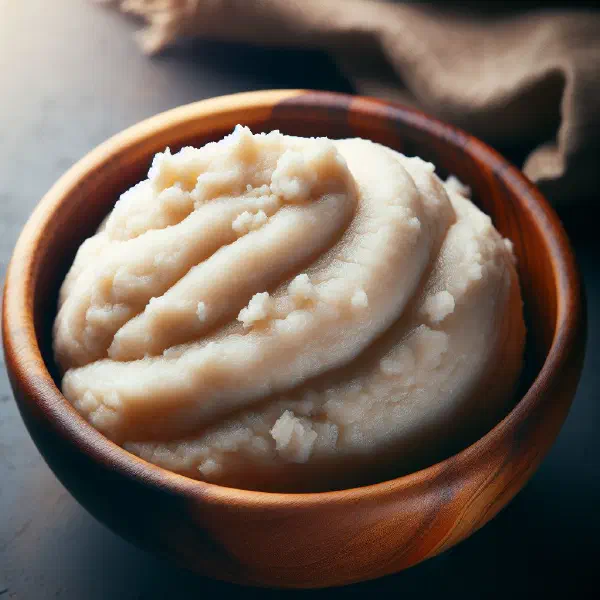
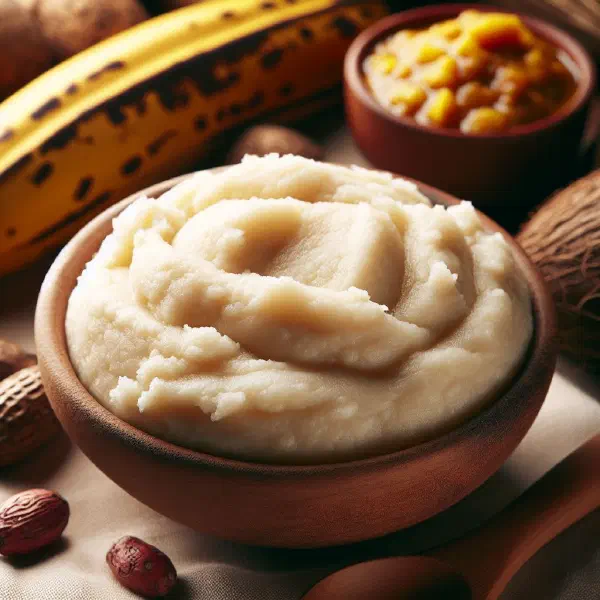
Fufu is a traditional West African side dish that plays a particularly important role in Benin. This starchy staple is made mainly from yam or plantain, boiled until tender and then pounded to a smooth mass. Its mild flavour and springy texture make Fufu an ideal companion to a wide variety of sauces and stews. It is especially prized for the way it soaks up the aromas of whatever it is served with, much like the pounded staples behind Telibo and Akassa.
Ingredients (serves 1–2)
- 500 g yam or plantain
- Water, for boiling
- A pinch of salt (optional)
Shopping for the ingredients
When shopping for Fufu, it is worth choosing good-quality yam or plantain. Check that the roots are free of dark patches or bruises, as these can be a sign of overripeness. You will find these ingredients in many supermarkets and African or Asian grocery shops, and market stalls are often an excellent source too. Look out for fresh, seasonal produce to guarantee the best possible flavour.
Preparing the dish
Before you make Fufu, it pays to prepare the ingredients properly. Start by peeling the yam or plantain and cutting it into evenly sized pieces. This ensures everything cooks through at the same rate and gives you a better final consistency. Take a little care over these preparatory steps and your Fufu will turn out all the better for it.
Step-by-step instructions
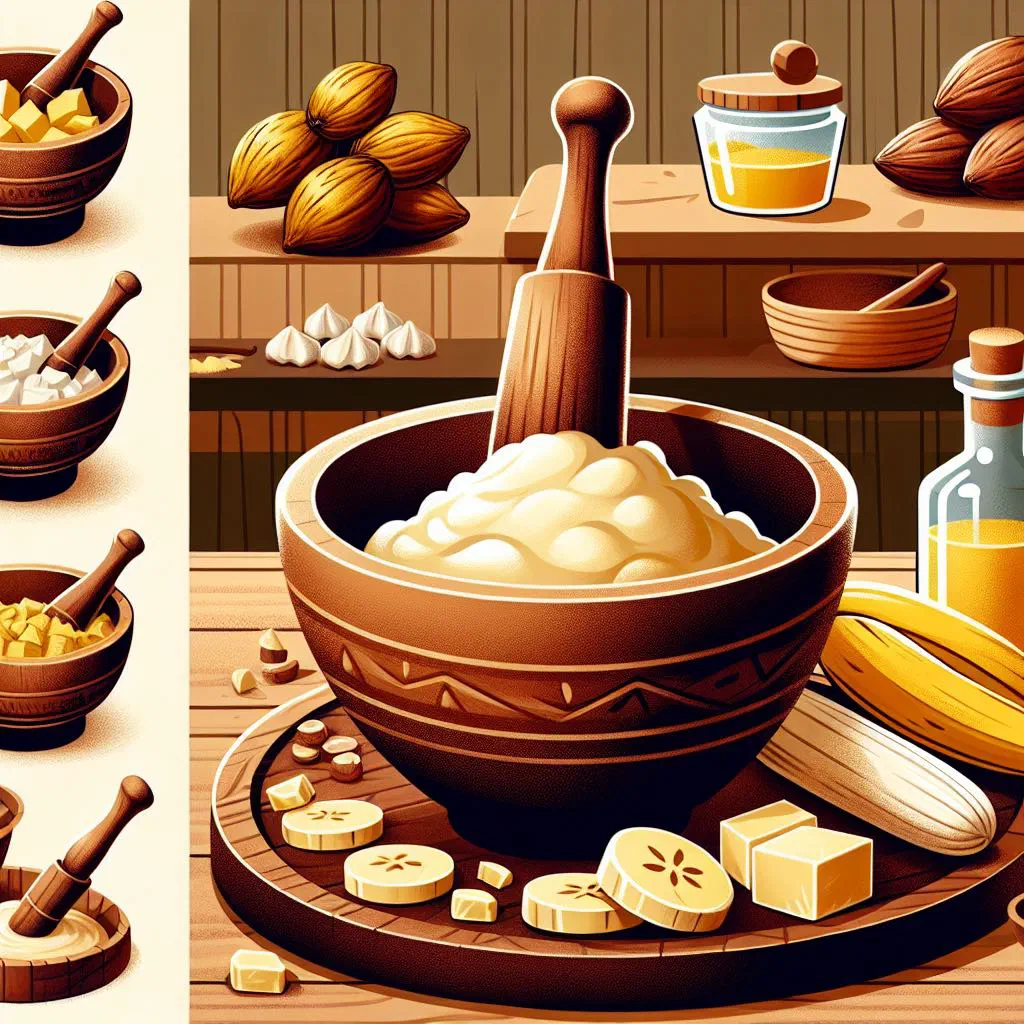
- Bring the peeled yam or plantain to the boil in a large pan of water.
- Cook over medium heat for 20–30 minutes, until the pieces are soft.
- Drain off the water and tip the cooked pieces into a bowl.
- Work them with a potato masher or a food processor into a smooth, supple mass.
- Optional: add a pinch of salt and mix through thoroughly.
Gluten-free / lactose-free version
Fufu is ideal for anyone with a gluten or lactose intolerance, as it is an entirely plant-based side dish. The ingredients consist solely of yam or plantain, both of which are naturally gluten-free and lactose-free. That means people with particular dietary needs can enjoy Fufu without a moment’s worry about intolerances.
Tips for vegans and vegetarians
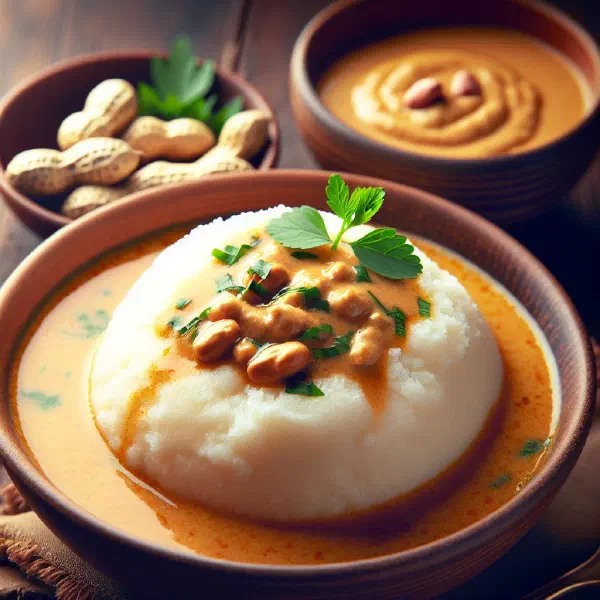
For vegans and vegetarians, Fufu is an excellent choice, since it is made purely from plant ingredients. Serve it with plant-based sauces and stews to create a balanced, nourishing meal, a peanut-based Sauce d’Arachide is a classic match. To boost the nutritional value, stir extra vegetables, pulses or tofu into the accompanying sauce. This makes the dish not only tastier but considerably more sustaining.
More tips and tricks
The most important ingredient for perfect Fufu is patience. Make sure the roots are thoroughly cooked so you reach the right consistency, and work the mass well to avoid any lumps. If you are cooking Fufu for a larger group, simply scale up the quantities and use a bigger pan. Working in batches also helps keep the texture even.
Adapting the recipe to your taste
The great thing about Fufu is how easily it adapts to individual preferences. Pair it with different sauces or starters to create entirely new flavour combinations. You can experiment with the base ingredients too, sweet potato, for instance, makes an interesting variation. That flexibility is what makes Fufu such a versatile and rewarding thing to cook.
Ingredient substitutions
If you cannot find yam, you can make Fufu from other starchy staples such as sweet potato or cassava, the same root that gives Bâton de Manioc its character. These alternatives will shift the flavour and texture slightly, so adjust the cooking time accordingly, since different ingredients need different times in the pan.
Drink pairing ideas
A number of drinks go beautifully with Fufu. Traditionally it is often served with fresh palm wine, a common mealtime accompaniment across West Africa. Alternatively, a fragrant ginger tea or a homemade lemonade will support the flavours nicely. For a fruity non-alcoholic option, a chilled smoothie or a hibiscus infusion such as Bissap rounds off the meal perfectly.
Serving and presentation ideas
Presentation can add a great deal to the Fufu experience. Serve it on a large platter to emphasise the communal nature of the meal, or shape small portions into neat balls and arrange them in individual bowls. Garnish with fresh herbs or pieces of vegetable to give the dish an attractive, inviting look. A brightly coloured sauce alongside provides a lovely contrast.
A bit of history
Fufu has a long history in West African cooking and is an important staple in many countries, Benin among them. Making and eating Fufu is closely bound up with cultural traditions passed down through the generations. In many communities it is regarded not merely as food but as a symbol of hospitality and togetherness. In that sense Fufu contributes as much to cultural identity and social life as it does to the table, and it remains a cornerstone of Beninese cuisine.
More recipe ideas
Summary: Fufu
In short, Fufu is a tasty and versatile side dish that plays a central role in West African cooking. With good-quality ingredients and the right technique, you can recreate this delicious staple at home with very little fuss. Experiment with different sauces and pairings to get the most out of it. It is a dish that pleases the palate while also offering a genuine connection to the traditions of West Africa.