National Dish Benin: Mafe (Recipe)
In this article
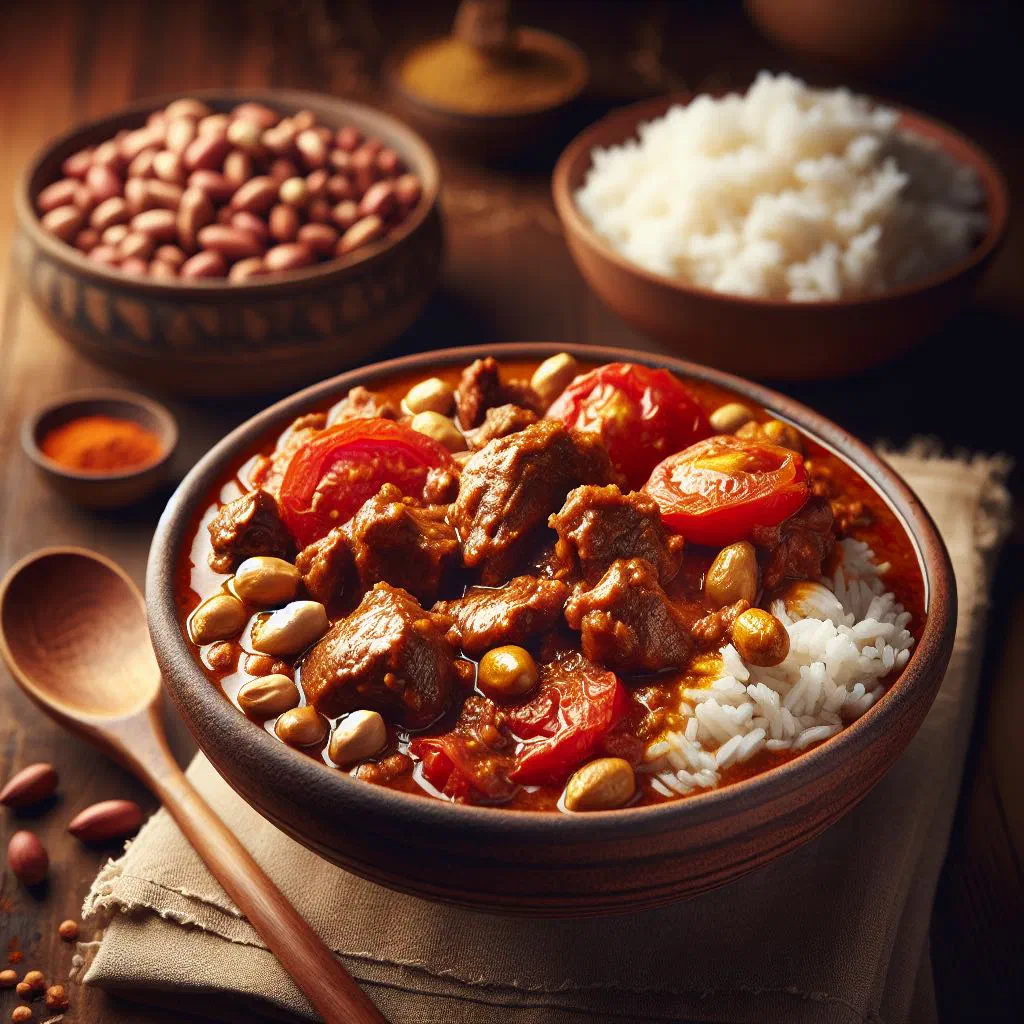
Meet Mafe, the creamy peanut stew that sits at the very heart of Benin’s home cooking. Tender meat and bright, seasonal vegetables simmer slowly in a rich peanut butter sauce until everything turns silky and deeply savoury. It is generous, warming food that fills the kitchen with a wonderful nutty aroma, and it tastes best spooned over fluffy rice or scooped up with soft fufu. One pot, one long simmer, and a proper taste of West Africa on the table.
About Mafe
Mafe is a traditional Beninese dish known for its deep, layered flavour and its wonderfully creamy texture. At its core it is a peanut stew that brings together tender meat and fresh vegetables in perfect balance. The peanuts are not only a valuable source of protein. They also give the dish its unmistakable character. Enjoy Mafe with rice or with a bowl of Fufu to appreciate the full range of its flavour.
Ingredients (serves 1–2)
- 250 g beef or chicken breast
- 150 g peanut butter (unsweetened)
- 1 onion
- 2 cloves of garlic
- 1 carrot
- 1 small courgette
- 400 ml vegetable or chicken stock
- 1 tablespoon vegetable oil
- Salt and pepper to taste
- Fresh parsley, to garnish
Shopping for the ingredients
Most of what you need for Mafe can be found in any well-stocked supermarket or at a specialist African grocery. When buying the peanut butter, make sure it is unsweetened so the pure peanut flavour comes through rather than a sugary note. Fresh organic vegetables improve the taste and the nutritional value of the finished stew. And do not forget fresh herbs such as parsley, which give the dish a final lift.
Preparing the dish
Before you start cooking, it pays to have every ingredient ready and the steps clear in your mind. Begin by cutting the meat into evenly sized pieces so that it cooks through at the same rate. The vegetables should likewise be washed and chopped small, which keeps the cooking time consistent across the pot. Trust your own preferences when choosing the vegetables, because Mafe adapts happily to whatever you have.
Step-by-step instructions
- Heat the oil in a large pan and fry the onion and garlic until soft.
- Add the meat and brown it lightly on all sides.
- Stir in the chopped vegetables, the peanut butter and the stock, mixing well.
- Bring to the boil, then lower the heat and simmer for 30–40 minutes until the meat is tender.
- Season with salt and pepper and garnish with fresh parsley.
Gluten-free / lactose-free version
Mafe is naturally gluten-free and lactose-free, since it contains neither gluten-bearing ingredients nor dairy. That makes it an excellent choice for anyone living with food intolerances. Do check, though, that the stock you use is certified gluten-free. If you want to be completely sure, read through the labels of every packaged ingredient to rule out hidden sources of gluten or lactose.
Tips for vegans and vegetarians
For a vegan or vegetarian Mafe, simply swap the meat for tofu or another plant-based protein. The recipe also works beautifully as a purely vegetable dish built around pulses, much like the bean-based Ata. Make sure that both the peanut butter and the stock are free from animal products. These small adjustments show just how flexible Mafe is and how easily it fits different ways of eating.
More tips and tricks
To deepen the flavour of Mafe, reach for a few extra spices and aromatics. Ginger or chilli add another dimension entirely, while vegetables such as sweet potato or peppers bring new textures and colours to the pot. A long, gentle simmer is the real secret: it lets the flavours mingle and gives the sauce its rounded, full-bodied taste.
Adapting the recipe to your taste
One of the great strengths of Mafe is how readily it bends to personal preference. Like it hot? Add more chilli or a heavier hand with the pepper. Prefer it mild? Simply leave the fiery spices out. The choice of meat personalises the dish too. Try lamb, beef or even seafood in the style of a Dahomey Fish Stew for a very different result. Every batch becomes something of its own.
Ingredient substitutions
If you do not have every ingredient to hand, there are plenty of alternatives. Vegetable stock in place of chicken stock turns the stew fully plant-based, and almond butter can stand in for peanut butter with a similar consistency and a comparable richness. The vegetables, meanwhile, can follow the seasons and whatever the market offers, which keeps the dish fresh and varied all year round.
Drink pairing ideas
A good Mafe calls for refreshing drinks. A light, cold lager or a glass of rosé sits beautifully alongside the creamy, savoury sauce. For soft options, fresh fruit juices work wonderfully, as does homemade iced tea or a chilled hibiscus Bissap, all of which lighten the palate between mouthfuls. The right glass makes the whole meal that much more enjoyable.
Serving and presentation ideas
Presentation matters with Mafe and can do a great deal to whet the appetite. Serve it in handsome deep bowls and finish with fresh parsley or a scattering of roasted peanuts for decoration. Another approach is to spoon the stew over a colourful bed of rice or fufu, which pleases the eye as much as the palate. Small touches like these turn a simple stew into something festive.
A bit of history
Mafe has its roots in West African cooking and is especially popular in Benin and the countries around it. It began as a dish of farming communities, made from what was readily available, peanuts, vegetables and whatever meat there was. Over time it became a symbol of southern West African cooking, and its many variations reflect the cultural range and culinary tradition of the region. It stands today among the great classics of Beninese cuisine.
More recipe ideas
Summary: Mafe
Mafe is a distinctive and thoroughly delicious Beninese dish that wins people over with its creamy texture and its intense peanut flavour. It offers endless scope for adapting to different diets and a genuine window onto West African cooking. Mafe is a real pleasure at the table. Let the variety of its ingredients and the simplicity of its method convince you, and enjoy every spoonful of this wonderfully flavourful stew.