National Dish Benin: Tchantchanga (Recipe)
In this article
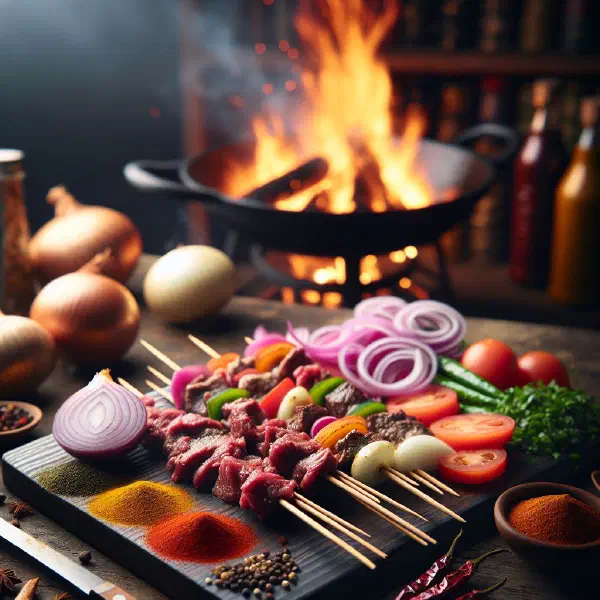
Tchantchanga are the grilled beef skewers that scent every evening street in Benin: cubes of beef rubbed with a dry mixture of roasted ground peanuts, chilli and ginger, then grilled hard over charcoal until the coating toasts and the meat stays juicy. They are handed over on the stick with raw onion and extra chilli powder — no plate, no cutlery, no ceremony.
About Tchantchanga
Tchantchanga are spiced beef skewers, among the most popular grilled specialities of West Africa. The meat is coated in a mixture of ground roasted peanuts and spices and cooked over an open flame, which toasts the peanut crust while the beef inside remains tender. Served straight from the grill with a sharp onion and chilli garnish, they belong to the bright street grilling culture found from Benin across to Nigeria, where the same idea appears as suya.
Ingredients (serves 1–2)
- 300 g beef fillet or rump, cut into cubes
- 3 tablespoons roasted peanuts, finely ground
- 1 teaspoon chilli powder or cayenne pepper
- 1 teaspoon ground ginger
- 1 teaspoon garlic powder
- 1 tablespoon vegetable oil
- Salt, to taste
- 1 red onion, sliced into rings, to serve
Shopping for the ingredients
A tender cut matters, since the cooking is fast and fierce, fillet, rump or sirloin all work. Grind the peanuts yourself if you can; pre-ground peanut flour is often defatted and lacks richness. Roast them briefly in a dry pan first for a noticeably deeper flavour, and keep the grind coarse rather than powdery.
Preparing the dish
Cut the beef into even cubes of around 3 cm so they cook at the same rate, and thread them onto skewers, leaving a little space between pieces. Mix the ground peanuts with the chilli, ginger, garlic powder and salt. Soak wooden skewers in water for half an hour so they do not burn, and get the coals down to steady, glowing heat.
Step-by-step instructions
- Cut the beef into cubes and thread onto soaked skewers.
- Mix the ground peanuts with the chilli, ginger, garlic powder and salt.
- Brush the skewers lightly with oil.
- Roll them in the peanut-spice mixture, pressing so it adheres.
- Grill over hot coals for 3–4 minutes per side, turning once.
- Dust with a little more of the spice mixture as they come off the heat.
- Serve immediately with raw onion rings and extra chilli.
Gluten-free / lactose-free version
Tchantchanga is naturally free from both gluten and lactose, beef, peanuts and spices contain neither. It is one of the easiest street foods to serve to guests with either intolerance, requiring no adaptation at all.
Tips for vegans and vegetarians
The peanut-spice crust works remarkably well on other things: thick slices of king oyster mushroom, firm tofu or halloumi all take the coating and grill beautifully. Brush with oil, coat generously and grill hot, the flavour comes almost entirely from the spice mixture rather than the meat.
More tips and tricks
The grill must be genuinely hot, since the pleasure lies in the contrast between a toasted crust and rare-to-medium beef. Watch closely: ground peanut burns quickly once the fat starts rendering. And apply a second dusting of the spice mixture off the heat, which is exactly what street vendors do.
Adapting the recipe to your taste
More chilli is entirely authentic, Beninese versions are usually assertive. A pinch of ground cloves or a little bouillon powder in the spice mix is common. The same treatment works on chicken, goat or lamb, all of which turn up on West African grills.
Ingredient substitutions
Groundnut flour substitutes directly for freshly ground peanuts. Fresh grated ginger and garlic can replace the powders, though the coating will be wetter and less crisp. Any well-marbled beef works; even skirt steak is excellent if sliced across the grain.
Drink pairing ideas
A cold lager is what most people drink alongside grilled skewers in Benin. Bissap, chilled hibiscus juice, and ginger juice are the classic alcohol-free options, and their sharpness balances the rich peanut crust. Palm wine is the traditional choice at gatherings.
Serving and presentation ideas
Serve tchantchanga on the skewer, piled on a plate or wrapped in paper, with raw onion rings, sliced tomato and a small mound of extra chilli-peanut mix for dipping. It is finger food, eaten standing up, ideally outdoors near the grill it came from.
A bit of history
Grilled, spice-crusted skewers are a signature of the Sahel and West Africa, spread along trade routes by Hausa traders whose suya is the best-known version. In Benin the tradition is firmly established in the night markets, where grillers work small charcoal braziers into the early hours. Tchantchanga offers a genuine window onto Beninese cuisine and its street food culture.
More recipe ideas
Summary: Tchantchanga
Tchantchanga are beef skewers crusted in roasted ground peanut, chilli and ginger and grilled hard over charcoal. Fifteen minutes of work, four minutes on the fire, and one of West Africa’s greatest street foods lands on your plate.