National Dish Bhutan: Hoentay (Recipe)
In this article
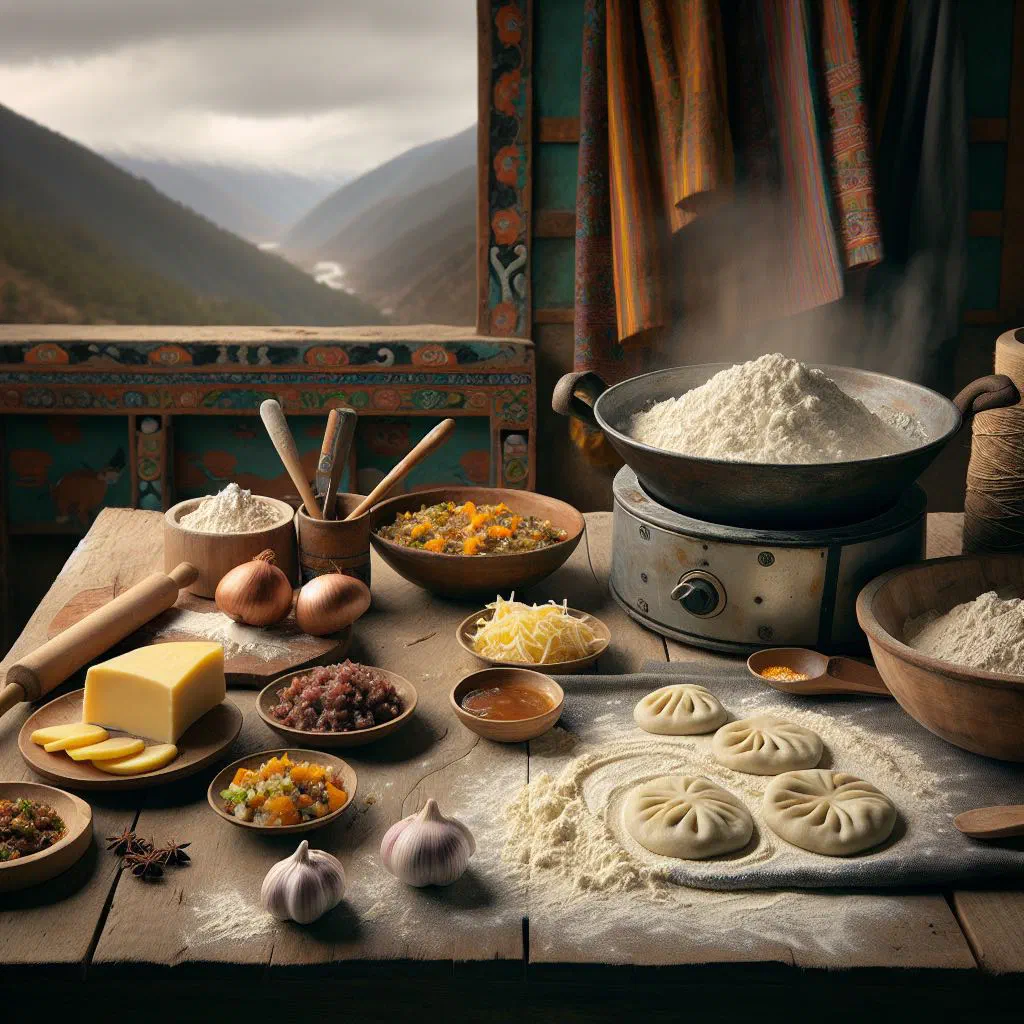
Discover Hoentay, the savoury Himalayan dumplings that Bhutan holds close to its heart. Each little parcel hides a filling of fresh leafy greens, crumbly cheese and gently warming spices, wrapped in a soft dough and cooked until golden. They are as welcome as a quick snack as they are at the centre of a family meal, and they bring the clean, mountain flavours of Bhutan straight to your own table.
About Hoentay
Hoentay is a traditional Bhutanese speciality that enjoys enormous popularity right across the region. These savoury dumplings are a pleasure to eat and a genuinely wholesome choice. A filling of fresh leafy greens, cheese and carefully chosen spices turns every mouthful into something memorable. Hoentay can be served as a snack or as a main course, which makes it a fine choice for almost any occasion, much like its better-known cousin, the Momo.
Ingredients (serves 1–2)
- 250 g plain flour
- 100 g fresh leafy greens (spinach or chard, for example)
- 100 g cheese (Bhutanese cheese or feta)
- 1 small onion
- 2 cloves of garlic
- Salt and pepper, to taste
- Olive oil or butter, for frying
Shopping for the ingredients
Tracking down the right ingredients for hoentay is part of the fun. Most of them, fresh leafy greens and cheese in particular, are easy to find in a well-stocked supermarket or at a local market. Choose produce that is fresh and of good quality, as this makes all the difference to the finished flavour. If you live somewhere the more specialised items are hard to come by, close alternatives will serve you perfectly well.
Preparing the dish
Before you start assembling your hoentay, give yourself plenty of time for the preparation. The filling can be made well in advance, which leaves you free to enjoy the cooking rather than rush it. Chop the greens finely and cook them briefly before mixing them with the cheese. This deepens the aroma considerably and gives the filling a much better texture.
Step-by-step instructions
- Combine the flour with a pinch of salt in a bowl and add water a little at a time until you have a smooth, pliable dough.
- Leave the dough to rest for about 30 minutes.
- Finely chop the onion and garlic and fry them gently in a pan.
- Add the leafy greens and cook briefly until they have wilted down.
- Crumble in the cheese, stir it through the greens and season with salt and pepper.
- Roll the dough out thinly and cut out small circles.
- Spoon the filling into the centre of each circle, fold the edges over and seal them firmly.
- Heat oil or butter in a pan and fry the hoentay until golden brown on both sides.
Gluten-free / lactose-free version
For a gluten-free version of hoentay, simply use gluten-free flour, taking care that the remaining ingredients are gluten-free as well. For a lactose-free result, reach for lactose-free cheese or a plant-based cheese, most of which are made from nuts or soya. Adjustments like these mean that people with particular dietary needs can enjoy the dish just as much as everyone else.
Tips for vegans and vegetarians
Hoentay adapts beautifully for vegans: replace the cheese with a blend of puréed cashews or another plant-based alternative. You can also bulk out the filling with extra vegetables to ring the changes. Keep the dough vegan too by using plain water rather than eggs. With these small tweaks the dish loses none of its character while suiting every kind of diet, the same flexibility you find in Kewa Datshi.
More tips and tricks
There are a few tips and tricks worth knowing to get the best from your hoentay. Knead the dough thoroughly so it reaches the right consistency. Keep an eye on the heat while frying, as the dumplings can catch on the underside surprisingly quickly. And do experiment with different fillings by varying the vegetables or the spices. Small changes like these can transform the flavour entirely.
Adapting the recipe to your taste
Adapting the hoentay recipe to your own preferences could hardly be easier. Feel free to experiment with the vegetables and to add whichever ingredients you like best. You can also dial the heat up or down with hot spices or fresh chillies, the approach that gives Ema Datshi its fiery reputation. In this way the dish ends up tasting exactly as you want it to.
Ingredient substitutions
If you do not have every ingredient for hoentay to hand, there are plenty of alternatives. You might choose a different cheese to vary the flavour, or use frozen vegetables in place of fresh leafy greens. The dough, too, can be made with other flours, wholemeal gives it a pleasantly rustic note. Remember that variations often lead to interesting new discoveries at the table.
Drink pairing ideas
A number of drinks go well with hoentay. Traditionally you might serve a simple tea, such as the buttery Suja, or a Bhutanese beer. For an alcohol-free option, fresh mint tea is excellent and complements the flavours of the filling nicely. A fruity lemonade is another good choice if you want something brighter alongside the meal.
Serving and presentation ideas
How you present your hoentay can lift the whole eating experience. Serve the dumplings on a colourful platter and garnish them with fresh herbs such as coriander or parsley. A little chilli dip or a fresh sauce on the side adds both colour and contrast. We eat with our eyes first, and an inviting arrangement does a great deal to sharpen the appetite.
A bit of history
The roots of hoentay reach deep into Bhutanese culture. These savoury dumplings are a fixture of the traditional Bhutanese cuisine and reflect the country’s rich culinary history. They are often served at festivals and on special occasions, bringing people together around a shared table. Hoentay represents the enduring spirit of Bhutan and a genuine appreciation for fresh, local produce.
More recipe ideas
Summary: Hoentay
Hoentay is a delicious and versatile dish that captures the flavours of Bhutan. The combination of fresh vegetables, cheese and warming spices offers a taste experience all of its own, and it works equally well as a snack or as a main course. With straightforward adaptations for vegan and gluten-free diets, it is a recipe almost anyone can enjoy. Give it a try and let the generosity of traditional Bhutanese cooking win you over.