National Dish Bolivia: Salteñas (Recipe)

In this article
Salteñas are baked pastries filled with a stew that is liquid when you bite into it. That is the difficulty and the point. The filling is set with gelatine, chilled solid, sealed in dough, and melts back to soup in the oven. Eating one without spilling it takes practice.
About Salteñas
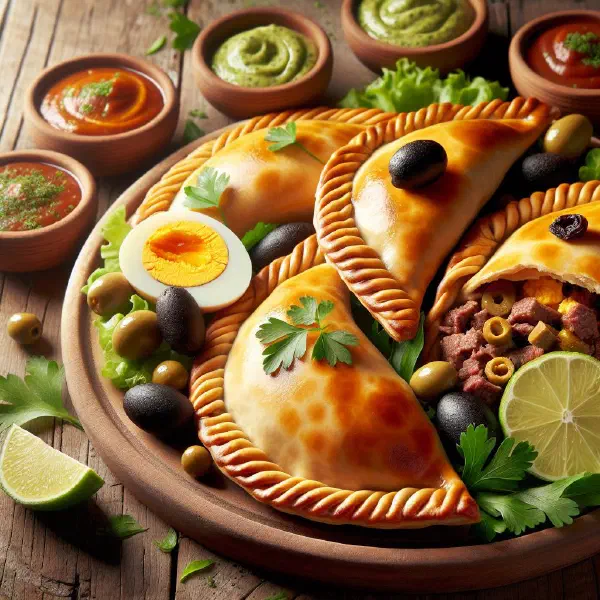
Salteñas are Bolivia’s mid-morning food. They are sold from ten until they run out, usually by noon, and eating one in the afternoon marks you out. The filling is beef or chicken with potato, peas, olive and a slice of hard-boiled egg, in a broth thickened just enough to hold.
The braided seam along the top is not decoration. It is the seal, and a badly braided salteña leaks.
Ingredients (serves 1–2)
- 300 g plain flour
- 75 g butter
- 1 egg
- 100 ml water
- 1/2 teaspoon salt
- 200 g minced beef
- 1 small onion
- 1 clove garlic
- 1 small potato
- 50 g peas (frozen or fresh)
- 1 hard-boiled egg
- 1/2 teaspoon cumin
- 1/2 teaspoon paprika
- Salt and pepper, to taste
- A little sugar (for the dough)
- Stock or gelatine (optional, for the sauce)
Shopping for the ingredients
The gelatine is not optional if you want a real salteña. Two leaves, or a teaspoon of powder, set into the cooled filling is what makes it work. Ají amarillo paste, sold in Latin American shops, gives the proper colour and a fruity heat that paprika only approximates.
Preparing the dish
Make the filling the day before. It has to be chilled solid, and that means several hours in the fridge at minimum. Warm or even cool filling will soak through the dough while you shape it. The dough itself needs only thirty minutes of rest.
Step-by-step instructions
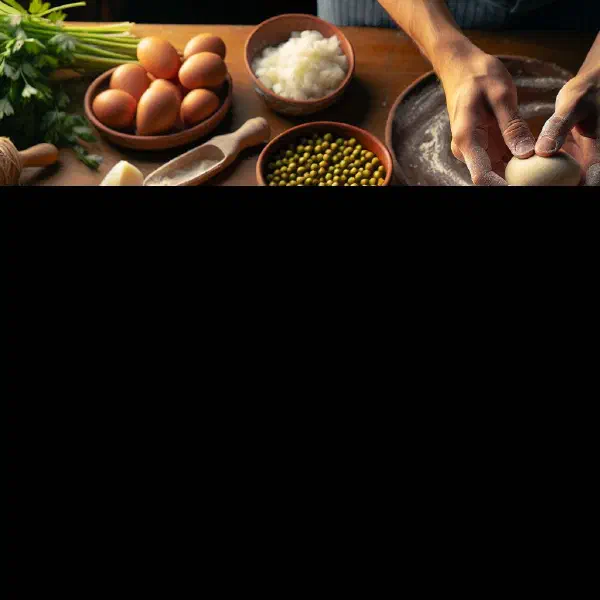
- Mix the flour, salt and sugar together in a bowl.
- Work the cold butter in small pieces, along with the egg, into the flour mixture.
- Gradually add the water and knead until you have a smooth, supple dough. Cover and leave to rest for 30 minutes.
- While the dough rests, prepare the filling. Gently sauté the finely diced onion and garlic until soft and translucent. Add the minced beef and fry until nicely browned.
- Stir in the diced potato, peas, cumin, paprika, salt and pepper, then let the mixture simmer briefly.
- Divide the dough into equal portions, roll each into a thin circle and fill with the meat mixture and a piece of the hard-boiled egg.
- Fold the circles into half-moons and press the edges firmly together to seal. If you like, crimp the edges decoratively for the classic look.
- Bake the salteñas at 200°C for around 20–25 minutes, until golden brown. For an attractive shine, brush the tops with an egg-yolk-and-milk wash before baking.
Gluten-free / lactose-free version
A gluten-free pastry blend works but is more fragile and harder to seal, so expect some leakage. For lactose-free, use a firm plant margarine in the dough and glaze with plant milk. The filling itself contains no dairy.
Tips for vegans and vegetarians
Ají de tofu makes a good filling in the same pastry, and cheese empanadas are the standard vegetarian alternative. For a vegan salteña, agar replaces the gelatine and sets firmer, so use slightly less.
More tips and tricks
Chill the filling until it is properly solid and spoon it in cold. Seal the seam with a wet finger before braiding. Bake on a preheated tray at a high heat so the base sets before the filling melts. Every one of those steps exists to stop the same failure, which is the filling escaping.
Adapting the recipe to your taste
Chicken makes salteñas de pollo, which is at least as common as beef. Raisins and a black olive are traditional inclusions and divide people. More ají makes them properly Bolivian.
Ingredient substitutions
Agar-agar replaces gelatine for a vegetarian set. Paprika with a pinch of cayenne stands in for ají amarillo. Ready-made empanada discs save time but are usually too thin to hold the liquid.
Drink pairing ideas
Chicha morada, the purple corn drink, is the traditional partner. Coffee is what most people have with them. A cold Paceña beer works if it is late enough.
Serving and presentation ideas
Eat them standing, holding them upright with the braided seam at the top, and bite a small hole in one end first to drink the broth before it runs down your wrist. Bolivians will demonstrate this if asked. A bowl of llajwa on the side.
A bit of history
The name is usually traced to Juana Manuela Gorriti, an Argentine writer exiled to Bolivia in the nineteenth century, who came from Salta and sold pastries to support herself. Whether or not that is exact, the dish is now thoroughly Bolivian and belongs to Bolivian cuisine alongside cuñapé and tamales.
More recipe ideas
Summary: Salteñas
Salteñas are baked pastries with a filling set firm with gelatine that melts back to broth in the oven. Chill the filling solid, seal the seam properly, and bite the end first.