National Dish Brunei: Putu Piring (Recipe)
In this article
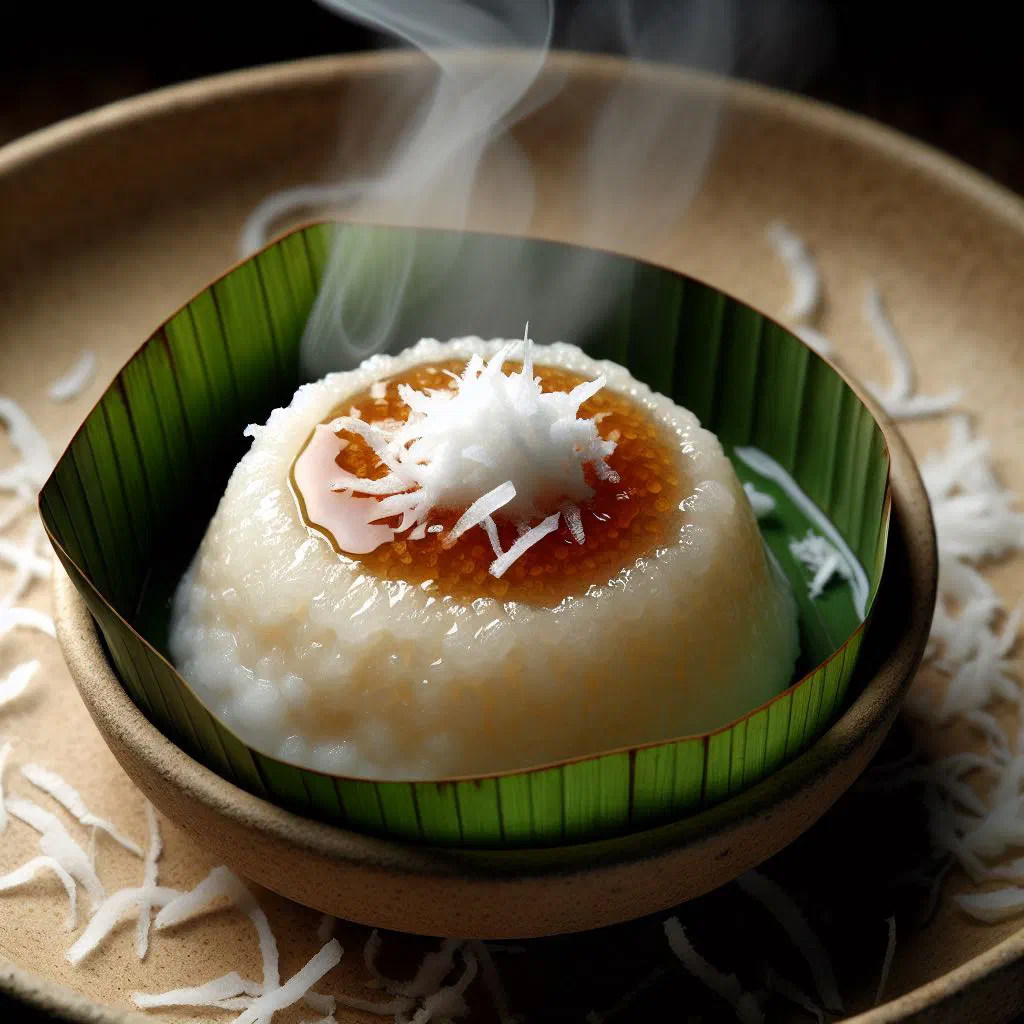
Meet Putu Piring, one of Brunei’s most treasured sweet treats. These soft, steamed rice cakes hide a molten centre of palm sugar and are cradled in fragrant pandan leaves that lend both aroma and a pretty finish. Light, gently sweet and utterly moreish, they turn up at festivals and family gatherings alike. Bring a little of Brunei’s street-side charm into your own kitchen with this simple, comforting classic.
About Putu Piring
Putu Piring are traditional steamed rice cakes that hail from Brunei, prized for their soft, pillowy texture and their appealing filling of palm sugar. Each cake is presented on a fresh pandan leaf, which gives it a wonderful fragrance as well as an attractive look. Enjoyed as both a snack and a dessert, Putu Piring is often shared at festivities and on special occasions, making it a familiar and much-loved part of Bruneian sweet cookery.
Ingredients (serves 1–2)
- 100 g rice flour
- 50 g palm sugar, chopped
- 1 tsp pandan extract, or a few pandan leaves
- Water, as needed
- A pinch of salt
Shopping for the ingredients
The ingredients for Putu Piring are easy to find in most Asian grocery shops or online. Palm sugar is the essential element that gives the cakes their characteristic sweetness, while rice flour forms the base of the dough. Pandan extract provides the signature aroma and green colour. If you would rather use fresher ingredients, pandan leaves are an excellent choice, though they can be a little harder to track down. Much like the fragrant leaves that flavour a good Kueh Seri Muka, a bit of pandan goes a long way.
Preparing the dish
To begin, it is important to prepare all the ingredients carefully. The rice flour should be sifted into a bowl to avoid any lumps. The palm sugar can be chopped into small pieces so that it melts more easily later on. If you are using pandan leaves, bruise them first with a mortar to release their fragrant aroma before you start.
Step-by-step instructions
- In a bowl, combine the rice flour with a pinch of salt and the pandan extract.
- Slowly add water until you have a thick but lump-free mixture.
- Place a few small pieces of chopped palm sugar in the centre of each portion of dough.
- Wrap the dough portions in the pandan leaves and set them in a steamer basket.
- Steam for about 15–20 minutes, until the dough is cooked through.
- Once steamed, carefully unwrap the cakes and serve.
Gluten-free / lactose-free version
Putu Piring is naturally gluten-free as long as you use rice flour, and it contains no lactose. That makes it a perfect option for anyone with a gluten intolerance or lactose intolerance. It is always worth checking the labels of all your ingredients before buying, to be sure they contain no hidden allergens.
Tips for vegans and vegetarians
Putu Piring is a vegan and vegetarian pleasure, as every ingredient is plant-based. Just make sure the palm sugar and rice flour contain no animal products. You can also experiment with different fillings, such as grated coconut or fruit, to vary the flavour. Do not forget to elevate the presentation by scattering fresh herbs or edible flowers on the plate.
More tips and tricks
For the best results, stick closely to the quantities listed. It also helps to use a proper steamer to ensure an even distribution of heat. Store any leftovers in an airtight container in the fridge, where they will stay fresh and delicious. Another option is to re-steam them briefly to restore their soft texture before serving.
Adapting the recipe to your taste
If you enjoy experimenting, the basic Putu Piring recipe is easy to adapt. The palm sugar can be swapped for other sweeteners, provided the consistency stays the same. You can also add flavourings such as vanilla or cardamom to create a signature taste. Be creative with the fillings too, from grated coconut to chocolate chips, there are no limits to what you can try.
Ingredient substitutions
Several ingredients in Putu Piring can be swapped without spoiling the quality of the dish. The sugar can be replaced with coconut blossom sugar or honey, depending on your preference. Instead of pandan extract you can use a little green food colouring to keep the colour, though the characteristic flavour will be lost. For a strictly gluten-free version, you could also experiment with a special gluten-free flour blend.
Drink pairing ideas
Putu Piring pairs beautifully with a range of drinks. A classic cup of tea is the simplest choice, as its gentle flavour complements the sweetness of the cakes. Coconut water is a refreshing option that highlights their tropical character. For something a little special, you could also serve a fruity cocktail or infused water alongside these sweets, much as you might with a bowl of Cendol.
Serving and presentation ideas
Thoughtful presentation can lift the whole Putu Piring experience. Serve the cakes on an attractive wooden board or a decorative platter with fresh herbs. A drizzle of coconut milk also makes a lovely garnish. Finish the arrangement with edible flowers or fresh fruit for that final flourish, a little care here turns a humble snack into a real centrepiece.
A bit of history
Putu Piring is one of the many traditional sweets of Southeast Asian cooking and appears in many countries across the region. In Brunei, however, it holds a special place, often served at festivities and celebrations. The name itself means “steamed cup”, a nod to the traditional way it is made. The combination of sweetness and the natural fragrance of pandan makes Putu Piring a beloved treat that the people of Brunei simply cannot get enough of, a fine example of Bruneian cuisine.
More recipe ideas
Summary: Putu Piring
Putu Piring is a delicious and versatile delicacy that captures the flavours of Brunei. Not only is it simple to make, it is also a wonderful way to get acquainted with Southeast Asian cuisine. Its flexible ingredients and endless scope for adaptation make it an ideal dessert for all kinds of occasions. Let its sweet temptation inspire you and enjoy Putu Piring in your own kitchen.