National Dish Burkina Faso: Saka Saka (Recipe)
In this article
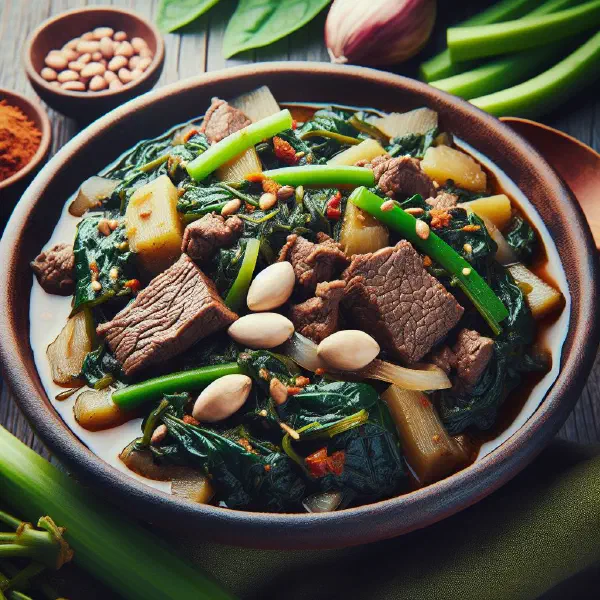
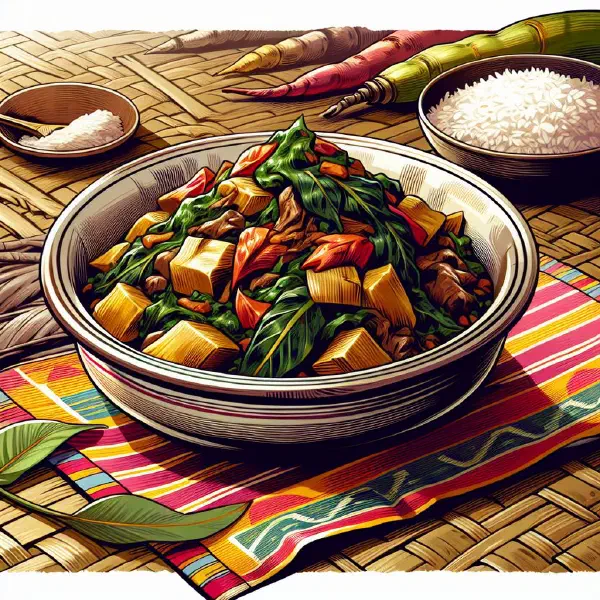
Meet Saka Saka, a deep green, gently spiced stew of cassava leaves that ranks among the great comfort dishes of Burkina Faso. Simmered slowly with roasted peanuts, onion, garlic and a spoonful of red palm oil, it turns a humble leaf into something rich, nutty and quietly addictive. It is nourishing, entirely plant-based and wonderfully easy to make at home, all you need is a big pot, a little patience and a bowl of rice to serve alongside.
About Saka Saka
Saka Saka is made chiefly from freshly prepared cassava leaves, which are packed with nutrients. The leaves are usually combined with peanuts and an assortment of spices to build a unique, deeply savoury aroma. Depending on your preference, other ingredients can be added to vary the flavour. That combination makes saka saka delicious and a genuinely nourishing meal, one of the cornerstones of everyday cooking in West Africa.
Ingredients (serves 1–2)
- 200 g cassava leaves
- 100 g peanuts
- 1 onion
- 2 cloves of garlic
- 1 tomato
- 1 tablespoon palm oil or vegetable oil
- Salt and pepper to taste
Shopping for the ingredients
When sourcing the ingredients for saka saka, fresh produce should always come first. Cassava leaves are often available at African grocers or can be ordered online, either fresh or frozen and finely ground. Buy the peanuts unsalted and, ideally, free from additives. Fresh onions, garlic and tomatoes should also be of good quality to guarantee the best possible flavour.
Preparing the dish
The preparation for saka saka is relatively straightforward. Begin by washing the cassava leaves thoroughly and removing the tough stalks. Next, the peanuts can be toasted to release their aroma. The onion and garlic should be finely chopped. It is well worth laying out all the ingredients in advance, as this makes the cooking process considerably easier, the same relaxed approach that pays off with a slow-simmered Mafe.
Step-by-step instructions
- Heat the oil in a large pot and add the onion and garlic. Fry both until golden brown.
- Add the chopped cassava leaves to the pot and stir well.
- Add the tomato and the toasted peanuts, then season the dish with salt and pepper.
- Cover the pot and let the saka saka simmer over low heat for about 30 minutes, until the leaves are tender.
- Serve the dish hot, ideally with rice or maize.
Gluten-free / lactose-free version
Saka saka is naturally gluten-free and equally suitable for anyone with a lactose intolerance. Because it relies on fresh, natural ingredients, the dish is an excellent option for people with food sensitivities. Do check, however, that the oils you choose contain no gluten-based additives. These qualities make saka saka a genuinely inclusive choice for a wide range of diets.
Tips for vegans and vegetarians
For vegans and vegetarians, saka saka is an outstanding choice, since it uses plant ingredients exclusively. The peanuts provide a good source of protein, something that can be lacking in many vegetarian and vegan diets. You can also fold in vegetables such as carrots or peppers to make the dish more varied still. Remember to adjust the seasoning to your own taste to bring the flavours fully forward.
More tips and tricks
There are a few tips that will help you get the most out of saka saka. Careful selection of fresh ingredients can improve the flavour of the dish considerably. If you want to intensify the taste, experiment with different spices such as ginger or chilli. Toasting the peanuts before use also lends the finished dish a delicious crunch and a far rounder aroma.
Adapting the recipe to your taste
One of the great virtues of saka saka is its versatility. You can easily adapt the basic recipe to your own personal preferences. Do you like things hotter? Simply add more spice. If you prefer a creamier texture, a splash of coconut milk works beautifully. This flexibility lets you shape the dish exactly to your liking while keeping the traditional elements intact.
Ingredient substitutions
Sometimes not every ingredient is easy to come by. In that case you can choose alternatives for some of them. Instead of cassava leaves, for instance, you can use spinach or chard to achieve a similar flavour and nutrient profile, much as the greens work in a Sauce Feuille. In place of peanuts, cashews or almonds do the job nicely. Adaptations like these let you create a tasty dish even when the original ingredients are missing.
Drink pairing ideas
A delicious dish like saka saka is best matched with refreshing drinks. A fresh fruit juice, from pineapple or mango, complements the flavours of the dish superbly. Alternatively you can serve soft drinks or a homemade lemonade, both of which work well against the spiced, savoury notes of the stew. A tart hibiscus infusion such as Bissap provides pleasant refreshment and adds an extra layer of flavour to the meal.
Serving and presentation ideas
The presentation of a dish can often make all the difference to how it is received. Serve saka saka on a rustic plate and garnish it with fresh herbs such as coriander or parsley. Adding lime wedges to the side of the plate looks smart and gives the dish an extra lift of freshness. An attractive arrangement improves the whole dining experience and will impress your guests.
A bit of history
The origins of saka saka lie in West African cooking, where it has long been regarded as a staple. It is a dish shaped by the use of local ingredients and passed down from one generation to the next. The popularity of saka saka reflects the cultural identity of Burkina Faso and the close connection to the land and the farming practices of the region. Like so much of Burkinabè cuisine, the dish mirrors the tradition and heritage of the people who cook it.
More recipe ideas
Summary: Saka Saka
Saka saka is a rich and nourishing dish that captures the essence of African cooking. The combination of cassava leaves, peanuts and spices creates a flavour experience that is both delicious and genuinely healthy. With only a handful of straightforward ingredients you can prepare this dish beautifully at home and enjoy a tour to Burkina Faso. Let the aromas and the history of this wonderful dish inspire you to give it a try.