National Dish Cambodia: Lok Lak (Recipe)
In this article
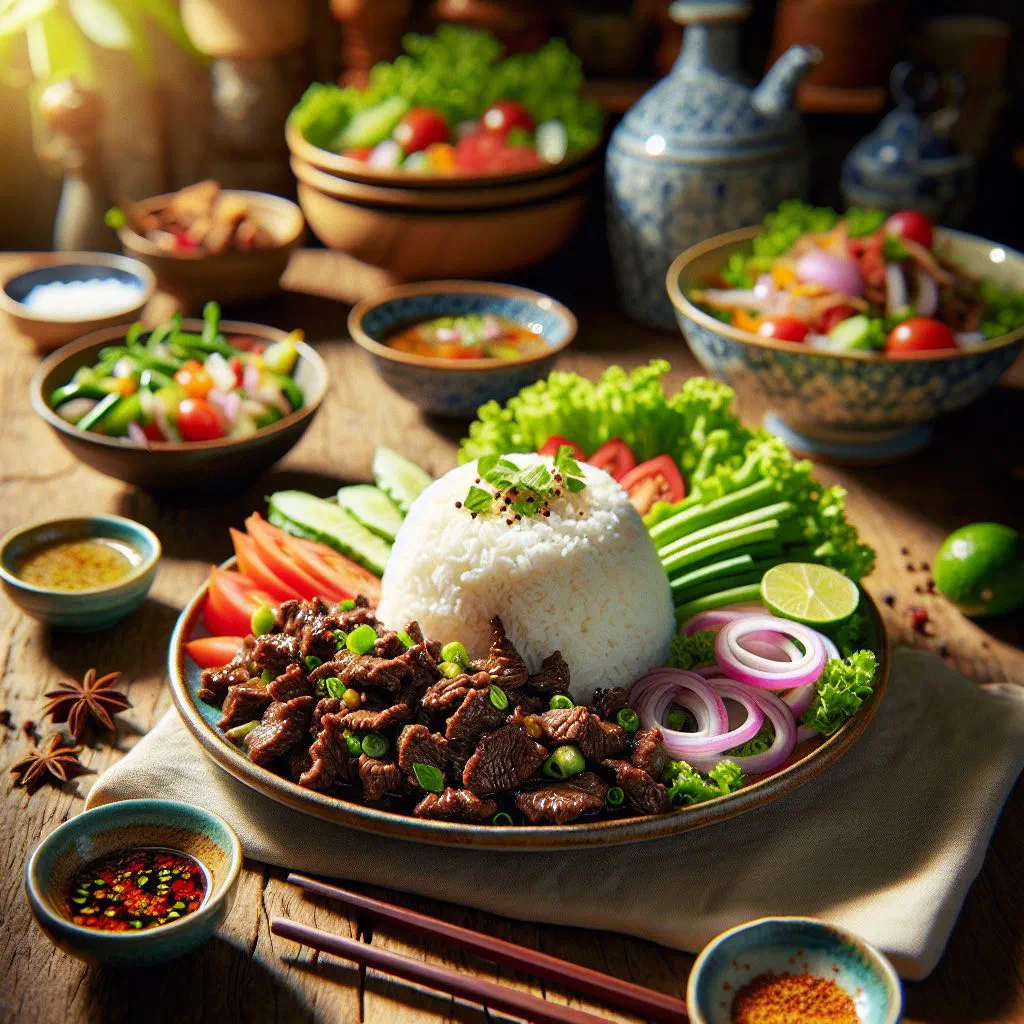
Say hello to Lok Lak, Cambodia’s beloved national dish of tender, marinated beef seared over a fierce heat and served with crisp salad and a bright, peppery lime sauce. It is a plate built on contrast: savoury and sweet, sharp and cooling, all coming together in a few quick minutes at the stove. Simple enough for a busy weeknight yet special enough for guests, this Khmer classic brings the bright flavours of Phnom Penh straight to your own table.
About Lok Lak
Lok Lak is a culinary highlight of Cambodia, celebrated for its striking blend of savoury, sweet and sour notes. At its heart is marinated beef, quickly fried and traditionally served with fresh vegetables and a zesty black pepper and lime sauce. As one of the country’s signature dishes, it stands out for its layered flavours and the harmonious balance between rich meat, cooling salad and a tangy dipping sauce that ties everything together.
Ingredients (serves 1–2)
- 300g beef, cut into strips
- 2 tablespoons soy sauce
- 1 tablespoon oyster sauce
- 1 teaspoon sugar
- 2 cloves garlic, finely chopped
- 1 tablespoon vegetable oil, for frying
- Salt and freshly ground black pepper
- 1 fresh lime
- 1 teaspoon ground black pepper, for the sauce
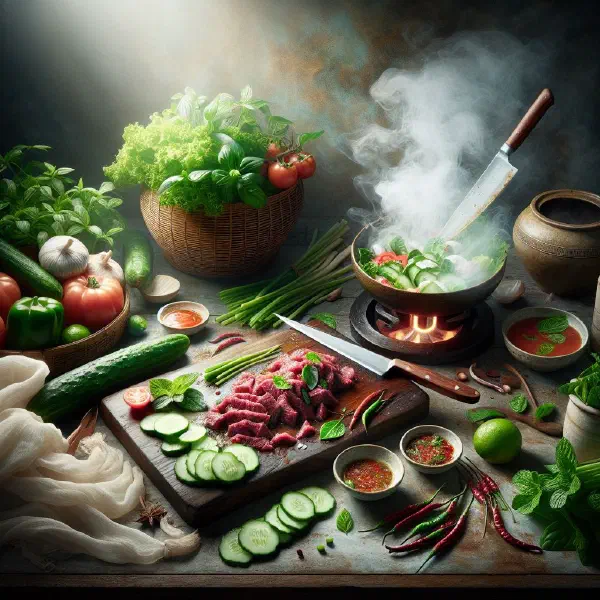
- Lettuce leaves, tomatoes and cucumber, to serve
Shopping for the ingredients
For the best results, it is worth choosing a good-quality cut of beef from your butcher. Soy sauce and oyster sauce are easy to find in any well-stocked Asian grocery or supermarket, and can just as readily be ordered online. Look for fresh, firm vegetables so the dish keeps its crisp, refreshing bite alongside the warm, savoury meat.
Preparing the dish
Prepare everything before you start cooking, as Lok Lak comes together very quickly. Slice the beef into strips, chop the garlic, and wash and trim the vegetables into neat pieces. A little groundwork makes for a smooth, relaxed cooking process, letting you focus on getting a good sear on the meat when the pan is hot.
Step-by-step instructions
- Marinate the beef with the soy sauce, oyster sauce, sugar and chopped garlic. Set aside for at least 15 minutes.
- While the meat marinates, wash the lettuce, tomatoes and cucumber and arrange them on a serving platter.
- Heat the oil in a pan and sear the marinated beef over a high heat until nicely browned.
- Mix the lime juice and ground black pepper in a small bowl to make the sauce.
- Arrange the seared beef on the bed of fresh vegetables and spoon the sauce over the top.
Gluten-free / lactose-free version
Lok Lak is naturally lactose-free and easy to adapt for a gluten-free diet. The one thing to watch is the soy sauce, which often contains wheat; simply swap it for a certified gluten-free tamari and choose a gluten-free oyster sauce, and the dish suits anyone avoiding gluten. Everything else, the beef, the fresh salad and the lime pepper sauce, is already free of both gluten and dairy, so no further changes are needed.
Tips for vegans and vegetarians
For a vegetarian or vegan version, replace the beef with firm tofu cubes or slices of king oyster mushroom, both of which take on the marinade beautifully and develop a lovely sear. Use a plant-based oyster sauce and a vegan-friendly soy sauce or tamari to keep the savoury depth. The fresh salad and the bright, peppery lime dressing carry the dish, so a meat-free Lok Lak loses none of its character.
More tips and tricks
If you can get hold of it, a scattering of fresh coriander adds a bright, authentic finish. Extending the marinating time will make the beef even more tender, so if you have an hour to spare, let it rest a little longer. Sear the meat in a single layer over a high heat rather than crowding the pan, so it browns properly instead of stewing in its own juices.
Adapting the recipe to your taste
Lok Lak is easy to tailor to your own preferences. If you like a bit of heat, add fresh chillies to the pepper sauce for a fiery kick. You can also adjust the sweetness or the tang of the sauce by playing with the sugar and lime, dialling the balance in until it suits you exactly. A fried egg on top is a popular addition that makes the plate even more generous.
Ingredient substitutions
If you are missing an ingredient, there are easy swaps to hand. Oyster sauce can be replaced with hoisin sauce for a similar savoury-sweet note, and if you have no soy sauce, tamari works well in its place. Chicken or pork can stand in for the beef, and the same fresh, punchy flavours also shine in a beef salad such as Lap Khmer.
Drink pairing ideas
A light, refreshing white wine or a cold beer pairs wonderfully with Lok Lak, cutting through the savoury meat and lifting the peppery sauce. For a non-alcoholic option, a splash of homemade lemonade or an ice-cold glass of white tea makes a cooling companion. A wedge of extra lime on the side never goes amiss either.
Serving and presentation ideas
Serve the Lok Lak on a large platter surrounded by the fresh vegetables, so everyone can help themselves. Offer the lime pepper sauce in a separate little bowl, letting each guest decide how much to spoon over their plate. A bowl of steamed rice alongside turns it into a fuller meal, and a garnish of coriander adds a final splash of colour.
A bit of history
Lok Lak traces its roots to Vietnam, where a close relative is known as bò lúc lắc, meaning “shaking beef”, a nod to the way the meat is tossed and shaken in the pan as it cooks. The dish travelled along trade routes into Cambodia, where it was reworked into Lok Lak and earned a firm place in the country’s kitchens and culture. Today it is one of the best-loved plates in Cambodian cuisine, served everywhere from family homes to busy city eateries.
More recipe ideas
Summary: Lok Lak
Lok Lak is a Cambodian national dish with a rich and varied flavour profile. The combination of marinated, seared beef, fresh vegetables and its signature peppery lime sauce makes it a memorable culinary experience. Quick to cook yet full of character, it is the kind of dish that turns an ordinary meal into something memorable, well worth trying whenever you fancy a taste of Khmer cooking at home.