National Dish Cameroon: Ndole (Recipe)
In this article
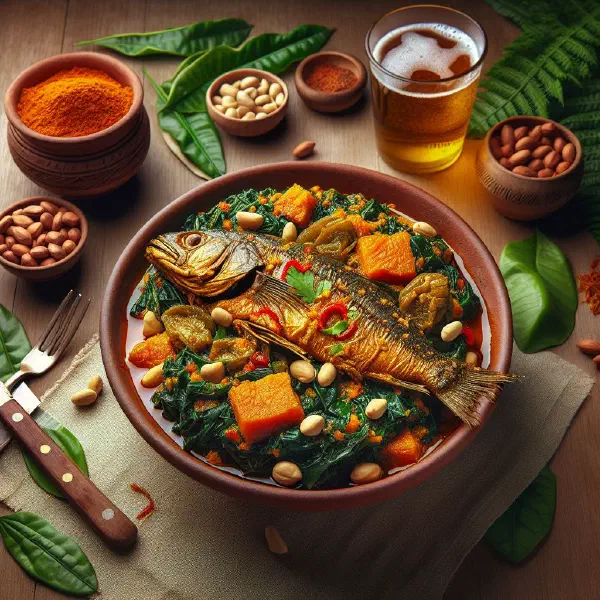
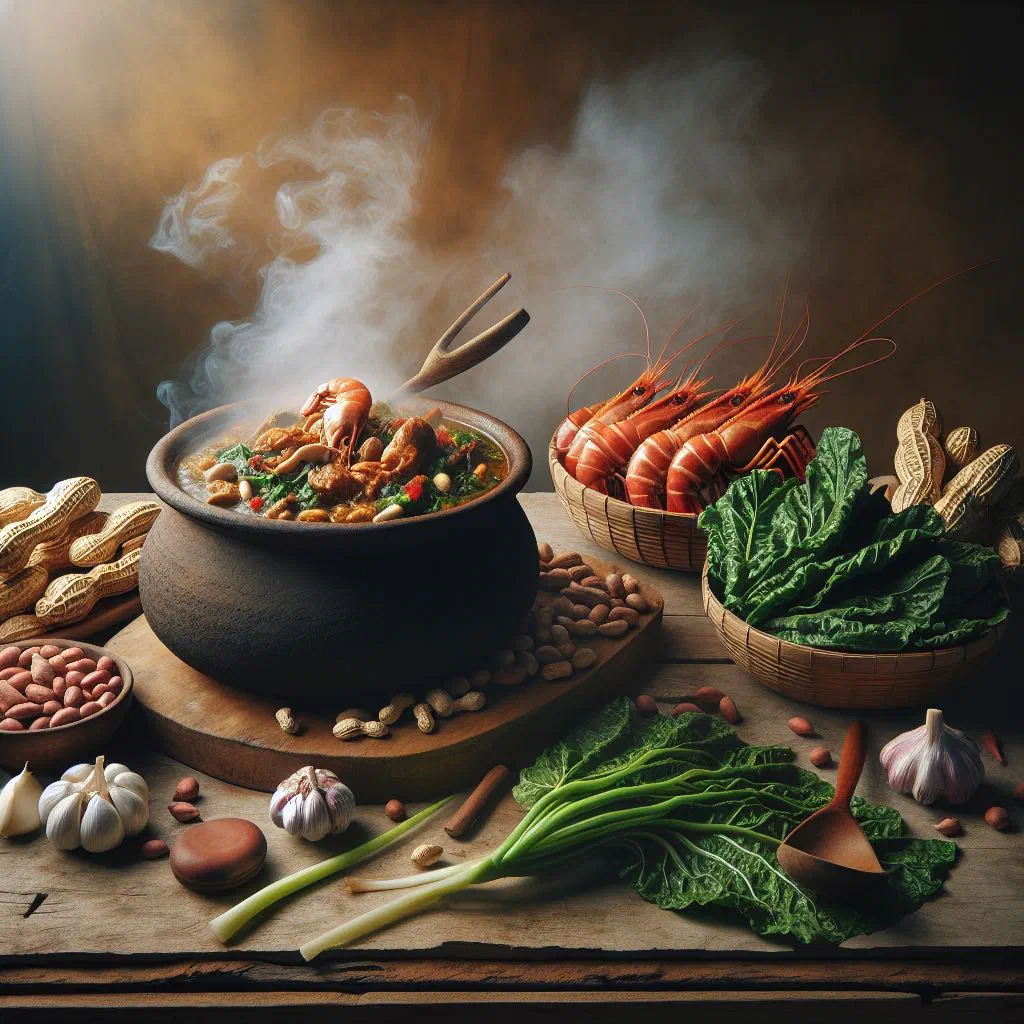
Ndolé is bitterleaf cooked with ground peanuts, and the bitterness is the point. The leaves are washed repeatedly to take the edge off, never to remove it entirely. Peanut paste thickens the sauce and softens what remains.
About Ndole
Ndolé is Cameroon’s national dish, most closely associated with Douala and the coastal Sawa peoples. Bitterleaf, Vernonia amygdalina, is boiled and washed several times, then cooked with a paste of ground peanuts, meat or fish and often prawns. It is served with fried plantain or boiled cassava.
The washing is the technique. Under-washed ndolé is genuinely unpleasant; over-washed loses the character that gives the dish its name.
Ingredients (serves 1–2)
- 200g fresh ndole leaves (or spinach as a substitute)
- 300g beef or fish, cut into pieces
- 200g prawns (optional)
- 2 medium onions, finely diced
- 4 garlic cloves, crushed
- 200g fresh or ground peanuts (peanut paste)
- 1–2 habanero chillies (to taste)
- 1–2 tablespoons palm oil or rapeseed oil
- 1 stock cube (optional)
- Salt and black pepper to taste
- 1–2 cups water or beef stock
Shopping for the ingredients
Frozen bitterleaf is sold in African grocers and is usually already washed, which saves the longest part of the job. Spinach is the common substitute but gives a sweeter, milder dish; adding a little rocket or dandelion restores some bitterness. Use unsweetened peanut butter or grind roasted peanuts yourself.
Preparing the dish
If your bitterleaf is unwashed, boil it, drain, rub it between your hands under running water and repeat three or four times, tasting as you go. Slacken the peanut paste with warm water before it goes into the pot, or it seizes into lumps.
Step-by-step instructions
- Heat the oil in a large pot and brown the meat all over, then lift it out and set it aside.
- In the same oil, fry the onions, garlic and chopped chillies until softened and translucent.
- Stir in the peanut paste, then return the meat along with the prawns and the chopped ndole leaves or spinach.
- Add the stock cube, salt, pepper and the water or stock, stir well and simmer over medium heat for 20–30 minutes until the sauce thickens slightly.
- Taste, adjust the seasoning as you like, then take the pot off the heat and serve.
Gluten-free / lactose-free version
Ndolé contains no gluten and no dairy. The stock cube is the only thing worth checking, since several common brands contain wheat.
Tips for vegans and vegetarians
The peanut and bitterleaf base stands on its own. Use vegetable stock, leave out the meat and prawns, and add smoked tofu or mushrooms for depth. Peanut and greens is a complete plate, and a good deal of West and Central African cooking works this way as a matter of course.
More tips and tricks
Slacken the peanut paste in warm water first. Taste the leaves after each wash rather than counting washes, since bitterness varies enormously between batches. And do not boil hard once the peanut paste is in; it splits and the oil separates out unattractively.
Adapting the recipe to your taste
Smoked fish alongside the fresh gives real depth and is standard in Douala. More prawns make the celebratory version. Some cooks add a spoonful of nkui or okra to thicken further.
Ingredient substitutions
Spinach plus a handful of rocket approximates bitterleaf. Cashew paste can replace peanut. Beef, fish and prawns are interchangeable and often all three appear together.
Drink pairing ideas
Pineapple juice is the common soft pairing and its sweetness works against the bitterness. Palm wine is the traditional answer. Cold lager suits it at a gathering.
Serving and presentation ideas
Serve it with fried plantain, boiled cassava or fufu, spooned alongside rather than over. It is rich, so portions are smaller than the plate size suggests. Eaten by hand in most households.
A bit of history
Ndolé belongs to the Douala and Bassa peoples of coastal Cameroon and has become the country’s signature dish nationally and among the diaspora. Groundnuts arrived from the Americas via Portuguese trade and were absorbed completely into the region’s cooking. It anchors Cameroonian cuisine alongside poulet DG and water fufu and eru.
More recipe ideas
Summary: Ndole
Ndolé is bitterleaf cooked with ground peanuts, meat and prawns. Wash the leaves until the bitterness is edible but still there, slacken the peanut paste first, and keep the simmer gentle.