National Dish China: Peking Duck (Recipe)
In this article
Peking Duck is about skin, not meat. The bird is inflated to separate skin from flesh, scalded, coated in maltose and hung to dry for a day, then roasted until the skin shatters. Restaurants carve it at the table into 108 pieces, by tradition.
About Peking Duck
Peking duck is a restaurant dish and always has been. The full method needs a hook, a cool draught and the better part of two days, which is why Beijing has specialist kitchens that do nothing else. Quanjude has been roasting them since 1864.
The recipe below is the home version: a duck crown or whole bird dried in the fridge and roasted hot. It will not match Quanjude. It will produce genuinely crisp skin.
Ingredients (serves 1–2)
- 1 duck (or 400–500 g duck breast/legs)
- 3–4 spring onions, finely sliced
- 3 tablespoons soy sauce
- 2 tablespoons hoisin sauce
- 1 tablespoon rice wine
- 1 tablespoon honey or sugar
- 1 teaspoon five-spice powder
- 2 tablespoons vegetable oil
- Salt to taste
- Rice or noodles, to serve
Shopping for the ingredients
A Pekin duck, the white farmed breed, is what the dish is named for and what to buy. Ask the butcher not to trim the neck skin. Maltose is the traditional glaze and is sold in Chinese supermarkets in tubs; honey is the usual substitute and browns faster, so watch it. Mandarin pancakes are sold frozen and steam in three minutes.
Preparing the dish
Pour a kettle of boiling water over the duck skin until it tightens visibly, then pat it completely dry. Mix the honey with a little hot water and rice wine and brush it over. Then leave the bird uncovered in the fridge for at least 12 hours, ideally 24. That drying is the whole secret and there is no shortcut.
Step-by-step instructions
- Scald the duck by pouring boiling water over the skin, then pat dry.
- Brush with the honey, rice wine and soy glaze, and hang or rest uncovered in the fridge for 12–24 hours until the skin is dry to the touch.
- Rub the cavity with five-spice and salt.
- Roast at 200°C for 30 minutes, breast up.
- Reduce to 160°C and roast for a further 50–60 minutes, basting once.
- Raise the heat to 220°C for the last 10 minutes to crisp the skin.
- Rest for 15 minutes, then carve the skin and meat into thin slices.
- Serve with warm pancakes, hoisin sauce, sliced spring onion and cucumber.
Gluten-free / lactose-free version
The duck has no dairy. Soy sauce and hoisin both usually contain wheat, so use tamari and a gluten-free hoisin. The pancakes are wheat; rice paper wrappers or lettuce leaves are the workable substitutes.
Tips for vegans and vegetarians
Roast duck has no meaningful vegan version, but the serving format does travel. Shredded king oyster mushrooms or marinated tofu, roasted hard and served with the same pancakes, hoisin, cucumber and spring onion, make a genuinely good plate. Chinese Buddhist cooking has a long tradition of exactly this kind of substitution.
More tips and tricks
Dry the skin properly. Twenty-four hours uncovered in the fridge does more for the result than anything you do in the oven. Do not cover the bird while roasting. And separate the skin from the fat underneath as you carve, because the fat is what makes home versions greasy.
Adapting the recipe to your taste
Duck breast alone, scored and dry-brined overnight, gives most of the effect in a fraction of the time. The carcass makes an excellent stock and is traditionally served as a soup course after the pancakes.
Ingredient substitutions
Maltose is better than honey if you can get it. Rice paper replaces pancakes for a gluten-free version. Shaoxing wine is the correct rice wine; dry sherry is the accepted stand-in.
Drink pairing ideas
Jasmine or pu-erh tea is what it is served with in Beijing, and pu-erh in particular cuts the fat. A light Pinot Noir works at a Western table. Tsingtao lager is the simple answer.
Serving and presentation ideas
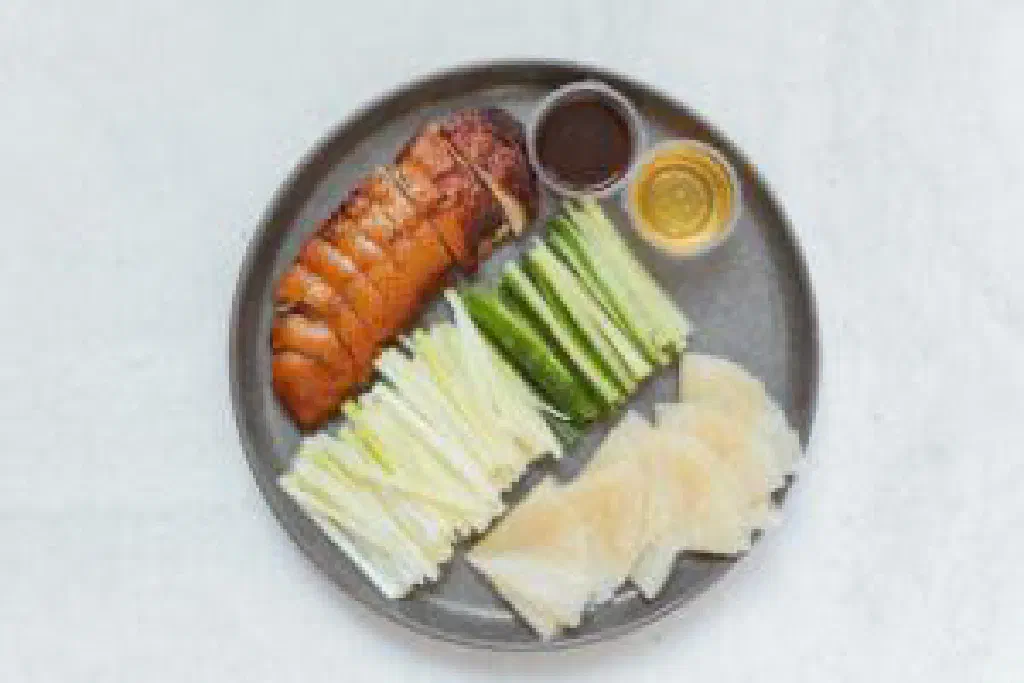
Carve the skin separately and serve it first, on its own, sometimes with a dish of caster sugar to dip. Then the meat with pancakes, hoisin, cucumber batons and spring onion, assembled by each person at the table. The carcass goes back to the kitchen for soup.
A bit of history
Roast duck appears in Chinese records from the Yuan dynasty and became an imperial dish in Ming-era Nanjing before moving north with the capital. The hanging oven method that defines the modern version dates to the Qing. It is the single most internationally recognised dish of Chinese cuisine, which says more about diplomacy than about how China eats day to day.
More recipe ideas
Summary: Peking Duck
Peking duck is scalded, glazed, air-dried for a day and roasted until the skin shatters. The drying does the work. Serve the skin first, then the meat with pancakes and hoisin.