National Dish Czechia: Jablečný Závin (Recipe)
In this article
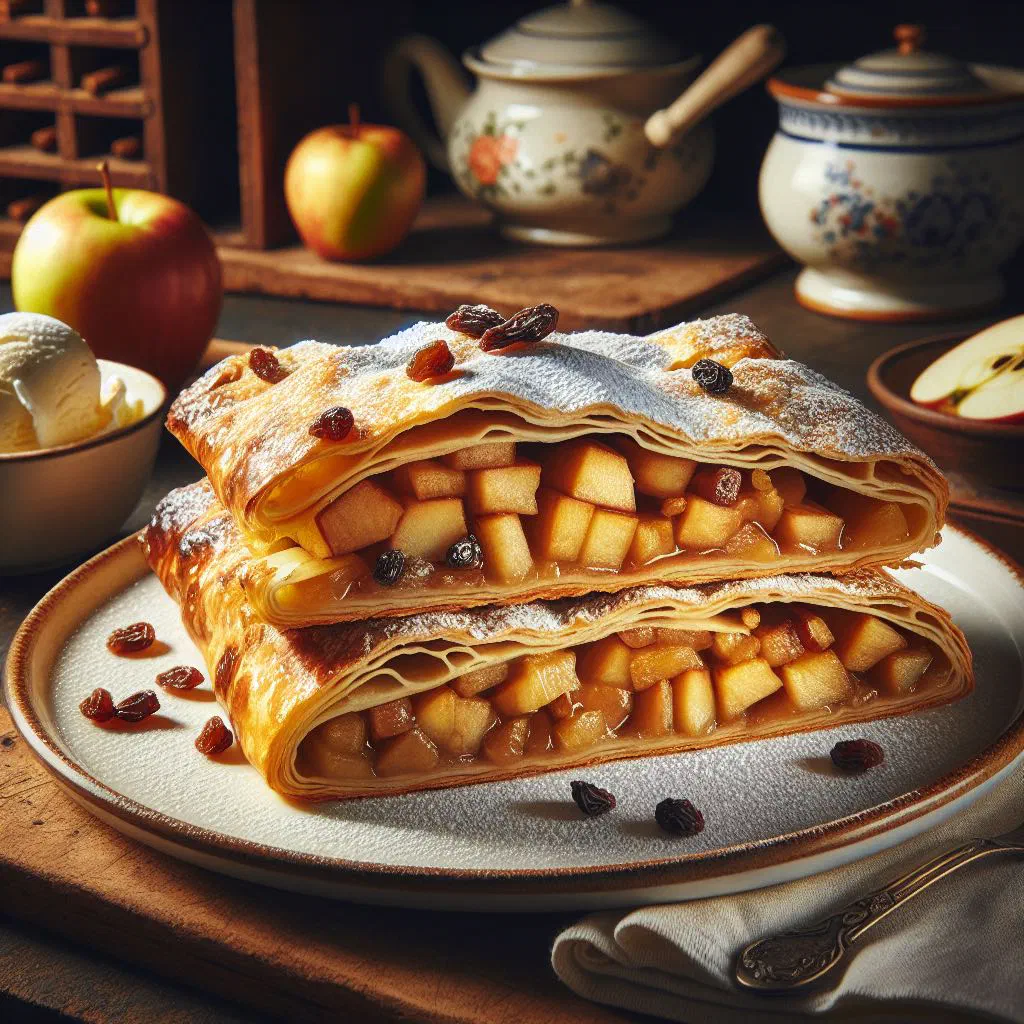
Meet Jablečný Závin, the Czech Republic’s beloved take on the classic apple strudel. Delicate sheets of pastry wrap around a fragrant filling of juicy apples, cinnamon and plump raisins, all baked to a golden, crackling finish. This timeless bake charms every sense with its very good aroma and melt-in-the-mouth texture. Here is how to bring a slice of Bohemian tradition into your own kitchen.
About Jablečný Závin
Jablečný Závin, also known simply as apple strudel, is the national dish of the Czech Republic and a cherished classic across much of Europe. This good pastry is built from several tender layers of dough wrapped around a filling of succulent apples, cinnamon and raisins. Served as a dessert or with a cup of coffee, apple strudel wins everyone over with its wonderfully moreish flavour.
Ingredients (serves 1–2)
- 250 g plain flour
- 1 tsp sugar
- 1 pinch of salt
- 100 ml lukewarm water
- 30 ml oil
- 2 apples (such as Boskoop or Granny Smith)
- 50 g sugar (for the filling)
- 1 tsp cinnamon
- 50 g raisins
- 1 egg (for glazing)
- Icing sugar (for dusting)
Shopping for the ingredients
When shopping for Jablečný Závin, it is well worth paying attention to the quality of your apples. Choose fresh, tart apples that hold their shape during baking and do not release too much liquid. The flour should also be of good quality to guarantee a perfect dough consistency. Getting the balance of ingredients right is key to a successful strudel.
Preparing the dish
Before you start baking, gather all your ingredients together. The dough needs to be thoroughly kneaded and then left to rest so it becomes stretchy and elastic. While it rests, you can prepare the filling by peeling, coring and finely chopping the apples. Tossing the apples with sugar, cinnamon and raisins builds a deep, warming aroma that runs right through the finished bake.
Step-by-step instructions
- Combine the flour, sugar, salt, water and oil in a bowl and knead to a smooth dough.
- Wrap the dough in cling film and leave it to rest for at least 30 minutes.
- Peel, core and finely chop the apples.
- Mix the apples with the sugar, cinnamon and raisins.
- Roll the dough out thinly and spread the filling evenly over it.
- Carefully roll the strudel up and place it on a lined baking tray.
- Brush with the beaten egg and bake at 180°C for about 30 minutes.
- Once baked, dust with icing sugar and serve warm.
Gluten-free / lactose-free version
To make Jablečný Závin gluten-free, simply use a gluten-free flour blend, taking care that the remaining ingredients are gluten-free too. For a lactose-free version, reach for plant-based alternatives such as vegetable oil in place of butter and lactose-free milk if any liquid is called for. These small adjustments make the dish enjoyable for those with allergies or intolerances, much as you would adapt a batch of Jablečné Knedlíky.
Tips for vegans and vegetarians
Making a vegan version of Jablečný Závin is perfectly straightforward. Replace the egg used to bind the dough with a mixture of water and ground flaxseed, or with a little apple purée. You can also swap the sugar for alternative sweeteners such as agave syrup or coconut blossom sugar. When choosing your raisins, check that they have been processed without any animal-derived products.
More tips and tricks
A few tips can help make your strudel even more delicious. Stir a handful of chopped nuts into the filling for extra crunch, or vary the spices by adding nutmeg or vanilla. Using the right baking tin encourages an even, golden browning. Timing matters too, so keep a close eye on the oven towards the end of baking for the best possible result.
Adapting the recipe to your taste
The recipe for Jablečný Závin is easy to tailor to your own preferences. Instead of apples you could use pears or cherries for a different flavour direction, as you might in a bowl of Ovocný Kompot. You can also dial the sweetness up or down to suit your palate. This flexibility makes the dish not only versatile but genuinely exciting and personal.
Ingredient substitutions
Swapping out classic ingredients opens up some interesting possibilities. In place of raisins, for example, you could use dried cranberries or dates to introduce a new note. For a healthier version, use wholemeal flour instead of standard plain flour. Adaptations like these bring welcome variety and support a more wholesome way of eating.
Drink pairing ideas
For a well-rounded experience with Jablečný Závin, certain drinks work especially well. An aromatic coffee or a fresh cup of green tea pairs beautifully with the sweet, spiced flavours of the strudel. A lightly chilled, fruity cider can also complement the aromas wonderfully. Experiment with different drinks to find your perfect match, perhaps served alongside a homemade Kofola.
Serving and presentation ideas
The presentation of Jablečný Závin can lift the whole experience considerably. Serve the strudel on an attractive platter and garnish it with fresh apple slices or a sprig of mint. A dusting of icing sugar gives it an elegant finish. Adding a little cream or a scoop of vanilla ice cream alongside makes the dessert even more appealing.
A bit of history
Jablečný Závin has a long history, with roots in Austrian and Hungarian cooking. The strudel first grew popular in the 18th century and went on to become a symbol of Bohemian cuisine. Over time it found its way into countless households and remains a long-standing tradition in the Czech Republic today. Making strudel is often seen as a shared activity, passed down from one generation to the next, and sits proudly within the wider world of Czech cuisine.
More recipe ideas
Summary: Jablečný Závin
In short, Jablečný Závin is a timeless dessert that sits firmly at the heart of Czech cuisine. The combination of tender pastry and a fruity filling makes it a favourite for so many people. It adapts easily to personal preferences, is endlessly versatile and suits any occasion. Treat yourself to this classic and bring a little piece of Czechia into your own kitchen.