National Dish Denmark: Æbleflæsk (Recipe)
In this article
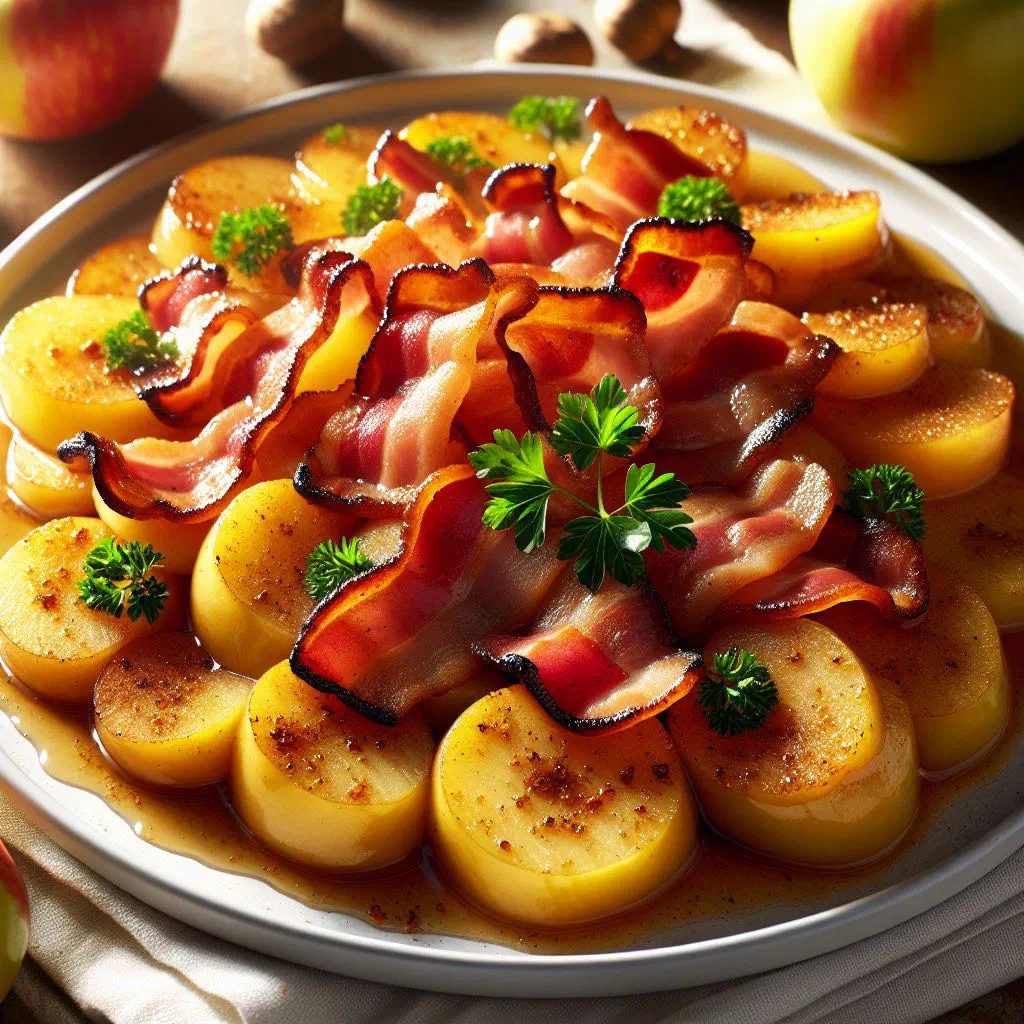
Meet Æbleflæsk, one of Denmark’s most comforting classics, crisp fried pork belly paired with soft, caramelised apples. It is a dish built on a simple idea: let sweet fruit and salty meat meet in the same pan and see what happens. The result is warming, a little nostalgic and perfectly suited to dark winter evenings, whether you are serving it at a festive table or as a quiet supper for two.
About Æbleflæsk
Æbleflæsk is a traditional Danish dish that brings together sweet apples and hearty pork in one pan. It reflects Danish food culture at its most honest and is especially prized for its balance of sweet and savoury flavours. Often reserved for festive occasions, Æbleflæsk is also a much-loved family meal. For many Danes the dish carries more than flavour. It carries fond memories of long meals shared around the kitchen table.
Ingredients (serves 1–2)
- 200 g pork belly or gammon
- 2–3 apples (Aroma or Bramley varieties work well)
- 2 tablespoons brown sugar
- 1 teaspoon ground cinnamon
- Salt and pepper, to taste
- A squeeze of lemon juice
- 1 tablespoon butter, for frying
Shopping for the ingredients
For Æbleflæsk it pays to be fussy about the quality of the pork belly. Fresh meat gives a noticeably richer flavour and a more tender texture. The apples should be as fresh as possible and chosen for a pleasant natural sweetness, so they round the dish out rather than fighting it. Many local markets carry good seasonal produce, and buying apples in season supports regional growers into the bargain.
Preparing the dish
Preparing Æbleflæsk is refreshingly simple and takes only a few steps. Begin by cutting the pork into small pieces, then peel the apples and slice them evenly. This gets the ingredients ready so everything cooks at the same pace in the pan. For an even brighter aroma, sprinkle the apple slices with a little lemon juice before they join the meat, the same trick that keeps the fruit lively in a Rødgrød Med Fløde.
Step-by-step instructions
- Fry the pork in a pan with the butter until golden brown and crisp.
- Lift the meat out of the pan and set it aside.
- Add the apple slices to the same pan and scatter over the brown sugar and cinnamon.
- Fry the apples for about 5–7 minutes, until soft and caramelised.
- Return the meat to the pan, stir everything together and season with salt and pepper.
- Serve hot, ideally with crusty bread or potatoes.
Gluten-free / lactose-free version
Æbleflæsk adapts to a gluten-free and lactose-free kitchen with almost no effort. For the gluten-free version, serve gluten-free bread or rolls alongside, and check that your cinnamon and sugar carry no gluten-containing additives. Lactose-free butter or plant-based options such as coconut oil are excellent for a lactose-free version and still deliver a beautifully rich result.
Tips for vegans and vegetarians
For a vegan or vegetarian take on Æbleflæsk, swap the pork for tofu or seitan. Marinate the alternative in a spice mixture first to build up depth of flavour. You can then caramelise the apples with agave syrup and cinnamon to bring in that sweet, aromatic element. The outcome is a genuinely satisfying plate that captures the character of the original.
More tips and tricks
To make Æbleflæsk even more interesting, try adding other spices such as paprika or caraway, both of which give the dish an extra lift. Be adventurous and combine different apple varieties in one pan for a more layered flavour profile. The dish also works well as meal prep for the week, since it keeps nicely and the flavours only deepen on reheating.
Adapting the recipe to your taste
The joy of Æbleflæsk is how easily it bends to personal taste preferences. If you like it sweeter, add more sugar or a spoonful of honey. For a spicier edge, a pinch of chilli flakes makes a surprisingly good addition. You can even fold in other fruit, such as pears, for an extra fruity note that keeps the dish feeling fresh.
Ingredient substitutions
If you have no apples to hand, other fruits that caramelise well, pears or peaches, for instance, do the job nicely. The meat can also be swapped for smoked sausage if you want a deeper, smokier flavour, along the lines of a good Medisterpølse. Using honey instead of sugar creates another lovely variation that plays well against the freshness of the fruit.
Drink pairing ideas
Æbleflæsk is happiest alongside light white wines or a fruity cider, both of which meet the sweet and savoury notes head-on. Non-alcoholic options such as homemade apple spritzer or a herbal tea work just as well. For a festive meal, a lightly sparkling prosecco adds a crisp edge that rounds off the whole experience.
Serving and presentation ideas
Presentation makes a real difference to how Æbleflæsk is enjoyed. Serve it in an attractive deep bowl and garnish with fresh herbs or a squeeze of lemon for a touch of colour and brightness. A side of green salad or colourful vegetables adds freshness as well as contrast, much as it does with a plate of Frikadeller. Make sure everything reaches the table warm, so the aromas come through fully.
A bit of history
Æbleflæsk has a long history in Denmark and began life as a simple dish cooked by farmers and fishermen. Pairing apples with pork made the most of whatever was on hand and reflects the Danish philosophy of using everything. Its popularity has grown steadily over the years, particularly during the winter months and at festive gatherings, where it often appears beside other traditional plates. Today it is a fixture of Danish cuisine and is enjoyed well beyond the country’s borders.
More recipe ideas
Summary: Æbleflæsk
In short, Æbleflæsk is a hearty yet sweet dish that represents Danish food culture beautifully. It offers an ideal balance of flavour and tradition and suits festive occasions and everyday meals alike. With straightforward steps and plenty of room to adapt the recipe, it is a dish everyone should try at least once. Treat yourself and your family to a piece of Danish tradition and let this warming classic win you over.