National Dish Egypt: Koshari (Recipe)

In this article
Koshari is rice, lentils and pasta in one bowl, layered rather than mixed, under tomato sauce, crisp fried onions and a garlic-vinegar sauce that most recipes leave out and should not. It costs almost nothing and it is the best cheap meal in Cairo.
About Koshari
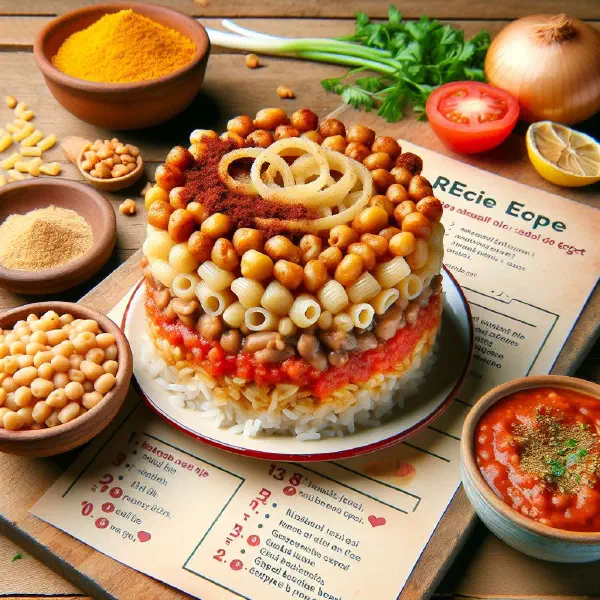
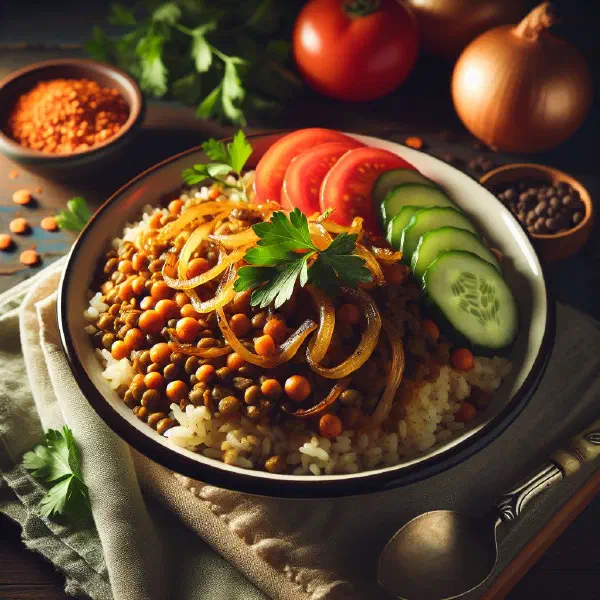
Koshari is Egypt’s national dish and its great street food. Everything is cooked separately and assembled: rice and brown lentils together, macaroni and small pasta separately, chickpeas on top, then a spiced tomato sauce, a garlic and vinegar sauce called da’a, and a heap of fried onions.
The onions are not a garnish. Half the flavour is in them, and they must be fried dark, almost to the point of burning.
Ingredients (serves 1–2)
- 150 g rice
- 100 g brown lentils
- 75 g small pasta (macaroni or ditalini)
- 2 tablespoons olive oil
- 2 tablespoons tomato purée, or 400 g tinned tomatoes
- 1 tablespoon ground cumin
- 1 tablespoon paprika
- 2 large onions, thinly sliced, for frying
- 2 garlic cloves, crushed
- 2 tablespoons white vinegar
- 100 g cooked chickpeas
- Salt and pepper, to taste
- Oil, for frying the onions
Shopping for the ingredients
Brown or green lentils, not red, since they must hold their shape. Egyptian short-grain rice is traditional but any rice works. Use two onions per person for the fried topping; it looks absurd and it is correct, since they reduce to almost nothing.
Preparing the dish
Fry the onions first, because they take longest and can be done well ahead. Slice them thinly and fry in plenty of oil over medium heat for twenty to twenty-five minutes until deep brown, then drain on paper. Keep the onion oil and cook the rice in it.
Step-by-step instructions
- Slice the onions thinly and fry in oil over medium heat for 20–25 minutes until dark brown and crisp; drain and set aside, reserving the oil.
- Simmer the lentils in water for 20 minutes until nearly tender, then drain.
- Add the rice to the lentils with double their volume of water and a spoonful of the onion oil; cover and cook 15 minutes, then rest.
- Boil the pasta separately, drain and set aside.
- For the tomato sauce, fry the tomato purée with the cumin and paprika for 2 minutes, add 200 ml water and simmer 10 minutes.
- For the da’a, crush the garlic with salt, add the vinegar and 3 tablespoons of water, and warm briefly.
- Layer into bowls: rice and lentils first, then pasta, then chickpeas.
- Pour over the tomato sauce and the garlic vinegar, and top with a generous heap of fried onions.
Gluten-free / lactose-free version
Koshari contains no dairy at all, so it is naturally lactose-free. The pasta is wheat; use a gluten-free short pasta and the rest of the dish is unaffected.
Tips for vegans and vegetarians
Koshari is vegan as it stands, and it always has been. It is one of the great vegan dishes of the world and nobody in Egypt thinks of it as such. Rice, lentils and chickpeas together make it a complete protein.
More tips and tricks
Fry the onions much darker than feels safe. Pale onions give a bland koshari. Do not skip the garlic vinegar; it is the element that makes the dish taste Egyptian rather than merely starchy. And layer rather than stir, since the point is that each spoonful is slightly different.
Adapting the recipe to your taste
Shatta, the Egyptian chilli sauce, goes on the table and most people use a lot of it. Some shops add a spoonful of dukkah. The proportions of rice to pasta to lentils vary by household and are argued about.
Ingredient substitutions
Vermicelli can replace some of the pasta. Tinned chickpeas are standard. Any short pasta shape works, and Egyptians often use several at once.
Drink pairing ideas
Hibiscus tea, karkade, served cold, is the standard accompaniment. Sugarcane juice is the street pairing. Sweet black tea afterwards.
Serving and presentation ideas
Serve it in a deep bowl with the onions piled high on top and the two sauces poured at the table so everyone can adjust. Koshari shops give you a bowl and put the bottles in front of you, which is the right way to do it.
A bit of history
Koshari is nineteenth-century and its parts came from three continents: lentils and rice from the Middle East, pasta from Italian influence, and the name probably from the Indian khichri, brought by British Indian Army troops. It is a colonial-era dish that became the most Egyptian thing there is, and it anchors Egyptian cuisine.
More recipe ideas
Summary: Koshari
Koshari is rice, lentils, pasta and chickpeas layered in a bowl under tomato sauce, garlic vinegar and dark fried onions. Fry the onions properly, make the da’a, and layer rather than mix.