National Dish Eritrea: Zigni (Recipe)
In this article
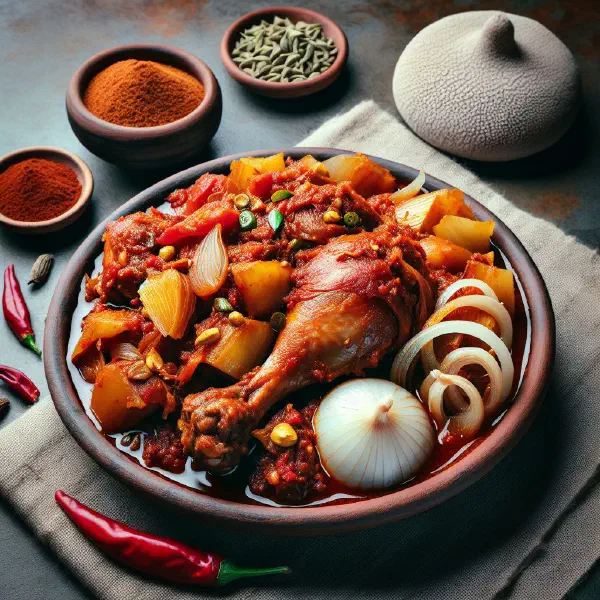
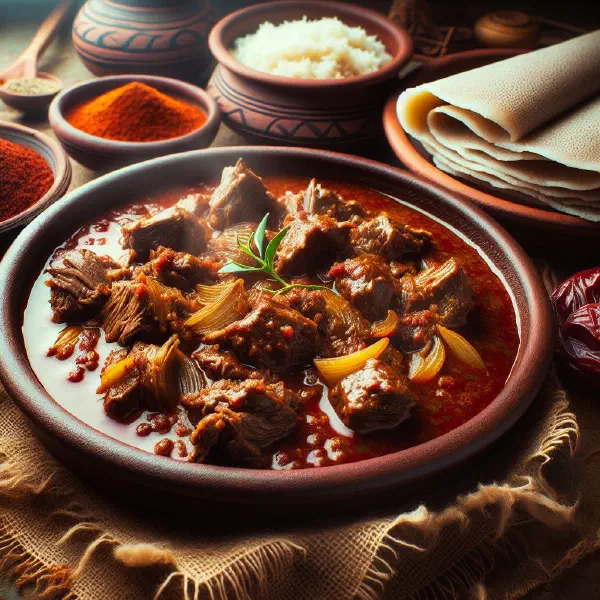
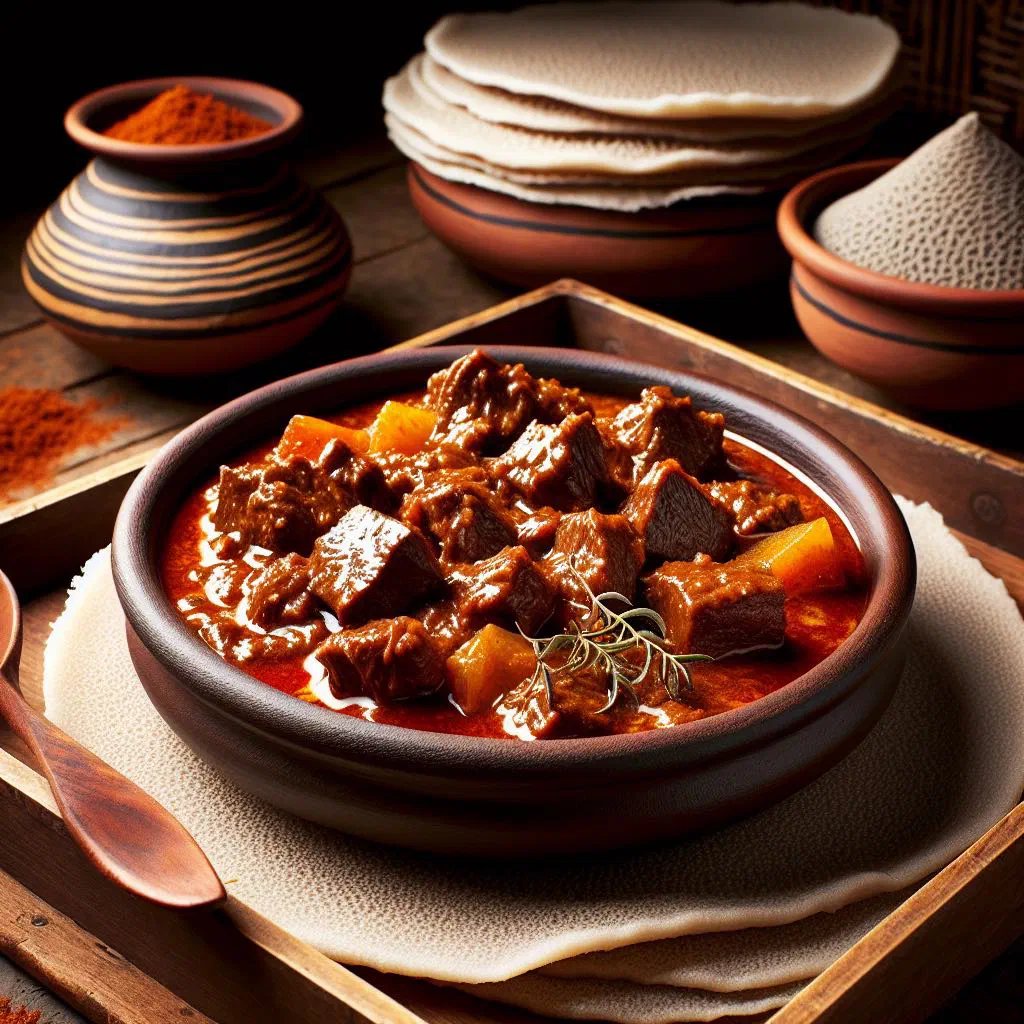
Zigni is beef stewed in berbere until the sauce goes dark red and thick enough to sit on injera without running. The onions go into a dry pot first, with no fat at all, and cook down before anything else joins them. That step is not optional.
About Zigni
Zigni is Eritrea’s national dish and the centrepiece of any shared platter. Beef simmers for an hour in a base of slow-cooked onion, garlic, ginger and berbere, the chilli and spice blend that defines both Eritrean and Ethiopian cooking. It is served on injera with the sourdough flatbread doing the work of both plate and cutlery.
The Ethiopian equivalent is sega wat, and the two are close enough that the distinction is mostly national rather than culinary.
Ingredients (serves 1–2)
- 300 g beef, cut into cubes
- 2 tablespoons vegetable oil
- 1 large onion, finely diced
- 2 cloves garlic, crushed
- 1 teaspoon fresh ginger, grated
- 1 tablespoon berbere spice blend
- 1 teaspoon tomato purée
- 400 g tinned chopped tomatoes
- 250 ml beef stock
- Salt and freshly ground black pepper, to taste
Shopping for the ingredients
Berbere from an Eritrean or Ethiopian shop is a different product from supermarket versions, with a dozen or more spices in it. Buy it there if you possibly can. Beef shin or chuck stands up to an hour of simmering; lean cuts do not. Niter kibbeh in place of oil makes it richer.
Preparing the dish
Dice the onion very finely, because it should disappear into the sauce. Start it in a dry pot for the first five minutes to drive off water and concentrate it, then add the oil. Slacken the berbere in a little water before it goes in, which stops it catching.
Step-by-step instructions
- Heat the oil in a large pot over medium heat.
- Add the onions and sweat them until soft and translucent.
- Stir in the garlic and ginger and fry for about a minute until fragrant.
- Add the beef and brown it well on all sides.
- Combine the berbere with a little water, then add the paste to the meat along with the tomato purée and cook for a few minutes.
- Pour in the chopped tomatoes and beef stock, stir, and bring everything to the boil.
- Reduce the heat and let the stew simmer for around 60 minutes, or until the meat is tender. Season with salt and pepper to taste.
Gluten-free / lactose-free version
Zigni itself is gluten-free. The injera is the question: pure teff injera contains no gluten, but most commercial versions are cut with wheat or barley. Use oil rather than niter kibbeh for a lactose-free version.
Tips for vegans and vegetarians
Eritrean fasting food is extensive and genuinely good. Timtimo, the red lentil stew, uses the same berbere base and is the direct vegan counterpart. Hamli, the greens, and alicha, the mild turmeric stew, complete a platter.
More tips and tricks
Cook the onions dry first. This is the technique that makes Eritrean and Ethiopian stews taste the way they do, and skipping it gives a thin, raw-tasting sauce. Slacken the berbere before adding it. And let the stew reduce until a spoon leaves a trail, since watery zigni slides off injera.
Adapting the recipe to your taste
Hard-boiled eggs added at the end are common. Lamb or goat replace beef. More berbere is the usual direction; Eritrean cooking is not shy about heat.
Ingredient substitutions
Niter kibbeh in place of oil is worth the effort. A mix of paprika, cayenne, fenugreek and coriander approximates berbere badly but serviceably. Tomato purée alone works if you have no tinned tomatoes.
Drink pairing ideas
Suwa, the local barley beer, is drunk with meals. Eritrean coffee, roasted and brewed at the table in a ceremony that takes an hour, follows. Water alongside.
Serving and presentation ideas
Spread injera over a large round tray, spoon the zigni into the middle with other stews around it, and give everyone extra rolled injera. Tear, scoop, eat with the right hand. Individual plates miss the point entirely.
A bit of history
Eritrea and Ethiopia share injera, berbere and most of their repertoire, a legacy of long common history, and Eritrean cooking adds an Italian layer from the colonial period that shows up in pasta dishes elsewhere on the menu. Zigni sits at the centre of Eritrean cuisine.
More recipe ideas
Summary: Zigni
Zigni is beef stewed for an hour in onion, ginger and berbere until dark and thick. Cook the onions dry first, slacken the berbere, and reduce it enough to sit on injera.