National Dish Estonia: Kamavaht (Recipe)
In this article
Kamavaht is Estonia’s national dessert and it is built on a national ingredient: kama, a toasted flour of barley, rye, oats and peas that exists almost nowhere else. Whipped into kefir or soured milk with a little sugar, it turns into a light, malty foam that gets served with berries. Five minutes, and it tastes like nothing else.
About Kamavaht
Kamavaht is the airy, creamy dessert of Estonia. Toasted kama flour is whipped with soured milk or kefir into a light foam, producing a sweet, nutty-malty pudding. Traditionally served with fresh berries, kamavaht combines rustic Estonian ingredients with a surprisingly refined texture. It is the summer dessert of choice across the country.
Ingredients (serves 1–2)
- 4 tablespoons kama flour (or a toasted wholegrain mix of barley, rye and oats)
- 300 g soured milk, kefir or buttermilk
- 2–3 tablespoons sugar, to taste
- A handful of fresh berries (lingonberries or blueberries, for example)
- A pinch of salt
Shopping for the ingredients
Kama is sold in Estonian and Baltic shops and increasingly online. It is a ready-toasted blend of barley, rye, oat and pea flour and has no real substitute, though a homemade mix of toasted wholegrain flours comes close. Use a thick, sharp kefir rather than a thin drinking one.
Preparing the dish
There is almost no preparation: measure the kama, have the kefir cold, and rinse the berries. The only thing that matters is whisking the kama in gradually so it does not clump, and giving it a few minutes to swell before serving.
Step-by-step instructions
- Put the cold kefir or soured milk into a bowl.
- Add the sugar and the pinch of salt and whisk to dissolve.
- Sprinkle in the kama flour a spoonful at a time, whisking continuously.
- Whisk vigorously for 2–3 minutes until light and foamy.
- Let it stand for 10 minutes so the flour swells and thickens.
- Whisk once more to lighten it.
- Spoon into glasses or bowls.
- Top with fresh berries and serve cold.
Gluten-free / lactose-free version
Kama contains barley and rye and is therefore not gluten-free; a toasted blend of buckwheat and oat flour is the nearest gluten-free approximation. For lactose-free, use a plant kefir, coconut or oat kefir both work well with the malty flavour.
Tips for vegans and vegetarians
The dessert is vegetarian as written. A vegan version with plant-based kefir or thick oat yoghurt works genuinely well, since the flavour comes from the toasted grain rather than the dairy.
More tips and tricks
Add the kama gradually and keep whisking, or you get lumps that never disperse. Let it stand for ten minutes. This is what turns a thin mixture into a proper foam. And serve it cold; kamavaht at room temperature is noticeably duller.
Adapting the recipe to your taste
Honey in place of sugar suits the malty flavour. Whipped cream folded in makes a richer version served at celebrations. Rhubarb compote, cloudberries or a spoonful of jam all work in place of the fresh berries.
Ingredient substitutions
Buttermilk, kefir and soured milk are interchangeable here. Greek yoghurt thinned with milk gives a thicker result. Any toasted wholegrain flour approximates kama, though the pea flour in the real thing is distinctive.
Drink pairing ideas
Coffee is the usual accompaniment. Cold milk suits it as a children’s dessert. A herbal tea works well after a heavy meal, which is often when kamavaht appears.
Serving and presentation ideas
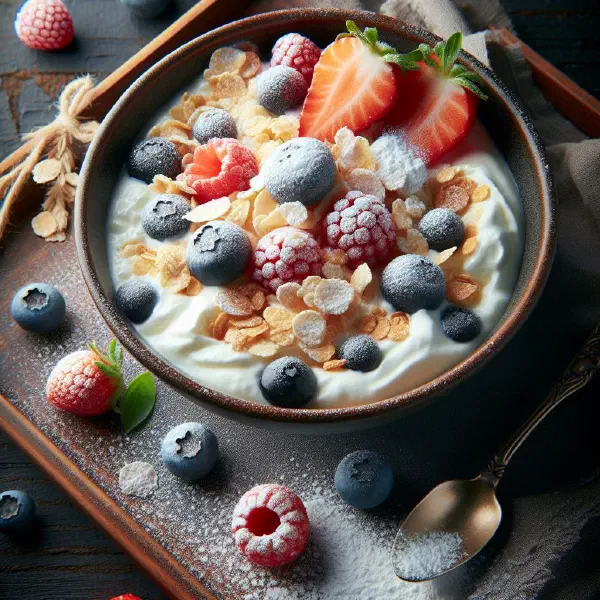
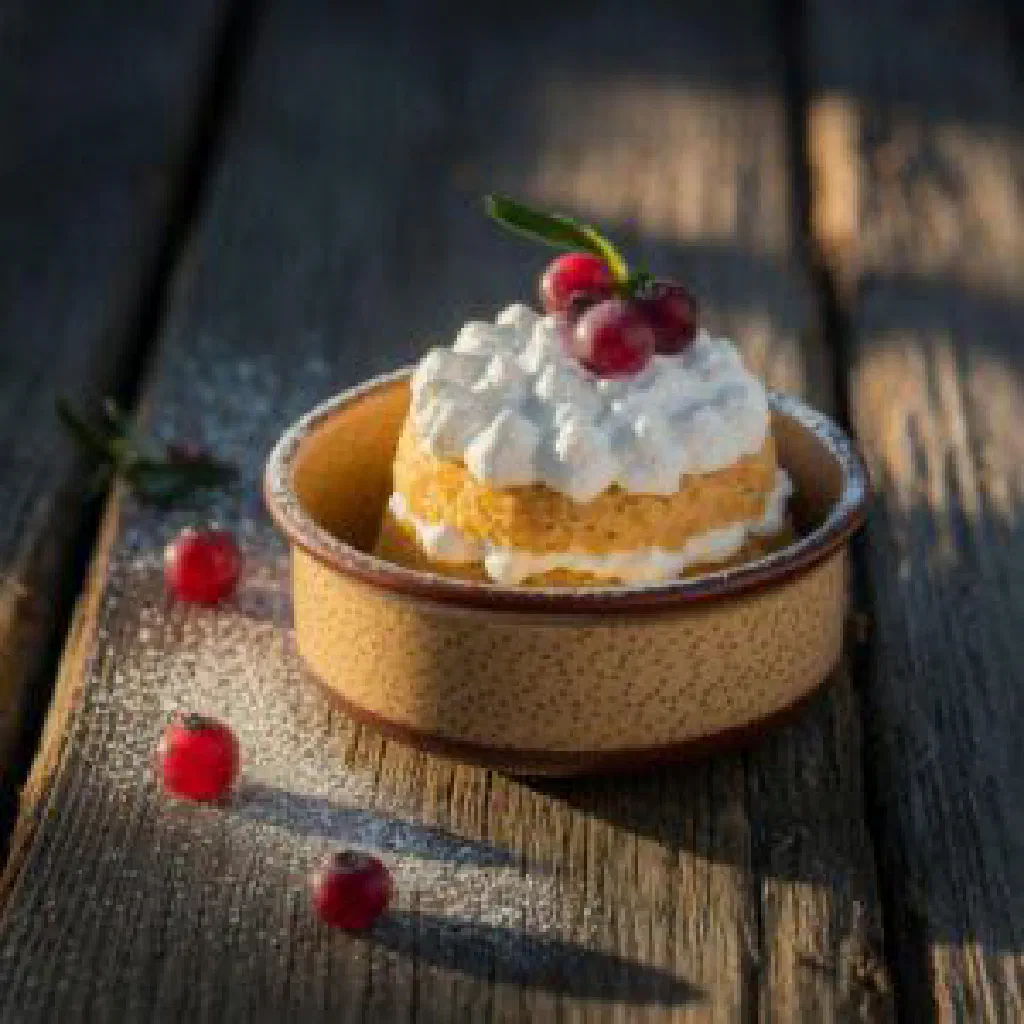
Serve kamavaht in glasses so the pale foam and the dark berries contrast, with a few extra berries on top and perhaps a mint leaf. It is a summer dessert in Estonia and is served cold, straight from the fridge, in generous portions.
A bit of history
Kama began as travelling food: toasted grain that kept indefinitely and needed only liquid to become a meal. It is one of the few genuinely distinctive Estonian ingredients and appears in a handful of dishes, of which kamavaht is much the best known. Similar toasted flours exist in Finland (talkkuna) and among other Finnic peoples. It offers a genuine window onto Estonian cuisine.
More recipe ideas
Summary: Kamavaht
Kamavaht is toasted kama flour whisked into cold kefir with sugar until foamy, then served with berries. Add the flour gradually, let it swell for ten minutes, and eat it cold.