National Dish Estonia: Maksakaste (Recipe)
In this article
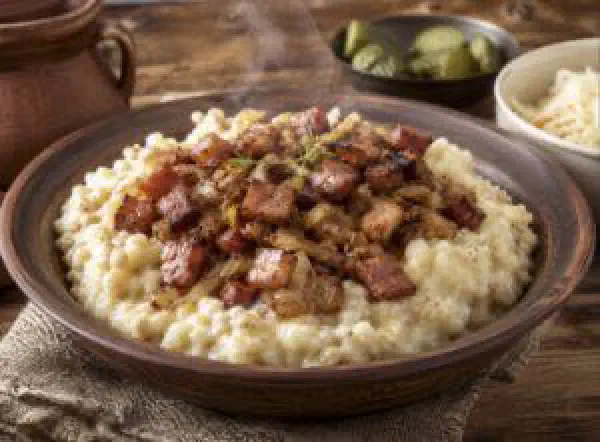
Maksakaste is liver and onions turned into a sauce: pork liver cut small, browned with onion, then simmered in a flour-and-milk gravy spiced with allspice. It goes over mashed potato, and it is the definition of Estonian kodune toit — home food, cheap, filling and served in canteens across the country.
About Maksakaste
Maksakaste is a traditional Estonian dish of tender pork liver in a creamy, onion-rich sauce, classically served with mashed potato. It is exactly the sort of unpretentious, authentic home cooking Estonia does well, the kind of dish that appears on the daily menu of every school and workplace canteen in the country, and that most Estonians associate with childhood.
Ingredients (serves 1–2)
- 300 g pork liver (or calf’s liver)
- 1 large onion
- 2 tablespoons butter
- 1 tablespoon plain flour
- 250 ml milk or stock
- A pinch of allspice or ground clove
- Salt and pepper, to taste
- 400 g potatoes, for the mash
Shopping for the ingredients
Fresh liver should be glossy and deep red with no dry or grey patches, and it should smell clean. Calf’s liver is milder and more expensive; pork liver is the traditional and stronger-tasting choice. Floury potatoes make the better mash.
Preparing the dish
Trim the liver of any membrane and cut it into small strips or cubes. Soaking it in milk for half an hour tames the strong flavour noticeably and is worth doing. Slice the onion thinly. Get the potatoes boiling before you start the sauce, since the liver cooks in minutes.
Step-by-step instructions
- Trim the liver, cut into small pieces and soak in milk for 30 minutes if you like; drain and pat dry.
- Boil the potatoes for the mash and keep them warm.
- Melt half the butter and fry the sliced onion gently for 8 minutes until golden.
- Add the remaining butter and the liver and fry hard for 2–3 minutes, no longer.
- Sprinkle over the flour and stir for 1 minute.
- Pour in the milk or stock gradually, stirring, until a smooth sauce forms.
- Season with allspice, salt and pepper and simmer for 5 minutes.
- Mash the potatoes with butter and milk, and serve the sauce over them.
Gluten-free / lactose-free version
Use cornflour instead of plain flour and the sauce is gluten-free. For lactose-free, make it with stock instead of milk and use oil in place of butter, a common variation in any case.
Tips for vegans and vegetarians
Liver is the dish, but the sauce structure works with mushrooms. Chestnut or portobello mushrooms fried hard with onion and finished in the same allspice gravy give a vegetarian version that sits over mash just as happily.
More tips and tricks
Do not overcook the liver, two or three minutes is genuinely enough, and beyond that it turns grainy and hard. Salt at the end for the same reason. And the milk soak really does soften the flavour if you find liver strong.
Adapting the recipe to your taste
Sour cream stirred in at the end makes it richer and is common. Bacon fried with the onion adds smoke. Marjoram or thyme suits it, and a splash of vinegar at the end lifts the whole plate.
Ingredient substitutions
Chicken livers are milder and cook even faster. Cream can replace some of the milk. Stock in place of milk gives a lighter, more savoury sauce.
Drink pairing ideas
A dark Estonian beer such as a porter suits the richness well. A robust red wine works at dinner. Kefir or buttermilk is the traditional cold drink alongside heavy food in the Baltics.
Serving and presentation ideas
Serve maksakaste ladled generously over mashed potato, with pickled cucumbers or lingonberry jam on the side, the sharpness is essential against the richness. It is canteen food and looks it, which is entirely as it should be.
A bit of history
Offal cooking has deep roots in Estonian food, where nothing from a slaughtered animal went unused. Maksakaste became a canteen standard during the Soviet period, when cheap protein mattered, and it has stayed on menus since, now more from affection than economy. It offers a genuine window onto Estonian cuisine.
More recipe ideas
Summary: Maksakaste
Maksakaste is pork liver fried briefly with onion and finished in a milk gravy spiced with allspice, served over mashed potato. Cook the liver fast, salt it late, and serve it with something sharp.