National Dish Estonia: Verivorst (Recipe)
In this article
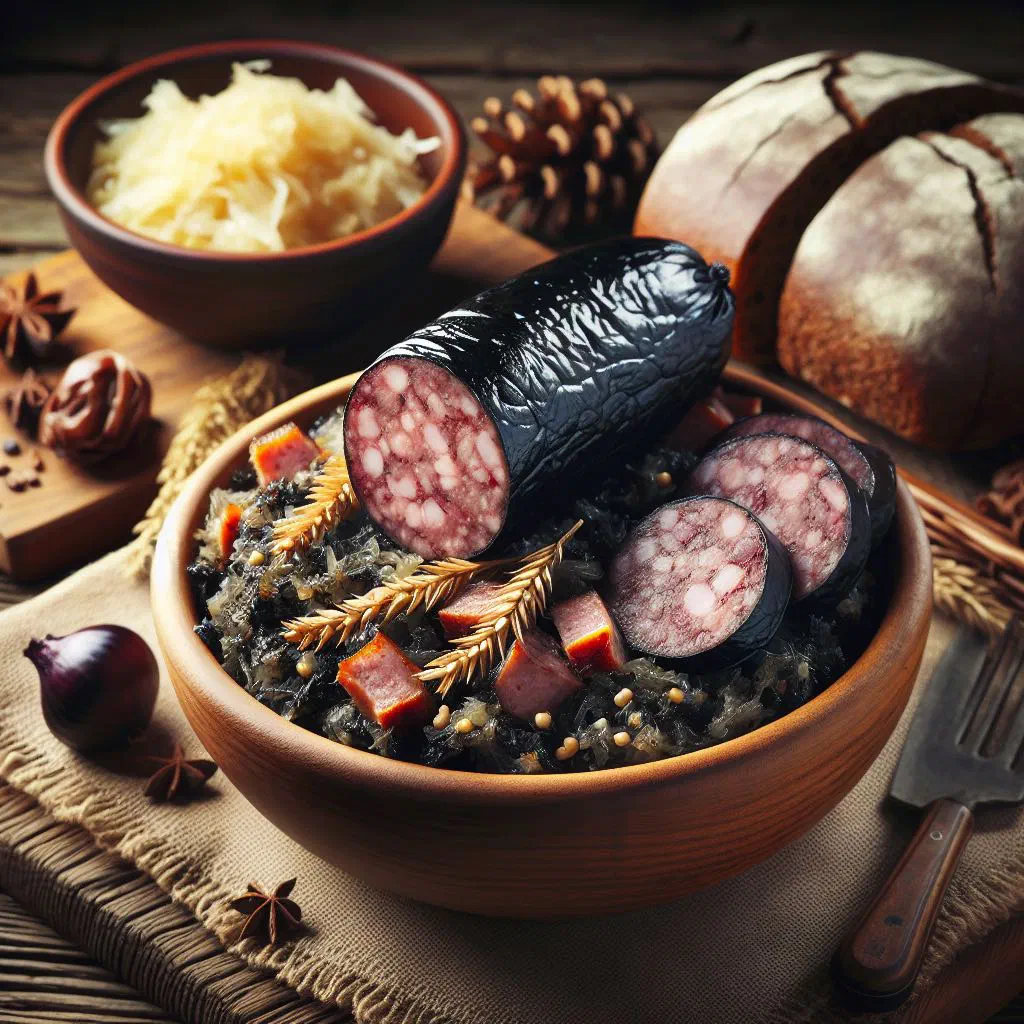
Verivorst is blood sausage filled with pearl barley, and Estonians eat it at Christmas with lingonberry jam. The barley is what distinguishes it from blood sausages elsewhere: it gives a loose, grainy texture rather than a smooth one.
About Verivorst
Verivorst is Estonia’s Christmas food. Pig’s blood, cooked barley, diced pork fat, onion and marjoram go into natural casings and are poached, then baked or fried until the skins split and crisp. Marjoram is the defining herb and Estonians use a great deal of it.
Supermarkets sell it from November. Making it at home is a December project.
Ingredients (serves 1–2)
- 200 g pearl barley
- 150 ml pig’s blood
- 100 g fatty pork belly
- 1 onion, chopped
- 2 cloves of garlic, finely chopped
- 1 tablespoon marjoram
- Salt and pepper to taste
- Natural sausage casings, for filling
Shopping for the ingredients
Fresh pig’s blood must be ordered from a butcher and used within a day or two; it is restricted in some countries. Natural casings come salted and need soaking and rinsing. Dried marjoram is what Estonian recipes call for, and a full tablespoon is correct rather than excessive.
Preparing the dish
Cook the barley until soft and let it cool completely. Warm ingredients will begin to set the blood. Strain the blood through a fine sieve to remove clots. Soak the casings in cold water for an hour, then run water through them.
Step-by-step instructions
- Cook the pearl barley until soft, then leave it to cool.
- Sweat the onion and garlic in a little fat until translucent, then allow to cool.
- Dice the pork belly finely and combine it with the barley, onion, garlic and pig’s blood.
- Season the mixture with marjoram, salt and pepper.
- Rinse the natural casings under running water and slide them onto the sausage filler.
- Fill the casings carefully, taking care that no air pockets form.
- Poach the filled sausages in a large pan of barely simmering water for about an hour.
Gluten-free / lactose-free version
Barley contains gluten, so verivorst is not gluten-free. Buckwheat groats make a workable substitute and are used in some Estonian households. The dish contains no dairy.
Tips for vegans and vegetarians
Blood sausage has no vegetarian equivalent. What Estonia does offer at the same table is rosolje, the beetroot salad, and tatrakotletid, buckwheat patties, both of which are proper dishes rather than substitutes.
More tips and tricks
Keep the poaching water below a simmer, around 80°C. A boil bursts the casings and you lose the lot. Prick each sausage a few times before poaching. And fill the casings loosely: barley swells and a tightly packed sausage will split.
Adapting the recipe to your taste
Some households add allspice or a little cream. Fry the poached sausages in butter until the skin blisters, which is how they are actually served. Baked in the oven with bacon over the top is the other method.
Ingredient substitutions
Ready-made verivorst, sold in Baltic and German shops in winter, only needs frying. Buckwheat replaces barley. Bacon can stand in for the pork belly.
Drink pairing ideas
Estonian dark beer suits it. Vodka or a herbal liqueur such as Vana Tallinn is the Christmas custom. Cranberry juice cuts the richness without alcohol.
Serving and presentation ideas
Serve it fried, with lingonberry jam, sauerkraut and roast potatoes, which is the Estonian Christmas plate. The jam is essential: the sweetness against the iron of the blood is what makes it work.
A bit of history
Blood sausage is old across northern Europe and survives because nothing from a slaughtered pig was wasted. Estonia fixed it to Christmas specifically, and verivorst with sült and roast pork is the standard festive table. It anchors Estonian cuisine in winter at least.
More recipe ideas
Summary: Verivorst
Verivorst is blood sausage filled with pearl barley and marjoram, poached then fried until the skin splits. Cool everything first, fill loosely, and keep the poaching water below a simmer.