National Dish Ethiopia: Injera (Recipe)
In this article
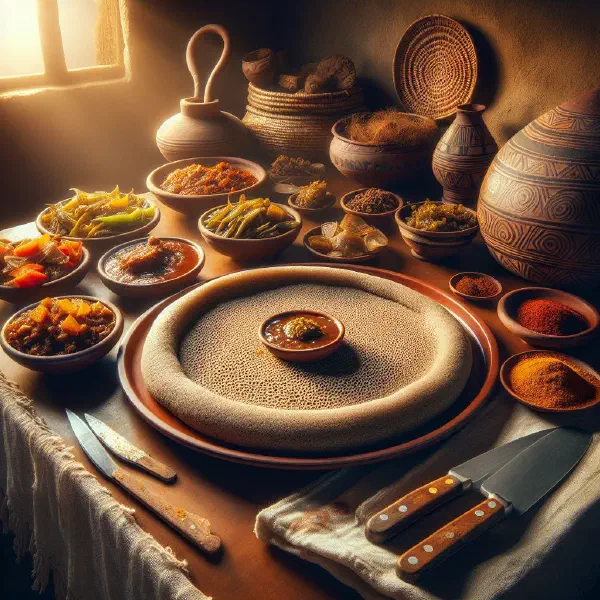
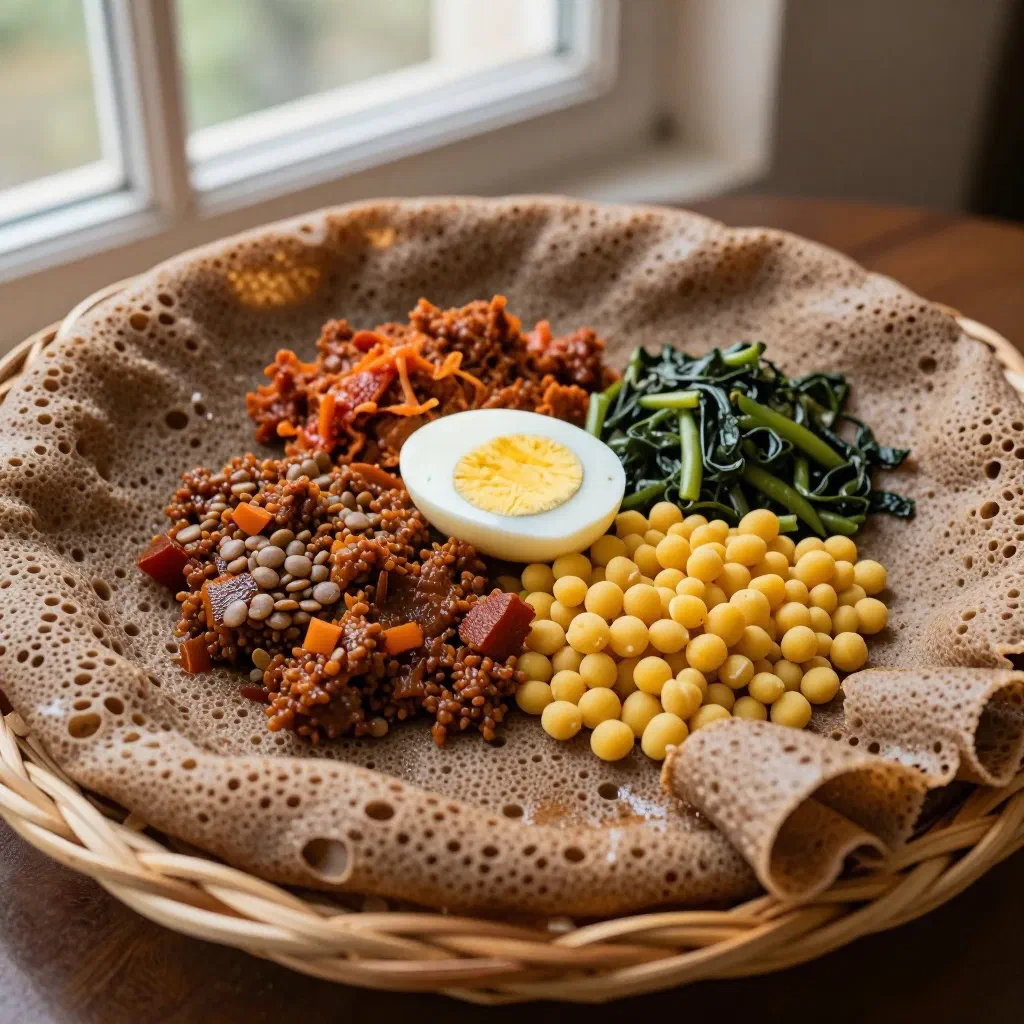
Meet Injera, the soft, tangy flatbread that sits at the very heart of Ethiopian dining. Made from nutty teff flour and fermented until it turns pleasantly sour, this spongy bread doubles as both plate and cutlery, ready to scoop up richly spiced stews. Its characteristic pockmarked surface, reminiscent of a moonscape, takes a little patience to master, but the reward is an unmistakably authentic taste of Ethiopia in your own kitchen.
About Injera
Injera is far more than a simple flatbread; it is the cornerstone of Ethiopian cooking and is regarded as the national dish of Ethiopia. It is traditionally made with teff flour, a tiny grain that thrives on the Ethiopian highlands. Injera’s unique texture and gently sour flavour make it an unmistakable part of any meal. It is both plate and utensil, its soft, sponge-like structure being perfect for scooping up and complementing other dishes. Preparing injera, with its signature surface that recalls a lunar landscape, calls for patience and practice, yet it rewards you with a truly authentic eating experience.
Ingredients (serves 1–2)
- 250 g teff flour
- 500 ml water
- 1/2 teaspoon salt
- 1/2 teaspoon baking powder (optional)
Shopping for the ingredients
Teff flour can be found in organic shops, health food stores or online. Pay attention to the quality of the flour and favour organic products wherever possible to achieve the most authentic result. Some shops also stock ready-made injera baking mixes, which can simplify the preparation process. If you are already stocking up on Ethiopian staples, it is worth picking up the ingredients for a hearty Doro Wat to serve alongside.
Preparing the dish
Make sure all the ingredients are at room temperature before you begin. Teff flour should be sifted before use to avoid lumps. Allow yourself plenty of time, as injera needs a resting period to develop its characteristic bubbles. A little planning goes a long way here, since the fermentation is what gives the bread its distinctive tang and airy structure.
Step-by-step instructions
- In a large bowl, mix the teff flour with the water and whisk into a smooth batter.
- Leave the batter covered in a warm place for 1–3 days, until it begins to ferment and forms bubbles.
- Stir in the salt and, optionally, the baking powder to encourage the bubbling.
- Heat a non-stick pan over medium heat and pour in a ladleful of batter, spreading it evenly.
- Cook the injera until the surface is dry and the edges lift away easily.
- Carefully remove the injera from the pan and repeat with the remaining batter.
Gluten-free / lactose-free version
Happily, injera is naturally gluten-free and lactose-free when made in the traditional way, since teff contains no gluten and the batter uses only flour, water and salt. This makes it an ideal bread for anyone with a gluten intolerance or a dairy allergy. Simply take care with any store-bought baking mixes, checking that no wheat flour or milk powder has been added, and you can enjoy this Ethiopian staple without a second thought.
Tips for vegans and vegetarians
Injera is entirely vegan by nature, as it is made from nothing more than teff flour, water and a pinch of salt. That makes it the perfect base for plant-based feasts, especially when paired with lentil and vegetable stews. Try it with a comforting bowl of Misir Wat or a creamy Shiro for a satisfying meal that suits every kind of diet.
More tips and tricks
The resting time of the batter can vary depending on how sour you want the result; the longer it rests, the tangier the flavour. It pays to heat the pan thoroughly before adding the first injera, so you achieve the best possible consistency. Should the injera turn out too thick, simply add a little water to the batter to reach the right texture.
Adapting the recipe to your taste
If you cannot find teff flour, other flours such as wheat flour or buckwheat flour can be used as an alternative. You can also experiment with spices like cardamom or cumin to give your injera a personal touch. Adjusting the fermentation time is another easy way to make the bread milder or sharper according to your own preference.
Ingredient substitutions
If teff flour is not available, you can use half teff and half wheat flour. This does slightly alter the authentic flavour, but it makes the batter easier to handle, as wheat flour is more forgiving to work with. For a fully gluten-free swap, a blend of teff and a little rice or sorghum flour keeps the bread suitable for those avoiding gluten while preserving its characteristic tang.
Drink pairing ideas
A number of drinks pair beautifully with injera and the spiced stews it accompanies. A cup of freshly brewed Jebenna Bunna, Ethiopia’s ceremonial coffee, is a classic match, while the honey wine Tej offers a gently sweet counterpoint to the sour bread. For a non-alcoholic option, a cooling glass of water or a light herbal tea helps balance the warming heat of the accompanying dishes.
Serving and presentation ideas
Serve injera traditionally on a large communal platter, laying the bread flat as a base and spooning colourful stews and vegetables directly on top. Diners tear off pieces with their hands to scoop up each mouthful, making the meal a shared, sociable affair. A generous spread of contrasting dishes, such as a fiery Tibs and a mild Gomen, creates an inviting and bright table.
A bit of history
Injera has been baked on the highlands of Ethiopia and Eritrea for centuries, its story bound up with the cultivation of teff, one of the world’s oldest domesticated grains. Long valued for its nutritional richness and its ability to grow in tough conditions, teff became the foundation of everyday eating in the region. Over time, injera evolved into the communal centrepiece it is today, a symbol of hospitality and togetherness in Ethiopian cuisine.
More recipe ideas
Summary: Injera
Injera is more than a bread; it is the very fabric of an Ethiopian meal, part plate, part utensil and part shared experience. With its nutty teff flour, its gentle sourness and its unmistakable spongy texture, it turns every gathering into a feast. Injera brings people together around the table. Give this Ethiopian classic a try and discover the flavour that defines a nation’s cooking.