National Dish Ethiopia: Teff Injera (Recipe)
In this article
Discover Teff Injera, the soft, tangy flatbread that sits at the very heart of the Ethiopian table. Made from nutty, gluten-free teff flour and given its lift by a gentle fermentation, this airy bread is far more than a side. It doubles as plate and utensil, cradling the rich stews it is served with. With its lightly sour note and endlessly spongy texture, injera turns every meal into a shared, hands-on feast.
About Teff Injera
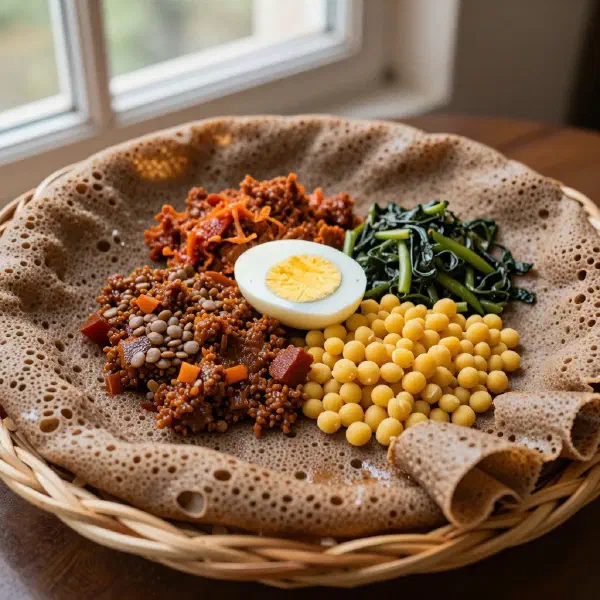
Teff Injera is a traditional Ethiopian flatbread made from the flour of the tiny, gluten-free teff grain. It has a distinctive, slightly sour flavour and an airy, honeycombed texture that makes it perfect for soaking up the delicious sauces and stews of Ethiopian cuisine. Injera is a staple food and a central part of the country’s dining culture, where it often is the plate itself and takes the place of cutlery. In this recipe you will learn how to make injera easily at home.
Ingredients (serves 1–2)
- 1 cup teff flour
- 1¼ cups water
- ½ teaspoon salt
- Optional: 1 teaspoon baking powder
Shopping for the ingredients
Teff flour is now widely available in health-food shops and online. If you are not sure where to find it, look for a well-stocked market for international foods. When buying, check that the flour is fresh and properly sealed to guarantee the best flavour. The other ingredients are usually already in the kitchen or easy to come by, which means the injera can be put together quickly.
Preparing the dish
To make injera, it is best to let the teff flour rest in water overnight. This fermentation stage is key to developing the bread’s characteristic flavour and to unlocking its healthful qualities. Alternatively, you can let it stand for just a few hours if you are pressed for time. Take care to mix the flour thoroughly with the water so you end up with a smooth, lump-free batter.
Step-by-step instructions
- In a bowl, combine the teff flour, salt and water and stir well.
- Cover the batter and let it rest at room temperature (ideally overnight).
- Heat a non-stick pan or a traditional injera pan. Add a little oil to the pan if you wish.
- Pour a ladleful of batter into the pan and spread it evenly to form a round shape.
- Cook until bubbles appear on the surface and the edges begin to lift away from the pan, about 3–5 minutes.
- Carefully lift out the injera and lay it on a clean tea towel to keep warm.
- Repeat with the remaining batter.
Gluten-free / lactose-free version
One of the best things about Teff Injera is that it is naturally gluten-free, which makes it an excellent option for anyone with a gluten intolerance. On top of that, the remaining ingredients are also lactose-free, since no dairy is needed. The recipe suits vegans beautifully, as everything in it is plant-based. Just be sure to avoid contaminated utensils to keep the preparation fully gluten-free.
Tips for vegans and vegetarians
Making injera calls for no animal products at all, so it is ideal for vegans and vegetarians. To boost its nutritional value further, you can stir a variety of seeds or grains into the batter, such as chia or flax seeds. Injera also pairs wonderfully with a whole range of plant-based dishes, making it a superb accompaniment to a wholesome, meat-free meal. Experiment with different stews to uncover new flavours, a comforting bowl of Shiro is a lovely place to start.
More tips and tricks
Making injera can feel a little tricky at first, but with a bit of practice you will master the batter in no time. When choosing your heat, make sure the pan is not too hot, as this raises the risk of the injera scorching. A splash of vinegar can help perk up the batter and intensify its flavour. Try out different cast-iron or non-stick pans to find the one that best suits your needs.
Adapting the recipe to your taste
You can adapt the recipe for injera however you like by varying the ingredients. If you prefer it a touch heartier, add a spoonful of fermented yoghurt for an even richer texture. For a slightly sweeter note, you might use a tablespoon of honey or beet syrup. Equally, you can reach for spiced teff blends to give the flatbread a little extra kick.
Ingredient substitutions
If you do not have teff flour to hand, you can also use other gluten-free flours such as buckwheat or chickpea flour. Bear in mind, though, that the texture and flavour will change. Blends of different gluten-free flours can safely be tried too. Experimenting with various types of flour can bring you fresh culinary experiences.
Drink pairing ideas
Injera goes wonderfully with a wide range of drinks. Traditionally in Ethiopia it is often served with Tej, a homemade honey wine. For an alcohol-free option, you can serve fresh mint tea or hibiscus tea, both refreshing and full of flavour. Even a cooling glass of water with a few slices of lemon can be a lovely addition to this dish. Choose whichever drink best suits your taste.
Serving and presentation ideas
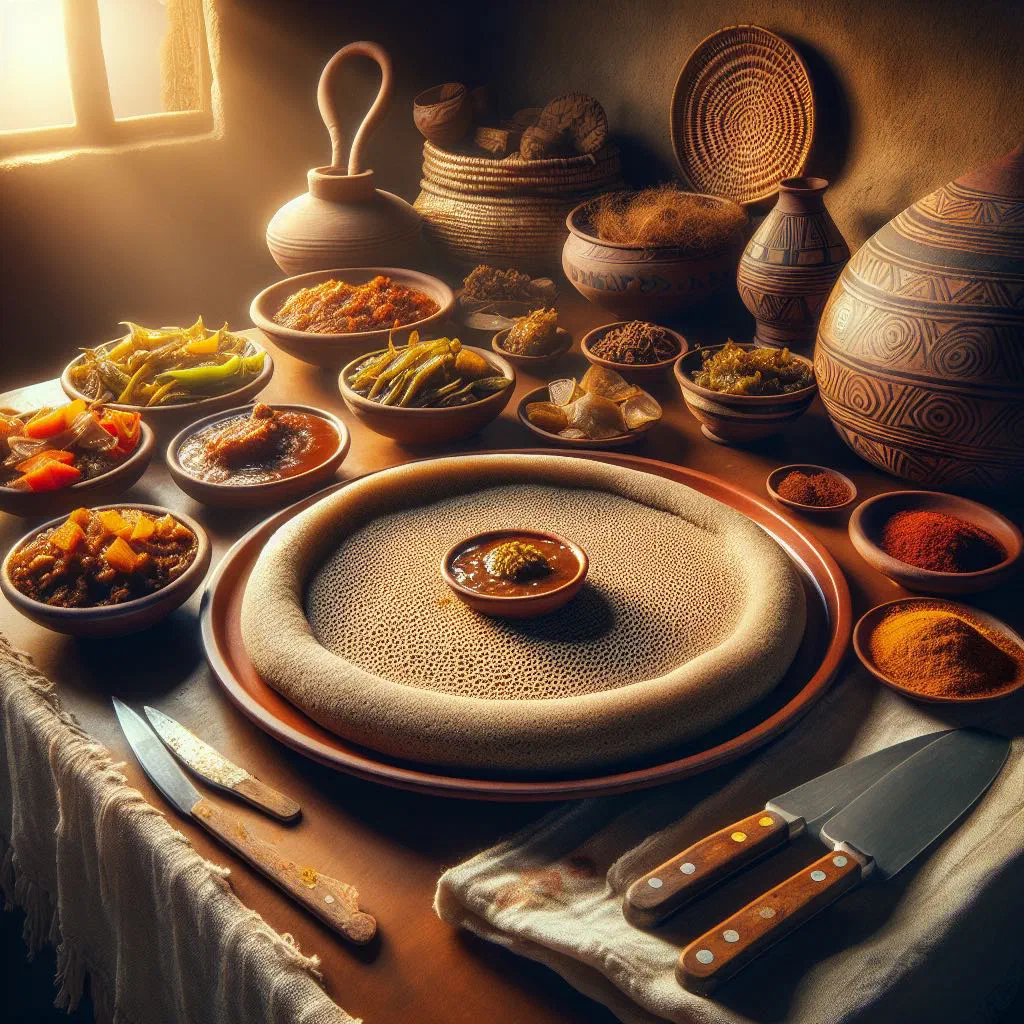
Serving injera can be a real occasion. Traditionally the injera is laid out on a large, flat platter, with the various stews arranged in the centre. This presentation makes it easy to share the food and turns the meal into a communal experience. Try it with a colourful Beyaynetu spread. Dress the table with traditional dishware or bright fabrics to create an inviting atmosphere. Remember, we eat with our eyes first.
A bit of history
Injera has a long history that reaches back to the earliest days of Ethiopian civilisation. As a staple food it symbolises the country’s culinary tradition and the social structure of eating, where people gather to share from a single platter. It is regarded as a symbol of hospitality and togetherness. Preparing and eating injera brings people together and nurtures a sense of community, a spirit at the very core of Ethiopian cuisine.
More recipe ideas
Summary: Teff Injera
Teff Injera is a delicious and nourishing dish that appeals to with its flavour and with its health benefits. Injera will enrich your meals. With its many uses and its simple preparation, it is ideal for any occasion. We hope we have brought the world of Ethiopian cooking a little closer and that you will try your hand at the art of making injera.