National Dish Gabon: Croquettes de Manioc (Recipe)
In this article
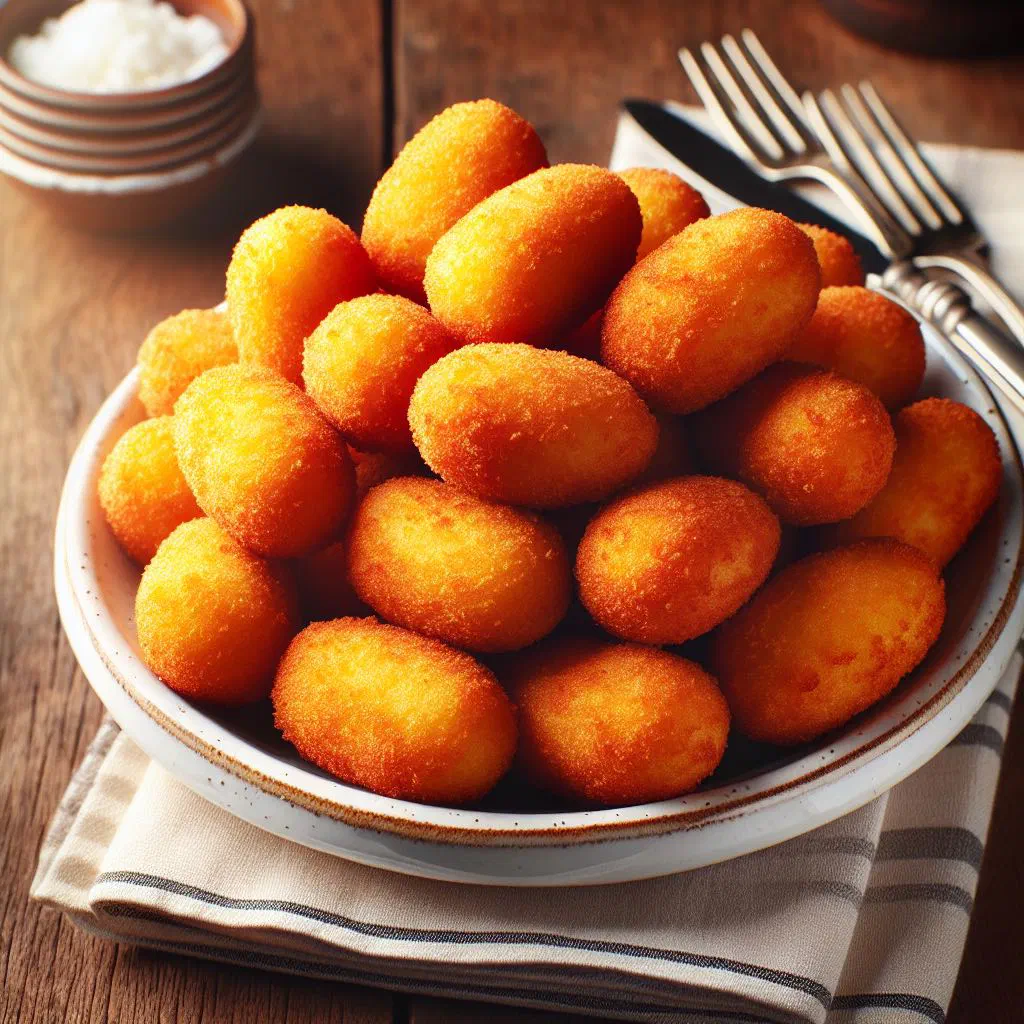
Discover Croquettes de Manioc, the crisp little cassava balls that Gabon has taken to its heart. Golden and crunchy on the outside, soft and comforting within, they turn a handful of humble ingredients into something genuinely special. They carry the warmth and hospitality of West Central Africa straight to your kitchen table.
About Croquettes de Manioc
Croquettes de Manioc are a much-loved national dish from Gabon, prized for their crisp texture and their savoury, satisfying flavour. These cassava balls are served most often as a snack or a side dish, and they are hard to imagine Gabonese cooking without. They bring simple, everyday ingredients together into a real treat that appeals to locals and visitors alike. Give the recipe a try and let the delicious aromas of Gabon win you over.
Ingredients (serves 1–2)
- 250 g cassava
- 1 small onion
- 1 garlic clove
- 1 egg
- Salt to taste
- Pepper to taste
- Oil for frying
Shopping for the ingredients
The ingredients for croquettes de manioc are easy to track down in most supermarkets, and easier still at African or Caribbean grocers and market stalls. Cassava is a staple across much of the African continent and should be available either fresh or as flour. Look for freshness in the onion and the garlic, as these carry much of the savoury backbone of the dish. Buying regionally where you can supports local traders and usually rewards you with better-quality produce.
Preparing the dish
Before you start on the croquettes de manioc, peel the cassava thoroughly and cut it into small, even pieces. Keep the water in the pan at a lively rolling boil so the pieces cook quickly and to a consistent softness. Once cooked, the cassava needs to drain properly before you mash it. Aim for a smooth mixture with no lumps, as any stray pieces will show up in the finished balls. The same careful groundwork pays off in a Fufu de Manioc, where cassava is again the star.
Step-by-step instructions
- Cook the peeled and chopped cassava in a pan of boiling water for around 20 minutes.
- Drain the cooked cassava well and mash it until you have a smooth mixture.
- Finely chop the onion and garlic, then fry them gently in a pan.
- Stir the onion and garlic mixture into the cassava mash and combine thoroughly.
- Beat in the egg and season with salt and pepper.
- Heat the oil in a pan and shape small portions of the mixture into balls.
- Fry the balls in the hot oil until golden brown, then drain on kitchen paper.
Gluten-free / lactose-free version
Croquettes de manioc are naturally gluten-free, since cassava is a starchy root rather than a grain. For a lactose-free version there is very little to change at all; simply use a plant-based egg replacer or leave the egg out entirely, as the cassava itself already provides plenty of binding. You can also switch to a different frying oil to suit your needs. That means anyone with an intolerance can enjoy these croquettes without a second thought.
Tips for vegans and vegetarians
Vegan cooks need only replace the egg in this recipe. Ground flaxseed or chia seeds stirred into a little water do the job beautifully and bind just as well. Both are not only plant-based but genuinely nutritious too. Make sure you fry only in vegetable oils to keep the dish entirely free of animal products. A fiery Pili Pili Sauce alongside makes a fine plant-based accompaniment.
More tips and tricks
To make croquettes de manioc even simpler on the day, you can peel and dice the cassava the evening before and keep it chilled in the fridge, which removes one whole step from the process. Different spices open up new variations too, with paprika or cumin giving the mixture a deeper, more aromatic character. It is also worth experimenting with fillings such as cheese or beans tucked into the centre of each ball for a creative twist.
Adapting the recipe to your taste
Croquettes de manioc lend themselves wonderfully to being tailored to your own preferences or those of your guests. You can dial the heat up or down by adding chilli, or take the recipe in a sweeter direction with a little sugar and cinnamon. Adding finely chopped vegetables or fresh herbs to the mixture opens up whole new flavour combinations. That flexibility lets you give every gathering its own personal stamp.
Ingredient substitutions
If fresh cassava is hard to come by, cassava flour works as a stand-in, although cooking the raw root does contribute aromas and a texture all of its own. Your choice of oil can vary as well, with sunflower or rapeseed oil producing a lighter result. Grated carrot or courgette folded into the mixture adds variety and lifts the nutritional value, much as it does in a Riz aux Légumes. These are all substitutions that slot neatly into the recipe without any fuss.
Drink pairing ideas
Croquettes de manioc go well with a broad range of drinks. Fruit juices such as pineapple or mango bring the flavours of the tropics to the table, and a spicy Jus de Gingembre is a particularly good match for the fried, savoury notes. Lightly sparkling water is a refreshing choice for a simpler pairing. For adults, a tropical beer or a light white wine rounds off the seasoning of the croquettes nicely.
Serving and presentation ideas
For an inviting presentation, arrange the croquettes de manioc on a nicely dressed plate and garnish them with fresh herbs. Banana leaves or a rustic wooden board lend an authentic touch that suits the dish well. Serving dips such as garlicky mayonnaise or a punchy salsa in small bowls alongside creates an extra layer of flavour, and a nutty Sauce d’Arachide works beautifully in the same role. A little care in the presentation makes the whole experience that much more memorable.
A bit of history
Croquettes de manioc have a long tradition in Gabonese culture. Cassava itself is a cornerstone of the national diet and has been cooked and served in countless forms for centuries. These fried balls often appear at celebrations and special occasions, and they stand as a symbol of the hospitality for which Gabon is known. The dish has evolved across generations and is enjoyed today in home kitchens and restaurants alike, a fine illustration of the resourcefulness of Gabonese cuisine.
More recipe ideas
Summary: Croquettes de Manioc
Croquettes de manioc are far more than a simple snack; they are a small piece of Gabonese culture and a genuine labour of love. With their crisp shell and soft, yielding centre, they are as straightforward to make as they are delicious to eat. These cassava balls can be adapted endlessly to suit whatever you or your guests happen to fancy. Enjoy this classic and create memories that reach well beyond the plate.