National Dish Gabon: Mikate (Recipe)
In this article
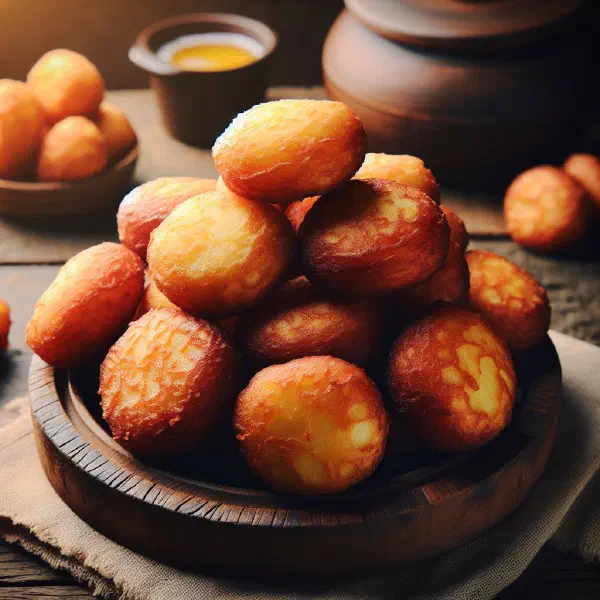
Meet Mikate, the golden little dough balls that Gabon reaches for whenever something sweet and satisfying is called for. Made from nothing more than flour, water and sugar, they puff up in hot oil into crisp-edged, pillowy rounds that are almost impossible to stop eating. They cost next to nothing, come together in minutes and taste like a celebration. Proof that the simplest recipes are often the most joyful.
About Mikate
Mikate are delicious fried dough balls that Gabon holds dear as a national favourite. They are a moreish snack built on a simple dough that comes together in no time at all. The main components, flour, water and sugar, deliver a straightforward but thoroughly satisfying flavour. Mikate work equally well as a between-meals snack or as a side, and they brighten up any table they land on.
Ingredients (serves 1–2)
- 200 g flour
- 100 ml water
- 50 g sugar
- Oil for deep-frying
- Optional: a pinch of salt and vanilla
Shopping for the ingredients
The ingredients for mikate are easy to track down in any local supermarket or grocery shop. Flour, sugar and oil are storecupboard basics that most households already have to hand. If you fancy adding a special touch, pick up some vanilla or a few spices to round out the flavours. Choose good-quality ingredients wherever you can, with a recipe this pared back, they make all the difference.
Preparing the dish
Before you start making mikate, set out all your ingredients in advance. This not only makes the cooking itself easier, it also means nothing gets forgotten along the way. A large, deep pan or a fryer is ideal for frying the balls evenly on all sides. Remember to have kitchen paper ready too, so the excess oil can drain away once they come out.
Step-by-step instructions
- In a bowl, combine the flour with the sugar and a pinch of salt.
- Slowly add the water, stirring until you have a smooth batter.
- Heat the oil in a deep pan or fryer.
- Using a spoon, drop small portions of the dough into the hot oil.
- Fry the balls for about 5–7 minutes, until golden brown.
- Drain the mikate on kitchen paper and serve warm.
Gluten-free / lactose-free version
For a gluten-free take on mikate, simply use gluten-free flour, which is widely available in supermarkets. Do check that all the other ingredients are gluten-free as well, so there is no risk of cross-contamination. A lactose-free version needs no work at all, since the recipe contains no dairy in the first place. That makes mikate a wonderfully easy snack for a whole range of dietary needs, much like the equally uncomplicated Beignets de Banane.
Tips for vegans and vegetarians
Making mikate is child’s play, and the recipe is naturally vegan. Because no animal products are involved, it is an ideal snack for vegans and vegetarians alike. If you are keeping an eye on how you eat, you can swap the sugar for chopped dates or maple syrup to get a more natural sweetness. These alternatives are healthier and broaden the flavour profile of the dish.
More tips and tricks
To get the best mikate, make sure the oil has come up to the right temperature before the dough goes in. If the oil is not hot enough, the balls turn greasy and soggy rather than light and crisp. You can also flavour the dough before frying, a little cinnamon or cocoa gives it a lovely warm, chocolatey note. Play with the size of the balls, too, to create different textures and impressions.
Adapting the recipe to your taste
The mikate recipe is remarkably versatile and easy to bend to personal preference. Add extra aromatics such as vanilla, lemon zest or chopped nuts to make the dough more interesting. You can also vary the size of the balls to suit the occasion, from bite-sized nibbles to more generous snacks.
Ingredient substitutions
If you do not have a particular ingredient to hand, there are plenty of alternatives to fall back on. Instead of wheat flour, for example, you can use almond flour or coconut flour to create a gluten-free version. In place of sugar, try pineapple or mango purée for a fruity sweetness, the same tropical touch that lifts Gateau de Banane. Substitutions like these change both the nutritional value and the flavour of your mikate considerably, and turn them into something a little different.
Drink pairing ideas
To round off your mikate, there are several drinks that sit beautifully alongside these fried snacks. Freshly squeezed lemon juice or a cup of ginger tea harmonises wonderfully with the sweet little balls, and a homemade Jus de Gingembre does the job perfectly. A fruity smoothie makes a refreshing accompaniment too. The right drink will deepen the whole experience.
Serving and presentation ideas
Presenting mikate can be simple yet striking. Arrange the balls on an attractive plate and dust them with icing sugar to make them look their best. Add fresh berries or a few mint leaves as a garnish for colour and freshness. A good-looking plate is more than a treat for the eyes. It also builds the anticipation before that first bite.
A bit of history
Mikate have their roots in Gabonese culture and are a traditional dish often served at celebrations and special occasions. The frying technique and the use of such simple ingredients reflect the way of life and the everyday food culture of Gabon. The dish tells the story of its people and their deep connection to the land and what it produces, a thread that runs through much of Gabonese cuisine. Today mikate are known far beyond Gabon’s borders and enjoy a genuinely international following.
More recipe ideas
- Beignets de Manioc
- Beignets de Patate Douce
- Croquettes de Manioc
- Galette de Patate Douce
- Banane Plantain Frite
Summary: Mikate
In short, mikate are a delicious and straightforward snack from Gabon. With only a handful of ingredients and a fuss-free method, they suit just about any occasion. Whether as a between-meals bite, at a party or simply for the pleasure of it, mikate sweeten the day and offer a genuine taste of West and Central African food culture. Discover the treasures of the Gabonese kitchen and enjoy everything this little dish has to give.