National Dish Gabon: Saka-Saka (Recipe)
In this article
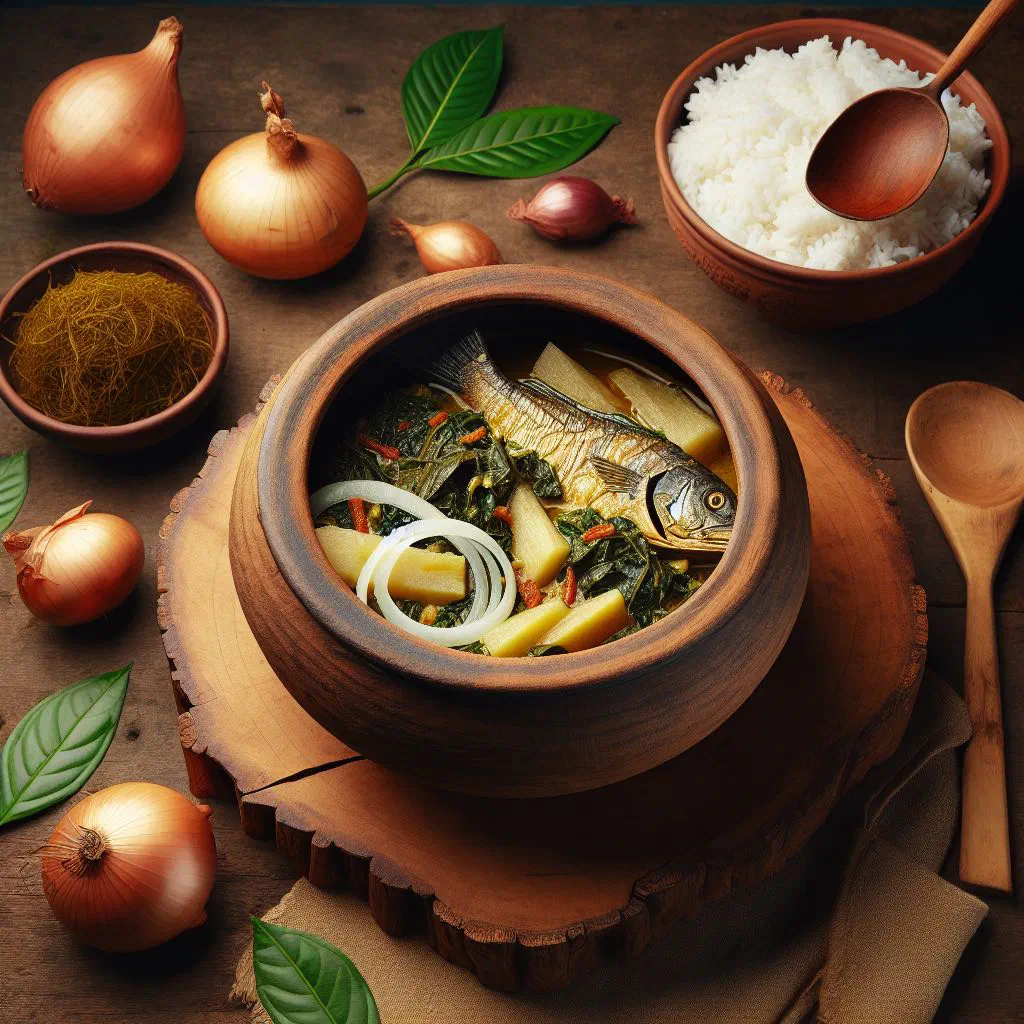
Meet Saka-Saka, the deep green, slow-simmered cassava leaf stew that Gabon calls its national dish. Rich with palm oil, sweetened by softened onions and lifted by garlic and fresh chillies, it is the sort of cooking that fills a whole house with its aroma long before anyone sits down to eat. In Gabon it is rarely made alone, friends and family gather to chop, stir and talk while the pot bubbles away. Naturally vegan and satisfying enough to stand as a full meal, it is a wonderful introduction to Central African home cooking.
About Saka-Saka
Saka-Saka is the national dish of Gabon and a genuine culinary experience. It is built around cassava leaves, simmered gently in a savoury sauce of palm oil, onions and a handful of well-chosen spices. Cooking it is not simply a kitchen task but a meaningful part of Gabonese culture and tradition. People often come together to prepare and share this dish, and that sense of community is as much a part of Saka-Saka as the ingredients themselves.
Ingredients (serves 1–2)
- 200 g fresh cassava leaves
- 3 tablespoons palm oil
- 1 onion, finely chopped
- 2–3 cloves of garlic, chopped
- 1–2 chillies (to taste)
- Salt and pepper to taste
- Optional: fish or meat for extra flavour
Shopping for the ingredients
The ingredients for Saka-Saka are stocked by most African and Asian grocers. Look out for fresh cassava leaves, as they are the key to an authentic flavour. If fresh leaves are not available, frozen or dried versions make a reasonable substitute, although both the texture and the taste will shift a little. Palm oil is the other defining element of the dish, so it is worth paying attention to quality here to draw out the fullest aromas.
Preparing the dish
Before you begin cooking, wash the cassava leaves thoroughly and cut them down if needed so that they cook evenly. Chop the onion, garlic and chillies as well, so everything is ready to go. Laying out all your ingredients close to the hob before you start makes for a much smoother session at the stove. A tidy, well-organised work surface lets you move through the steps calmly and combine each element at just the right moment.
Step-by-step instructions
- Heat the palm oil in a large pan over a medium heat.
- Add the chopped onions and fry until translucent.
- Stir in the garlic and chillies and fry everything for a further 2 minutes.
- Add the washed cassava leaves and stir well so they are coated in the sauce.
- Cover the pan and leave everything to simmer over a low heat for around 30 minutes.
- Season to taste with salt and pepper and serve hot.
Gluten-free / lactose-free version
Saka-Saka is naturally gluten-free and lactose-free, since it contains neither dairy nor any gluten-bearing ingredients. That makes it an easy choice for anyone with a gluten intolerance or lactose intolerance. Even so, it is worth checking the spices and seasonings you use for additives that might contain traces of gluten or lactose. All in all, Saka-Saka is a flavourful option that suits a wide range of dietary needs.
Tips for vegans and vegetarians
Saka-Saka is already an excellent vegan dish, which makes it especially appealing to vegetarians and vegans alike. You can make it more varied still by adding other vegetables such as carrots or spinach for extra nutrients. If you would like more protein, tofu or tempeh both work beautifully and give the dish a better balance. Do experiment with different spices and herbs to tune the flavour to your own taste, much as you would with a Sauce Folong.
More tips and tricks
To make cooking Saka-Saka easier, prepare and store your chopped ingredients in advance. It saves time at the stove and means you can throw together an authentic meal on the spur of the moment. Adding more or fewer chillies lets you dial the heat up or down to suit the table. Above all, be patient: give the flavours time to melt into one another for the roundest, fullest result.
Adapting the recipe to your taste
The Saka-Saka recipe is easily adjusted to your own flavour preferences. Feel free to try different varieties of onion or garlic to shift the aroma. Your choice of spices is another simple way to develop a personal signature. For a heartier version you can also add fish or meat, which brings extra savour and protein, an approach shared by dishes such as Viande En Sauce Tomate.
Ingredient substitutions
If you cannot find fresh cassava leaves, use spinach or chard instead to achieve a similar taste and texture. When it comes to the oil, olive oil makes a lighter alternative, though it will never quite match the characteristic depth of palm oil. In place of fresh chillies, chilli powder works perfectly well and lets you set the heat exactly where you want it. Creative variations like these are a good way to discover new flavour combinations.
Drink pairing ideas
Several drinks round out the flavours of Saka-Saka nicely. A refreshing fruit juice, such as pineapple or mango, is a superb match and brings a welcome sweetness. If you prefer something alcoholic, a light beer or a white wine will complement the dish without overwhelming it. Serve everything well chilled, a cold glass makes the meal all the more enjoyable, as it does alongside a warming Soupe Darachide.
Serving and presentation ideas
Presentation matters when Saka-Saka reaches the table. Serve it in an attractive bowl and garnish with fresh herbs such as coriander or parsley. Adding colourful vegetables on the side improves not only the look of the plate but its nutritional value too. A thoughtful arrangement whets your guests’ curiosity as much as their appetite, and sets up a meal they will remember.
A bit of history
Saka-Saka has a long history and is deeply rooted in traditional Gabonese cuisine. It is not merely something to eat but a symbol of community and of the country’s culture. The use of cassava leaves and palm oil reflects how readily these ingredients grow across the region. Over the years Saka-Saka has spread well beyond Gabon’s borders and now enjoys an international following, standing as one of the finest ambassadors of Gabonese cuisine.
More recipe ideas
Summary: Saka-Saka
Saka-Saka is a delicious, nourishing dish that brings the flavours of Gabon into your own kitchen. With its wholesome base of cassava leaves and its savoury sauce, it is straightforward to make and easy to adapt to different diets and tastes. Use fresh ingredients, follow the preparation tips closely, and you will create something genuinely authentic that friends and family will love. Give Saka-Saka a try and enjoy a piece of Gabonese culture.