National Dish Georgia: Churchkhela (Recipe)
In this article
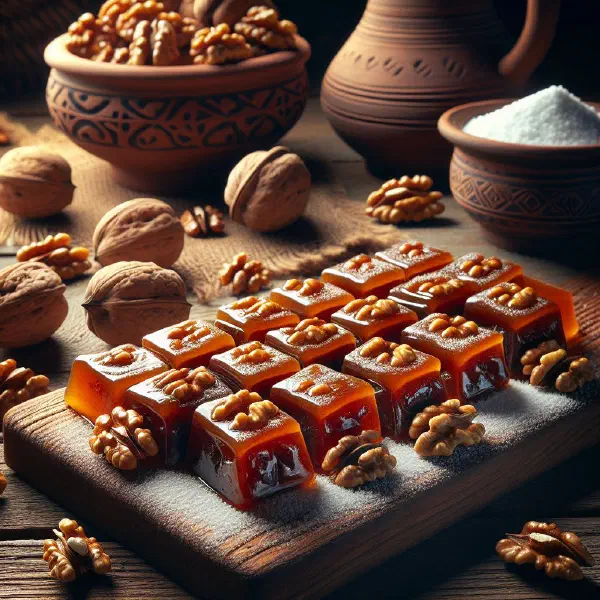
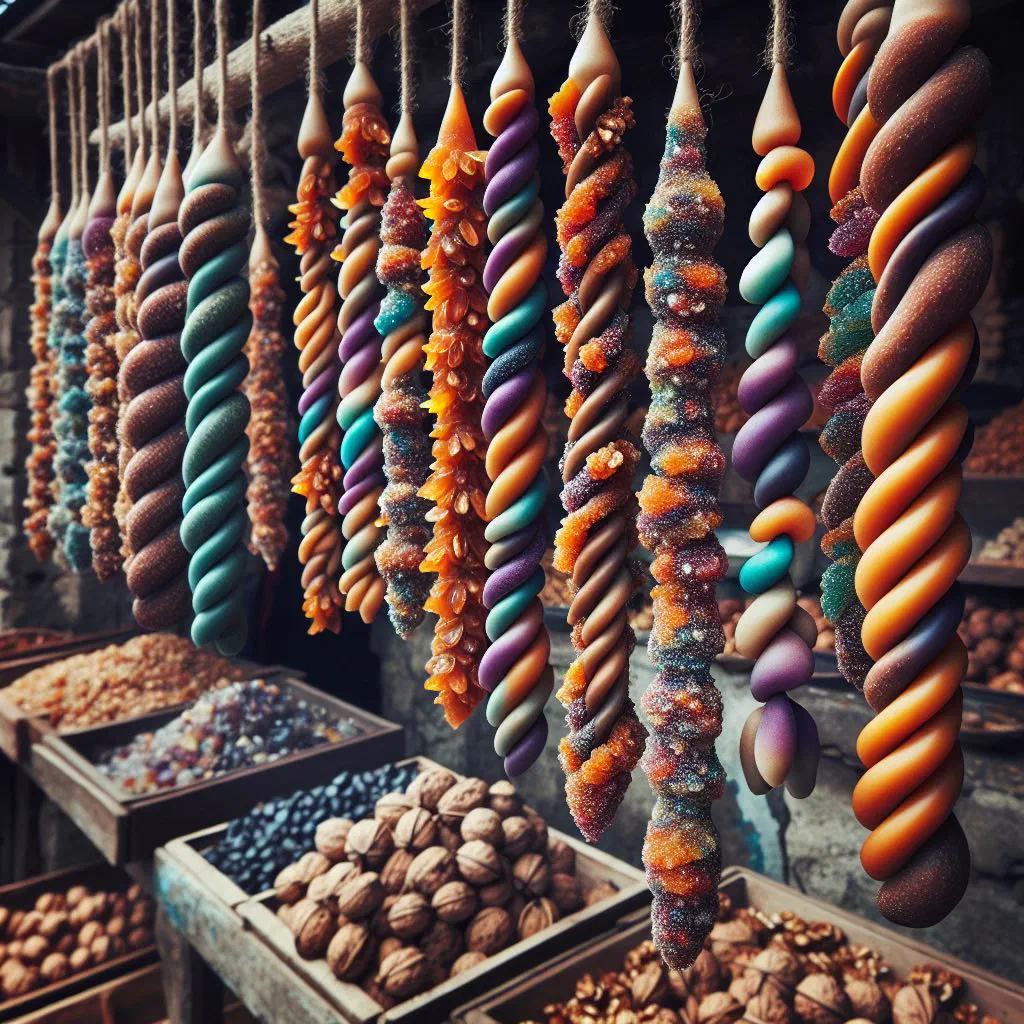
Discover Churchkhela, the sweet that has become a symbol of Georgia. Strings of walnuts are dipped again and again into thickened grape juice until they set into glossy, candle-shaped batons. There is no refined sugar in sight, no baking involved and no special equipment needed. Just fruit, nuts and patience. Bring a taste of the Caucasus into your own kitchen with this ancient and wonderfully simple treat.
About Churchkhela
Churchkhela is a traditional Georgian sweet built on an unusual but brilliant combination of nuts and grape juice. It is eaten as a snack throughout the year and counts as an important part of the country’s food culture. The method is straightforward: nuts threaded onto string are dipped into a thick grape juice that has been thickened with flour, then left to dry. The resulting texture is genuinely unique, offering a lovely balance of crunch from the nuts and a soft, chewy juiciness from the fruit coating.
Ingredients (serves 1–2)
- 200 ml fresh grape juice
- 100 g nuts (walnuts or hazelnuts work best)
- 50 g flour (or rice flour for a gluten-free version)
- Sugar to taste
- A pinch of cinnamon (optional)
Shopping for the ingredients
For churchkhela you should always favour fresh grape juice, as it gives by far the best flavour. Many markets in Georgia sell specific grape varieties chosen precisely for juicing, and pressing your own is well worth the effort. The nuts can be picked according to preference; walnuts are the traditional choice, though other nuts work perfectly well. Do not forget to check the quality of the flour, particularly if you intend to make a gluten-free batch.
Preparing the dish
Preparing Churchkhela is relatively simple, but it does call for a little patience. Excess liquid in the grape juice is reduced by thickening it gently with flour until you reach the ideal consistency. At the same time the nuts should be washed thoroughly to remove any dust or residue. It is also well worth toasting the nuts lightly beforehand, as this deepens their flavour considerably and gives the finished sweet more character.
Step-by-step instructions
- Press the grapes to extract fresh juice, then heat it in a pan over a medium heat.
- Add the flour slowly, stirring constantly, until the mixture becomes thick and glossy.
- Dip the nuts into the mixture, making sure they are evenly coated all over.
- Hang the coated nuts on a clean cloth to dry, or set them somewhere well ventilated.
- After around two to three days the Churchkhela is ready to serve.
Gluten-free / lactose-free version
For a gluten-free version of churchkhela, simply use rice flour in place of wheat flour. This gives a very similar texture without any gluten-containing ingredients. The recipe is naturally lactose-free in any case, since no dairy products are involved at any stage. Do take care to choose gluten-free options for the other ingredients too, particularly any sweeteners you decide to add.
Tips for vegans and vegetarians
Churchkhela is ideal for vegans, as the recipe contains no animal products whatsoever. To keep everything plant-based, you can use natural sweeteners such as agave syrup or stevia to control the sugar content. This lets you dial the sweetness up or down to suit your own taste. Using seasonal fruit for the juice is also highly recommended, since it makes a noticeable difference to the finished flavour.
More tips and tricks
If you are making churchkhela for the first time, it helps to run a small test batch with a reduced quantity. That way you can adjust the consistency and sweetness to your liking before committing to a larger amount. The choice of nut matters a great deal, too, as some varieties carry a far more intense flavour than others. Store the finished churchkhela in an airtight container to keep it fresh, much as you would with Tklapi, the country’s chewy fruit leather.
Adapting the recipe to your taste
One of the great strengths of churchkhela is how easily the recipe bends to personal preference. Experiment with different nuts such as almonds or cashews to discover new flavour combinations. You can also adjust the level of sweetness simply by adding more or less sugar. For colour, other fruit and even vegetable juices can be used to create striking visual effects on the finished strings.
Ingredient substitutions
Instead of fresh grape juice you might use other fruit juices such as pomegranate juice or apple juice, each producing a completely different character. Likewise, dried fruit or seeds can be dipped in place of nuts. These alternatives add variety of flavour and to the nutritional value of the snack. Think about which combinations suit you best and let your creativity run free, the same spirit that produces sweets like Gozinaki.
Drink pairing ideas
Plenty of drinks make a fine partner for churchkhela, including freshly brewed tea or a refreshing grape smoothie. Another excellent option is a glass of Georgian wine, which harmonises beautifully with the sweetness of the snack, a Tsinandali is a classic choice. Lightly sparkling mineral water works well too, cleansing the palate and letting the flavours of the nuts and grape come forward.
Serving and presentation ideas
To present churchkhela attractively, arrange it on a handsome wooden board, ideally alongside a selection of other Georgian treats such as Matsoni with Honey and Nuts. Fresh herbs or edible flowers help bring the colours to life. A small drizzle of honey on the plates adds an extra dimension of flavour. The more thought you put into the presentation, the more pleasure the sweet gives when it reaches the table.
A bit of history
The origins of Churchkhela reach back into antiquity and are deeply rooted in Georgian culture. The sweet was once sold at markets and was a favourite snack for travellers and pilgrims, since it kept well and carried a great deal of energy in a small package. The methods of making it have been passed down from generation to generation, which is what makes it such an important part of the Georgian heritage. This nut-and-grape confection symbolises Georgian hospitality and the abundance of the land, a theme that runs right through Georgian cuisine.
More recipe ideas
Summary: Churchkhela
All in all, churchkhela is far more than a delicious sweet; it is a marker of Georgian culture and tradition. Making it is simple and calls for no special cooking skills at all, only a little time and patience. It offers a rare chance to eat something genuinely wholesome that still satisfies a sweet tooth completely. Perhaps the many possible variations will inspire you to bring this recipe into your own repertoire of treats.