National Dish Georgia: Lobio (Recipe)
In this article
Meet Lobio, the hearty bean stew that Georgians reach for whenever the table needs filling and the mood needs lifting. Slow-simmered red kidney beans are crushed to a rough, comforting mash and folded through with garlic, ground walnuts and the warm, hay-like scent of blue fenugreek. It is humble food with real depth, the sort of dish that tastes of a kitchen where people have been cooking the same thing, happily, for generations.
About Lobio
Lobio is Georgia’s national pride, and rather more than simply a bowl of beans. It is famous for its simplicity and its remarkable richness of flavour, built from red kidney beans, fresh coriander, walnuts and a distinctive blend of spices. Why is it the national dish? Because it embodies the hospitality and warmth that run through Georgian culture. It appears at family celebrations and communal feasts, offering a real sense of togetherness and sharing. What makes it special is the freshness of the ingredients and a traditional method handed down from generation to generation, so that every mouthful carries a story.
Ingredients (serves 1–2)
- 200 g red kidney beans, soaked overnight
- 2–3 tablespoons vegetable oil
- 1 medium onion, finely chopped
- 2 cloves garlic, crushed
- 1 teaspoon ground coriander
- 1 teaspoon red chilli powder
- 1/2 teaspoon ground fenugreek seed
- 1/2 teaspoon ground blue fenugreek
- Salt to taste
- Freshly ground black pepper to taste
- A few sprigs of fresh coriander, chopped
- 1 tablespoon walnut kernels, ground
- 1 tablespoon white wine vinegar, or to taste
Shopping for the ingredients
For a truly authentic lobio, seek out good-quality dried red kidney beans and spices that still smell lively rather than dusty. Several of the more specialised ingredients, blue fenugreek above all, may not turn up in an ordinary supermarket, but a well-stocked international or Eastern European grocer will usually have them. Do not compromise on the fresh coriander: it gives the dish its characteristic flavour, and tired leaves simply will not do the job.
Preparing the dish
Make sure the beans are soaked overnight, or for at least eight hours, so they soften properly during cooking. Measure out all the spices in advance and set them within reach, since they go into the pan in quick succession. Chop the onion and crush the garlic before you start too, a little groundwork makes the whole process calm and unhurried, much as it does with a batch of Khinkali.
Step-by-step instructions
- Drain the soaked beans, tip them into a pan and cover with fresh water. Bring to the boil and simmer for around 1–1.5 hours, until the beans are tender.
- Meanwhile, heat the oil in a separate pan and soften the onion until translucent. Add the garlic, ground coriander, chilli powder, fenugreek seed, blue fenugreek, salt and pepper, and cook for a further 2 minutes.
- Once the beans are done, drain off the excess water and crush them lightly to give a coarse, rustic texture.
- Stir the spiced onion mixture through the beans and combine well. Fold in the fresh coriander and the ground walnuts, then season with white wine vinegar.
- Continue to simmer gently until the flavours have married and the stew has reached the consistency you like.
Gluten-free / lactose-free version
Lobio is naturally gluten-free and lactose-free, which makes it an easy dish to put in front of guests with dietary restrictions. Everything in the pot, beans, vegetables, nuts and spices, is free of both wheat and dairy. The only thing to watch is what you serve alongside: swap traditional wheat bread for a gluten-free loaf or for mchadi, the Georgian cornbread, and the whole meal stays safe.
Tips for vegans and vegetarians
Lobio is vegan as it stands, with no butter, stock or dairy anywhere in the recipe. Do check that your white wine vinegar has not been fined with animal-derived products, as some varieties are. The ground walnuts already provide plenty of richness and protein, so there is no need to add anything else to make the stew satisfying. It sits comfortably alongside other plant-based Georgian favourites such as Pkhali.
More tips and tricks
The beans can be cooked ahead and frozen in portions, which cuts the preparation time dramatically on a weeknight. Stir the pot regularly while the beans simmer so nothing catches and scorches on the base. If you would like a thicker, creamier stew, crush a few more of the beans against the side of the pan; if it has gone too dense, loosen it with a splash of water.
Adapting the recipe to your taste
If you prefer things gentler, simply reduce the amount of chilli powder. For a nuttier, more luxurious result, increase the quantity of walnuts, the stew will only be better for it. Some cooks add a spoonful of tomato purée for depth and colour, while others keep it strictly traditional. Adjust the vinegar at the end too, tasting as you go until the sharpness balances the earthiness of the beans.
Ingredient substitutions
Blue fenugreek can be replaced with a mixture of fennel and mustard seed to approximate its distinctive aroma, though the flavour will not be identical. Instead of walnuts, other nuts such as hazelnuts work well and create a slightly different texture. Red kidney beans can give way to pinto or borlotti beans at a pinch, and a squeeze of pomegranate molasses makes a fine stand-in for the vinegar.
Drink pairing ideas
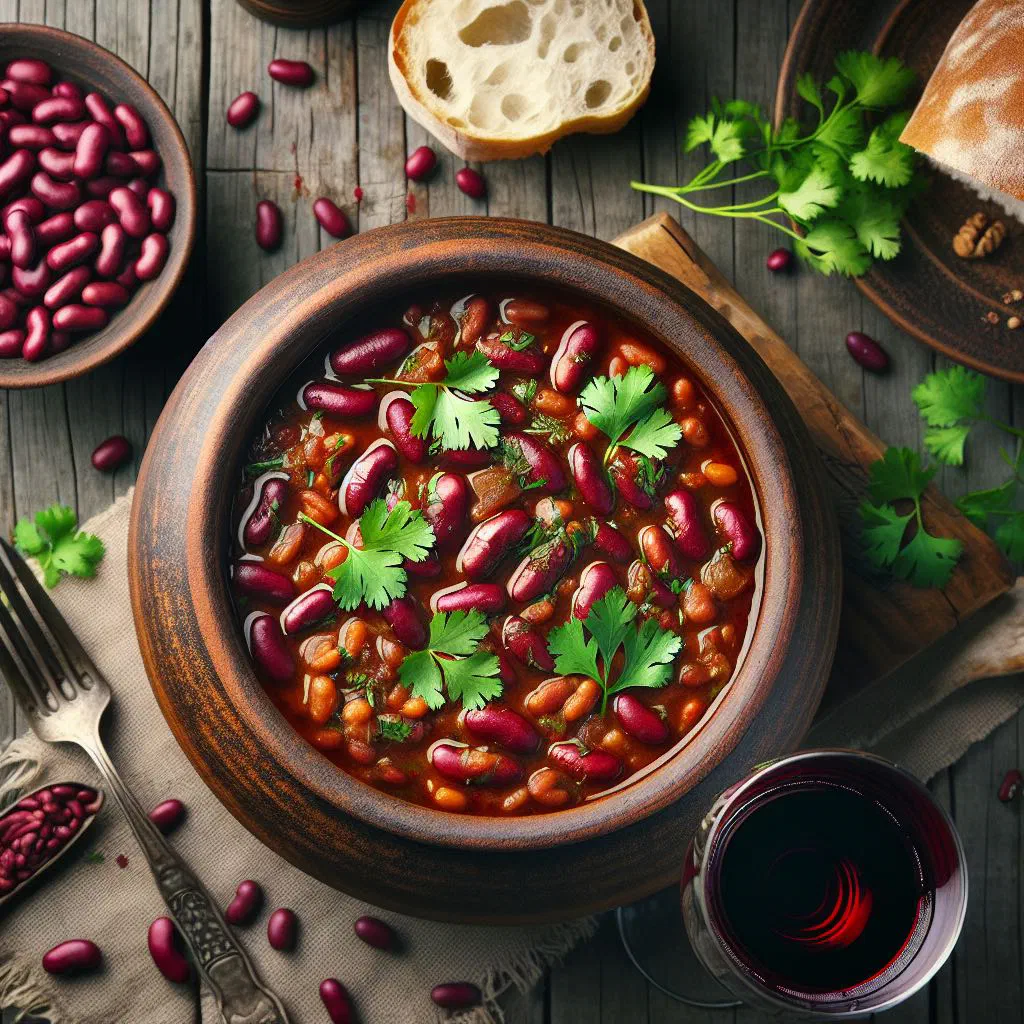
A dry Georgian red wine is an excellent match for lobio, standing up nicely to the spices and the walnuts. Those who prefer something without alcohol can turn to traditional Georgian tea or to tarkhuna, the bright green tarragon lemonade found all over the country. A glass of sparkling mineral water with lemon also cuts pleasantly through the richness of the beans.
Serving and presentation ideas
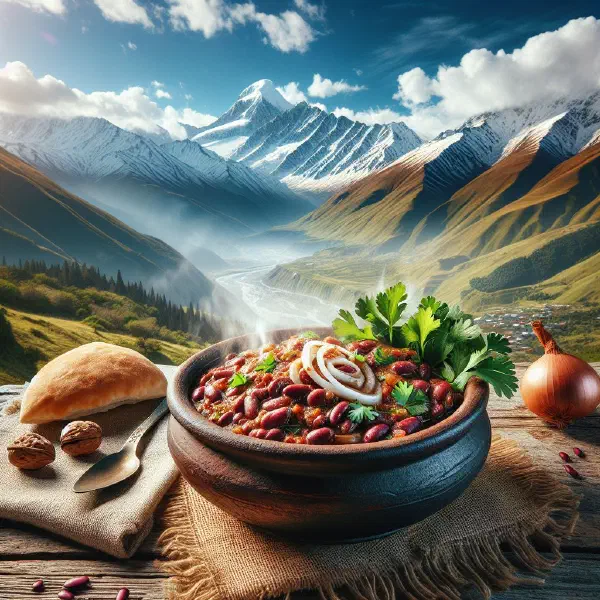
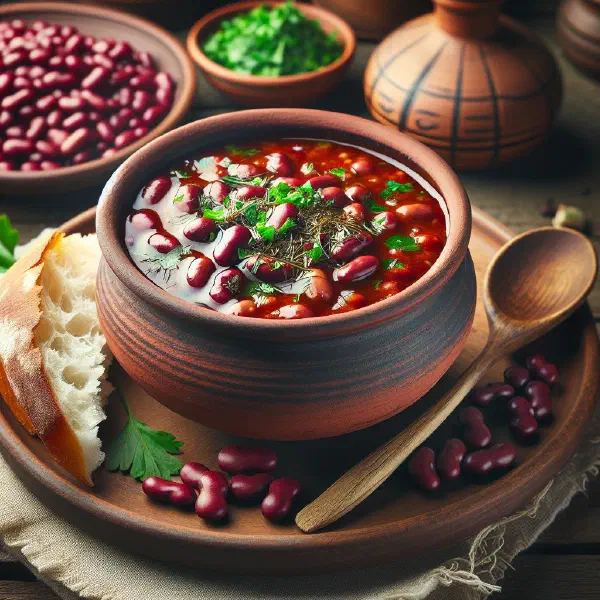
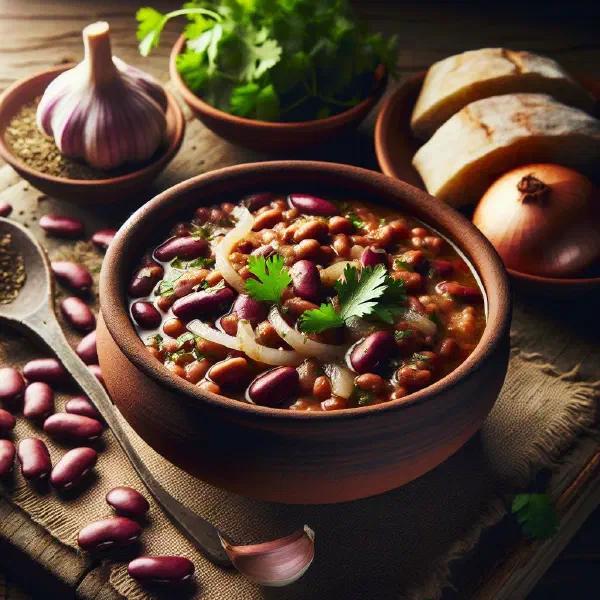
Serve lobio in a deep bowl or, better still, in a traditional Georgian clay pot, scattered with fresh coriander leaves. Presenting it on a colourful platter with a piece of Georgian bread such as Tonis Puri reinforces the sense of occasion. Pickled vegetables and a few spring onions on the side complete the picture and give guests something to nibble between spoonfuls.
A bit of history
The roots of this stew reach deep into Georgian history and culture. Originally a meal for the poorer parts of society, lobio has grown into a piece of national heritage enjoyed equally across every social circle. The dish reflects Georgian values such as hospitality and the gathering of family and friends around one table. Together with the cheese breads and walnut sauces of the region, it forms the backbone of Georgian cuisine.
More recipe ideas
Summary: Lobio
Lobio is a versatile and deeply satisfying dish that mirrors the Georgian soul. With its blend of aromatics and traditional ingredients, it delivers a flavour experience you will not find anywhere else. The simplicity of the method, paired with how readily the recipe bends to personal preference, makes it a favourite for keen cooks and complete beginners alike. Set a pot on the stove, let it bubble away, and share it the way Georgians do, generously.