National Dish Georgia: Pkhali (Recipe)
In this article
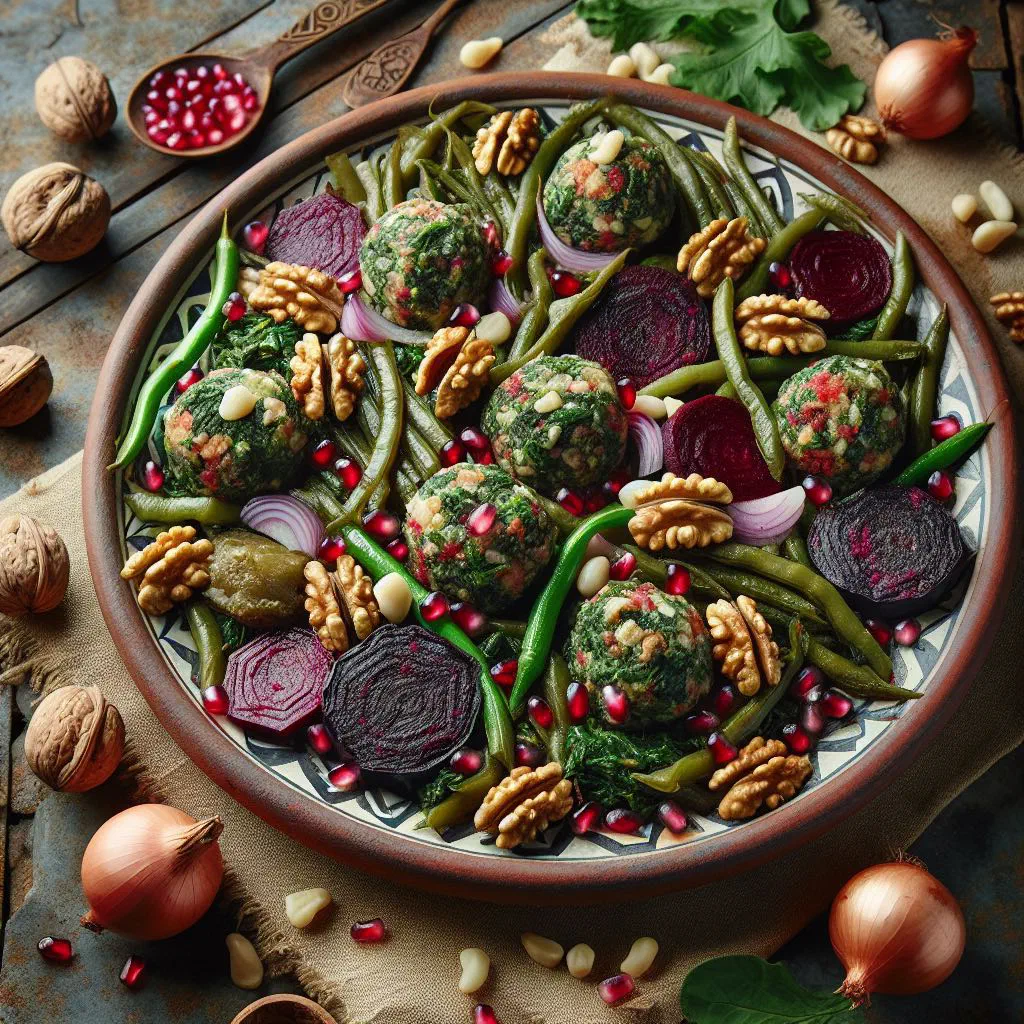
Discover Pkhali, one of Georgia’s most colourful and quietly brilliant creations. This vegetable and walnut paste turns humble greens into something rich, creamy and deeply aromatic, scented with garlic, herbs and warm spices. Served in little mounds and crowned with ruby pomegranate seeds, it works beautifully as a starter, a side or part of a generous shared table. It is proof that simple ingredients, treated well, can be utterly memorable.
About Pkhali
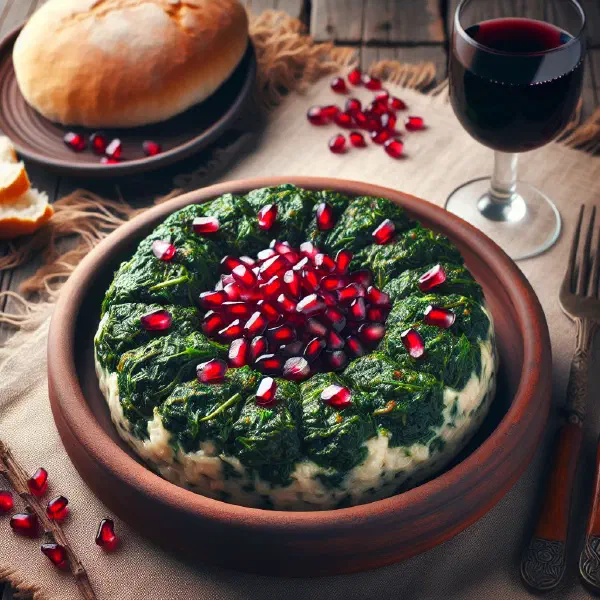
Pkhali is a traditional Georgian dish made from puréed vegetables, walnuts and aromatic herbs. It is usually served as a starter or a side, and it is famous for the vivid range of colours it can take on, depending on which vegetable forms the base. The texture is soft and creamy, while the flavour is intensified by the walnuts and spices. Pkhali is delicious and healthy and nutrient-rich, which makes it an excellent choice for any meal.
Ingredients (serves 1–2)
- 200 g spinach or chard (cooked and cooled)
- 100 g walnuts, ground
- 1 small onion, finely chopped
- 2–3 cloves of garlic, crushed
- 1–2 tablespoons pomegranate syrup
- 1 teaspoon ground cumin
- Salt and pepper, to taste
- Fresh herbs (such as coriander or parsley), to garnish
Shopping for the ingredients
Making pkhali calls for fresh, good-quality ingredients. The spinach or chard should be as fresh and crisp as possible to guarantee the best flavour. Walnuts can be bought either vacuum-packed or loose. Do check that your spices are fresh, as they matter enormously to the character of the finished dish.
Preparing the dish
Before you begin, it is important to wash the vegetables thoroughly and cook them. Once cooked, the spinach or chard should be cooled and squeezed out well to remove any excess liquid. This stops the pkhali from turning watery. The walnuts should be coarsely ground rather than reduced to a paste, so the dish keeps some texture and the lovely nutty flavour comes through all the more strongly.
Step-by-step instructions
- Put the cooked, cooled vegetables into a bowl and mash them with a fork.
- Add the ground walnuts, chopped onion, crushed garlic, pomegranate syrup, cumin, salt and pepper.
- Mix everything thoroughly until you have a smooth, even mixture.
- Shape the pkhali into small portions on a plate and garnish with fresh herbs.
Gluten-free / lactose-free version
Pkhali is naturally gluten-free and lactose-free, as it contains neither wheat products nor dairy. That makes it a wonderful option for anyone with particular dietary requirements. Simply keep an eye out for hidden sources of gluten in spice blends or other additions when you shop. That way you can be confident your pkhali will suit every guest at the table.
Tips for vegans and vegetarians
Pkhali is an excellent choice for vegans and vegetarians alike. The dish contains no animal products and is rich in plant protein thanks to the walnuts. For extra nutrients you can also work in other vegetables such as carrots or beetroot. These variations bring welcome variety and produce an even wider spread of colour on the plate.
More tips and tricks
To get the very best from your pkhali, make it the day before. Left overnight in the fridge, the flavours mingle and grow noticeably deeper and more aromatic. Serve it well chilled as a refreshing starter. It is also worth experimenting with different herb mixtures to tune the taste to your own palate, much as cooks do with the herb-heavy dishes of Georgian cuisine more broadly.
Adapting the recipe to your taste
Pkhali is easy to adapt to personal preference. Use different vegetables according to the season or whatever is available. A little more or a little less garlic can be added depending on how assertive you like it. If you prefer heat, simply stir in a pinch of chilli powder or some fresh chillies to give the dish more of a kick.
Ingredient substitutions
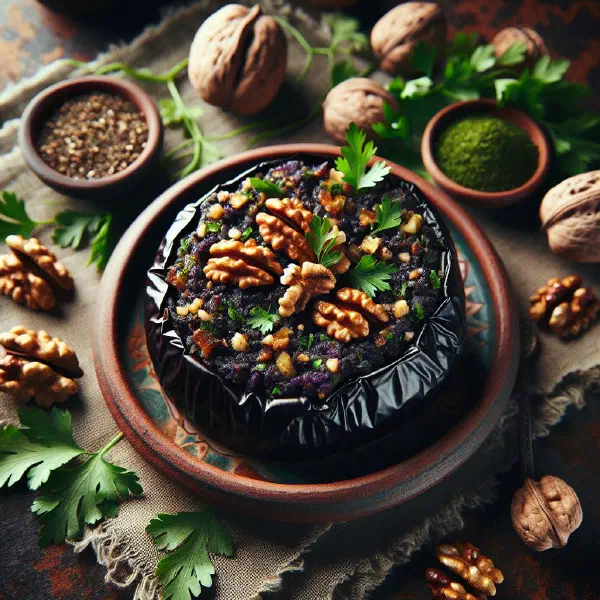
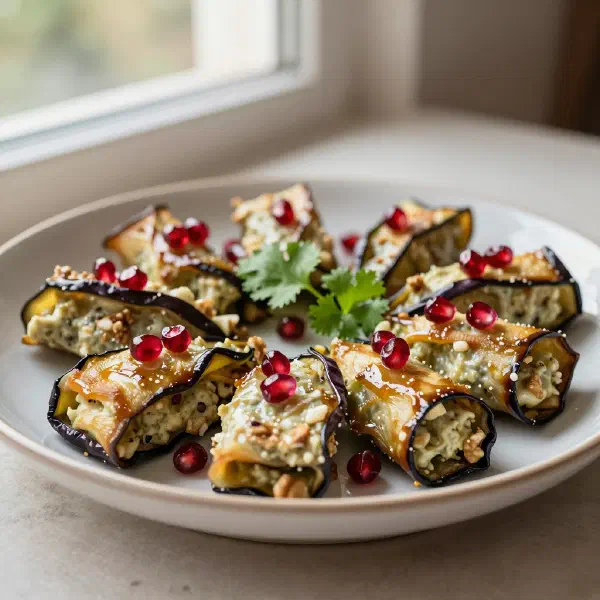
If you have no walnuts to hand, other nuts such as almonds or pecans work too. The flavour will shift, but the nuts still contribute something delicious. Likewise, pomegranate syrup can be replaced with maple syrup or agave nectar for a different kind of sweetness. Adjust the quantities as you go to reach the balance you want, the same instinct that guides a good Nigvziani Badrijani, which relies on a similar walnut paste.
Drink pairing ideas
Pkhali goes wonderfully with a wide range of drinks. A chilled glass of white wine or a gently sparkling sekt lifts the fresh aromas of the dish. For an alcohol-free option, a minty lemonade or a herbal tea offers a refreshing contrast. It is well worth trying regional Georgian drinks too, if you want the full authentic experience.
Serving and presentation ideas
Presentation can genuinely improve the whole pkhali experience. Serve it in an attractive bowl and garnish with fresh herbs and perhaps a scattering of pomegranate seeds for a splash of colour. Brightly coloured crockery helps underline the liveliness of the dish. A small selection of other Georgian dishes on the table, some grilled Mtsvadi, for instance, rounds out the picture beautifully.
A bit of history
Pkhali has a very long tradition in Georgian cooking and has been made for centuries. It originally arose from the practical need to preserve vegetables, and over time countless variations developed. It is often served at festive occasions or as part of the Georgian feast known as the supra. These communal meals are an important part of Georgian culture and are built around eating and drinking together.
More recipe ideas
Summary: Pkhali
Pkhali brings the varied and delicious cooking of Georgia straight to your table. With its wholesome ingredients and straightforward preparation, it suits food lovers and health-conscious cooks in equal measure. Pkhali impresses with its distinctive flavour and striking appearance. Give it a try and enjoy a piece of Georgian tradition.