National Dish Ghana: Waakye (Recipe)
In this article
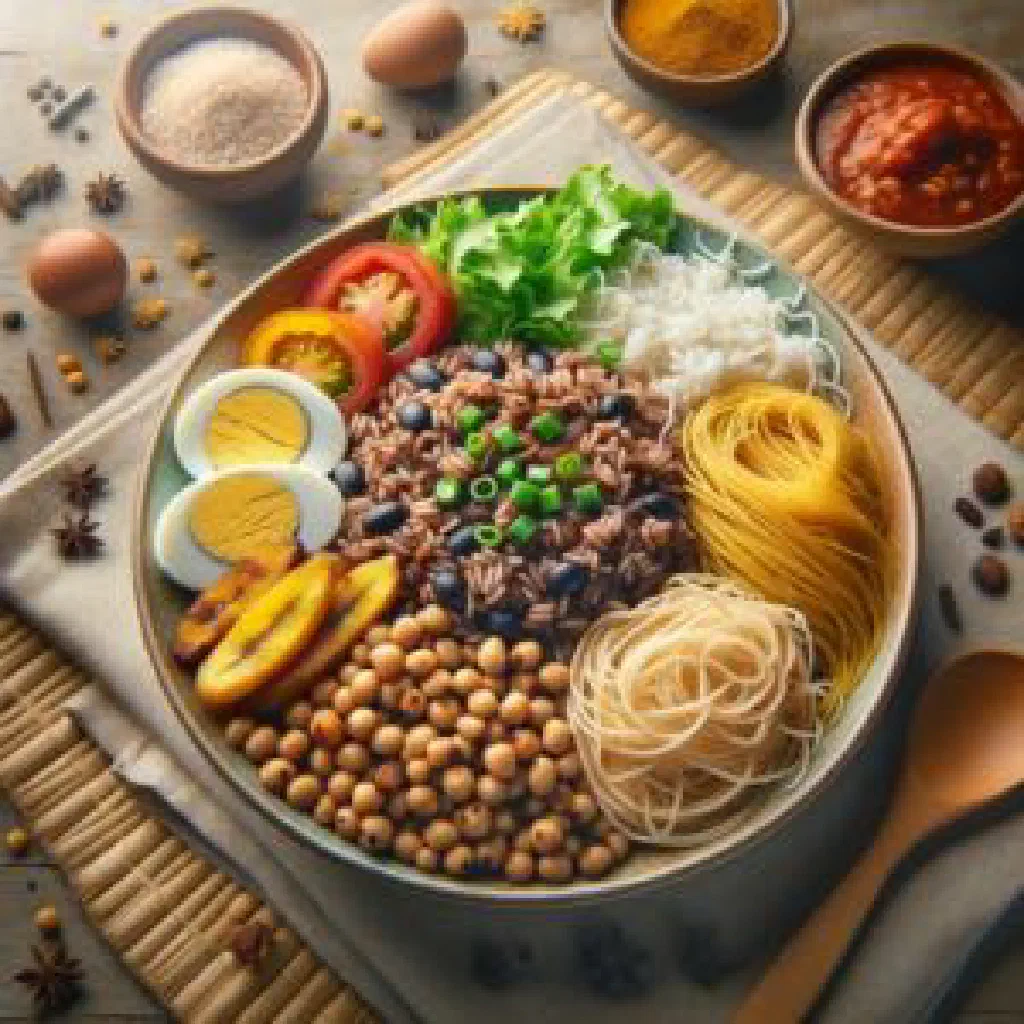
Meet Waakye, the hearty rice-and-beans classic that Ghana wakes up to. Traditionally cooked with dried millet leaves that stain the grains a deep reddish-brown, it is a dish built around comfort and colour. Piled high with sides like fried fish, spaghetti, boiled egg and the fiery shito sauce, waakye is as much a national ritual as it is a meal. Bring the buzz of a Ghanaian roadside food stand straight into your own kitchen.
About Waakye
Waakye is a beloved, warming dish from Ghana, built on a simple but satisfying combination of rice and beans. It is far more than everyday food: waakye reflects the cultural richness and culinary heritage of the country, and is enjoyed at breakfast, lunch and everything in between. What sets it apart is the addition of dried millet leaves (sorghum leaves), which lend the rice its distinctive colour and a subtle, earthy aroma. It is usually served with an array of accompaniments, fish, meat, salad and the unmistakable spicy shito sauce.
Ingredients (serves 1–2)
- 1 cup rice
- 1/2 cup black-eyed beans or red kidney beans
- 2–3 dried millet leaves (sorghum leaves)
- 2 tablespoons vegetable oil
- 1 small onion, diced
- Salt to taste
Shopping for the ingredients
To track down special ingredients such as the millet leaves, it is worth visiting an African or international grocery shop. Look out for fresh, good-quality beans, as they are the heart of the dish and carry much of its flavour. Choose a decent rice too, so you can achieve that perfect, tender consistency. Most other bits and pieces are easy to find in a regular supermarket.
Preparing the dish
Soak the beans overnight to shorten the cooking time and improve the final texture. Prepare all your ingredients in advance by measuring, chopping and setting them out, so the cooking process runs without a hitch. A well-organised work surface lets you cook at a relaxed, steady pace.
Step-by-step instructions
- Bring the soaked beans to the boil in a pan and cook until almost tender.
- Wash the millet leaves and add them to the beans.
- Rinse the rice and add it to the beans and leaves, then simmer until everything is soft.
- In a separate pan, heat the oil and sauté the onions until golden brown.
- Stir the sautéed onions into the pot and season with salt to taste.
- Serve the finished dish with the accompaniments of your choice.
Gluten-free / lactose-free version
Waakye is naturally gluten-free and lactose-free, since its core is simply rice, beans and millet leaves. Just take care with any sides you serve alongside it, swap regular spaghetti for a gluten-free variety, and keep an eye on shop-bought sauces, which can hide gluten or dairy. Cooked with plain vegetable oil rather than butter, the base recipe suits anyone avoiding gluten or lactose, so every guest can dig in without worry.
Tips for vegans and vegetarians
In its base form, waakye is entirely vegan, rice and beans provide plenty of protein and substance on their own. To keep it plant-based, simply choose vegetable-friendly sides such as fried plantain, salad, avocado or a spoonful of shito made without dried fish. Fresh vegetables and herbs are key to an authentic flavour, so reach for seasonal produce wherever you can. This classic adapts easily to a meat-free table.
More tips and tricks
For a more even colour, soak the millet leaves in a little water first and use that reddish liquid to cook the rice. A heavy-based pot is well worth using, as it helps prevent the rice and beans catching and burning on the bottom. Keep the heat gentle once everything is simmering together, and resist stirring too often so the grains stay intact.
Adapting the recipe to your taste
Waakye is wonderfully flexible. Some cooks like it soft and porridge-like, others prefer distinct, fluffy grains, either way, a little experimentation lets you land on the version that suits you best.
Ingredient substitutions
If millet leaves are hard to come by, you can use dried bean leaves instead, or simply cook the rice without them (you will lose the signature colour but not the comfort). In place of rice, bulgur or quinoa make a great gluten-free alternative. And if you love a beans-forward meal, the same hearty pulses shine in Ghana’s classic Red Red. Substitutions like these help you adapt the recipe to what is in season or to your own preferences.
Drink pairing ideas
Traditional Ghanaian drinks such as palm wine or a home-made ginger tea pair beautifully with waakye. For a non-alcoholic option, fresh fruit juices like mango or pineapple are a lovely, refreshing match. A chilled glass of hibiscus sobolo also works a treat, cutting through the richness of the spiced sides.
Serving and presentation ideas
Presentation lifts the whole waakye experience. Serve it in a generous bowl and garnish with freshly chopped tomatoes, onions and coriander. A small dish of shito sauce on the side rounds things off both visually and in flavour, and a scattering of colourful accompaniments, fried fish, boiled egg, salad, turns a simple bowl into an inviting spread.
A bit of history
Waakye has its roots in northern Ghana, and over the years its popularity has spread across the whole country and well beyond its borders. The dish is thought to date back to a time when different kinds of meals were developed to keep agricultural workers fuelled and energised through a long day. Today it is one of the most recognisable examples of Ghanaian cuisine, sold from street stalls each morning across the nation.
More recipe ideas
Summary: Waakye
Waakye is a multi-layered, deeply flavourful dish that captures the spirit of Ghanaian cooking. With the right ingredients and a simple step-by-step method, it is easy to recreate at home. Endlessly adaptable and generous with its accompaniments, it can be served to suit every palate. Let this Ghanaian classic inspire you and give it a try, a comforting bowl of rice and beans has rarely tasted this good.