National Dish Greece: Moussaka (Recipe)
In this article
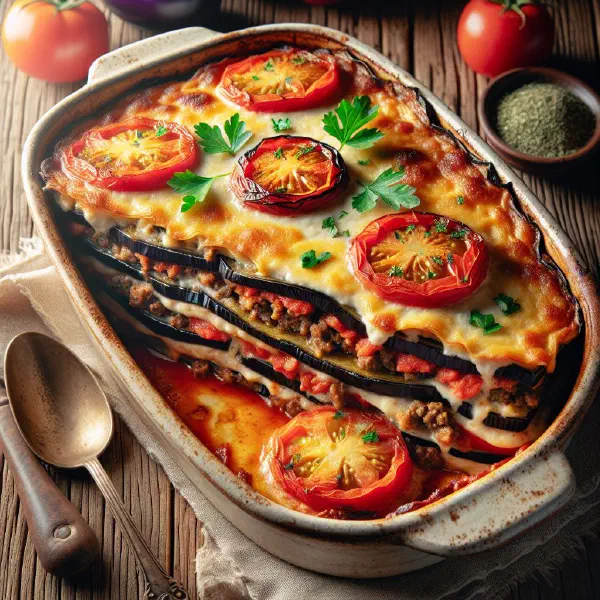
Moussaka has three layers and a béchamel on top, and the béchamel is what makes it moussaka rather than a baked mince and aubergine. It should set firm enough to cut into squares that hold their shape.
About Moussaka
The Greek moussaka most people know was standardised by Nikolaos Tselementes in the 1920s, who added the French béchamel to an older Ottoman dish of layered aubergine and meat. That addition is now non-negotiable in Greece.
Aubergine, potato in some versions, spiced lamb or beef with cinnamon and tomato, and a thick béchamel enriched with egg and cheese.
Ingredients (serves 1–2)
- 1 large aubergine, peeled and thinly sliced
- 200g minced meat
- 2 tablespoons olive oil
- 1 onion, chopped
- 2 cloves garlic, finely chopped
- 1 teaspoon dried oregano
- 1 teaspoon dried thyme
- Salt and pepper to taste
- 400g tomatoes, chopped
- 200g grated cheese
- For the béchamel: 40 g butter, 40 g flour, 400 ml milk, 1 egg yolk, nutmeg
Shopping for the ingredients
Lamb mince gives the more traditional flavour; beef is the everyday choice. Kefalotyri or kefalograviera are the Greek cheeses for the béchamel; parmesan is the accepted substitute. A cinnamon stick in the meat sauce is what makes it taste Greek rather than Italian.
Preparing the dish
Salt the aubergine slices and leave them thirty minutes, then rinse and pat dry. This draws out water and stops the finished dish being soggy. Roast or fry them until golden before layering. Cook the meat sauce until it is thick and almost dry, since watery sauce ruins the layers.
Step-by-step instructions
- Salt the aubergine slices, rest 30 minutes, rinse and pat dry, then fry or roast until golden.
- Brown the minced meat in a pan with the olive oil.
- Add the onion and garlic and sauté them together with the meat.
- Stir in the herbs, tomatoes, salt and pepper, then simmer until thick and almost dry.
- For the béchamel, melt the butter, stir in the flour, add the milk gradually and cook until thick; take off the heat and beat in the egg yolk, nutmeg and half the cheese.
- Layer the aubergine slices in an ovenproof dish, then the meat sauce, then the remaining aubergine.
- Pour the béchamel over the top and scatter with the remaining cheese.
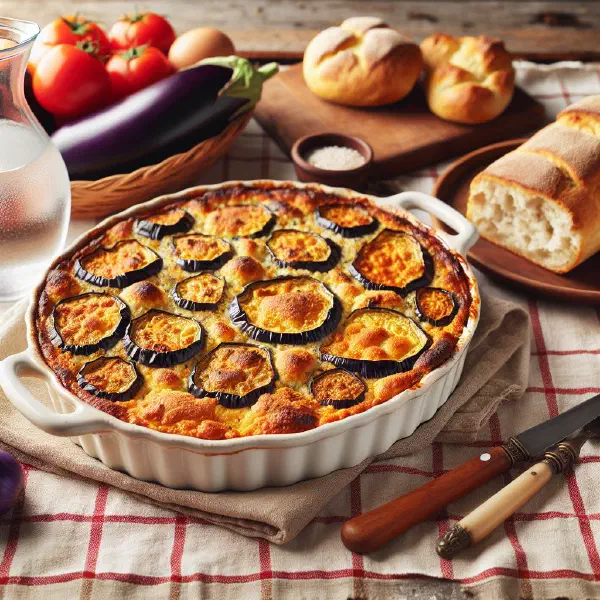
- Bake at 180°C for 45 minutes until deep golden, then rest 30 minutes before cutting.
Gluten-free / lactose-free version
Use cornflour for the béchamel roux and the dish is gluten-free. Lactose-free is harder, since the béchamel is milk and butter, though a lactose-free milk and a plant margarine work reasonably.
Tips for vegans and vegetarians
Lentils in place of the meat, with the same cinnamon and tomato, make a genuinely good moussaka, and Greek tavernas serve it during Lent. A béchamel from plant milk and olive oil holds together well. Briam, the roasted vegetable dish, is the other Lenten option.
More tips and tricks
Rest it for at least half an hour after baking. Cutting into a hot moussaka gives a collapsed heap; a rested one gives clean squares. Cook the meat sauce drier than seems right. And do not skip salting the aubergine.
Adapting the recipe to your taste
A layer of sliced potato at the bottom is common and makes it more substantial. Courgette can replace some of the aubergine. A splash of red wine in the meat sauce is standard.
Ingredient substitutions
Beef, lamb or a mixture all work. Parmesan replaces kefalotyri. Roasting the aubergine instead of frying uses far less oil and is what most Greek home cooks now do.
Drink pairing ideas
A Greek red such as Agiorgitiko suits the cinnamon and lamb. Retsina divides opinion but is traditional. Tzatziki on the side does the work of a palate cleanser.
Serving and presentation ideas
Cut it into generous squares and serve warm rather than hot, with a tomato and feta salad alongside. Bread for the juices. It is often better the next day.
A bit of history
The layered aubergine and meat dish is Ottoman and versions exist from Turkey to the Levant, usually without a topping. Tselementes, trained in France, added the béchamel as part of a deliberate project to make Greek cooking more European. Whatever one thinks of the motive, the result is now the definitive Greek dish abroad.
More recipe ideas
Summary: Moussaka
Moussaka is layered aubergine and spiced meat under a thick béchamel, baked until golden. Salt the aubergine, cook the sauce dry, and rest it half an hour before cutting.