National Dish Hungary: Mákos Guba (Recipe)
In this article
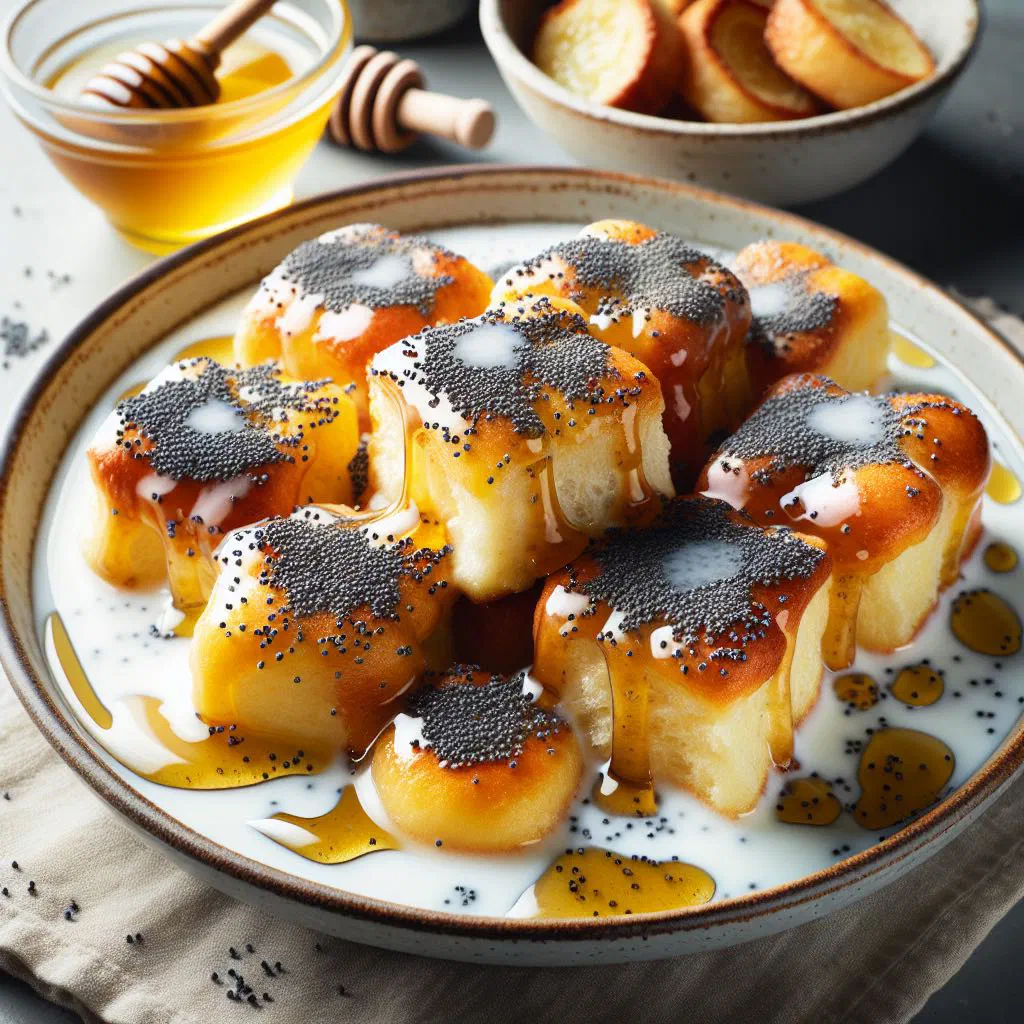
Discover Mákos guba, one of Hungary’s most comforting sweet classics. Soft cubes of day-old white bread are layered with fragrant ground poppy seeds and bathed in a creamy vanilla custard before baking to a golden finish. It is a dessert that turns a handful of humble leftovers into something festive, equally at home on a holiday table and at the end of an ordinary weeknight supper. Warm, nutty and gently sweet, it is Hungarian home cooking at its most generous.
About Mákos Guba
Mákos guba is a time-honoured Hungarian dessert that sets the heart of every sweet tooth racing. It combines tender cubes of bread with an aromatic poppy seed filling and a creamy vanilla sauce. The dish is a treat for the palate and a centrepiece on any festive table. The rich, nutty flavour of the poppy seeds makes Mákos guba a genuinely distinctive experience, one you really should not miss.
Ingredients (serves 1–2)
- 2–3 slices stale white bread
- 100 g ground poppy seeds
- 50 g sugar
- 2 eggs
- 300 ml milk
- 1 tsp vanilla sugar
- Butter, for the dish
- Optional: icing sugar, for dusting
Shopping for the ingredients
When shopping for Mákos guba, it pays to choose good-quality products. The poppy seeds in particular play a decisive role, so reach for freshly ground poppy seeds to get the very best flavour. The bread, by contrast, should no longer be fresh, slightly stale slices give the ideal texture. Supermarkets and specialist Hungarian shops usually stock the best ingredients, so everything is easy enough to track down.
Preparing the dish
To get started, cut the stale bread into small cubes. Try to keep them as even as possible so they bake to a consistent texture. While you prepare the bread, whisk the milk and eggs together in a bowl and stir in the sugar and vanilla sugar. This forms the base of the creamy custard that rounds the dish off and lends it extra sweetness.
Step-by-step instructions
- Preheat the oven to 180°C.
- Layer the bread cubes into a buttered baking dish.
- Mix the poppy seeds, sugar and a little milk together and spread evenly over the bread.
- Pour the milk-and-egg mixture over the top and leave to soak for about 30 minutes.
- Bake in the preheated oven for 30–40 minutes, until the surface is golden brown.
- Serve warm and dust with icing sugar if you like.
Gluten-free / lactose-free version
For a gluten-free version of Mákos guba, simply use gluten-free white bread. It is worth checking the packaging carefully to confirm the loaf really is free from gluten. Lactose-free milk works just as well as ordinary milk, so anyone with a lactose intolerance can enjoy this delicious dessert too. With these adjustments the flavour stays exactly the same, and you can tuck in without a second thought.
Tips for vegans and vegetarians
Vegans can enjoy Mákos guba as well by swapping the eggs and milk for plant-based alternatives. Instead of eggs, try apple purée or ground linseed, both of which act as binders. Oat or almond milk suits the custard beautifully and adds a delicate note of its own. These options make the dessert vegan and light and easy to digest.
More tips and tricks
A few extra pointers will help you refine your Mákos guba further. Make sure the bread cubes are thoroughly soaked through with the milk-and-egg mixture so they do not dry out in the oven. Experiment with the amount of sugar to dial the sweetness to your own taste. Adding chopped nuts or dried fruit is another good way to bring interesting texture and extra flavour to the dish.
Adapting the recipe to your taste
Mákos guba is extremely versatile and adapts easily to different preferences. Add chocolate chips for a sweeter finish, or experiment with spices such as cinnamon or nutmeg for a warmer, rounder flavour. Using different breads, wholemeal, for instance, or slices of leftover Kifli, can give the dessert a whole new dimension. There are almost endless ways to personalise the recipe and make it match your own taste exactly.
Ingredient substitutions
If you do not have particular ingredients to hand, that is no problem at all. In place of milk you can use coconut milk for a more exotic flavour. If poppy seeds do not agree with you, ground almonds make a good alternative, much as ground walnuts do in a slice of Zserbó. Creative swaps like these help make the dish your own while still preserving the essence of Hungarian cooking.
Drink pairing ideas
A number of drinks work nicely alongside a serving of Mákos guba. A mild herbal tea is refreshing and complements the sweet notes of the dessert wonderfully. Hot chocolate or a fruity dessert wine are equally good choices for rounding off the palate. For an alcohol-free option, mix fresh lime or lemon juice with sparkling water for a lively, cleansing contrast.
Serving and presentation ideas
We eat with our eyes first, so feel free to get creative with the presentation. Serve the dessert in attractive individual portions, small glasses give it a pleasingly rustic look. A whisper of icing sugar or a scattering of fresh berries on top makes it more inviting still. A garnish of mint leaves lifts both the flavour and the appearance considerably, and turns the dish into something fit for a special occasion, much like a plated Somlói Galuska.
A bit of history
Mákos guba has its roots in Hungarian farming and village life. It was originally made from leftover bread so that nothing went to waste, which reflects a long-standing tradition of thrift and resourcefulness. Over time the recipe evolved, and today it is a much-loved national dish enjoyed at festivals and family gatherings alike, a dessert that ties tradition to modern indulgence and shows the sweeter side of Hungarian cuisine.
More recipe ideas
Summary: Mákos Guba
To sum up, Mákos guba is not simply delicious. It embodies the very essence of Hungarian tradition. The combination of tender bread cubes, aromatic poppy seeds and a creamy vanilla sauce makes it an outstanding dish, valued as much on special occasions as in everyday life. Thanks to the many ways it can be adjusted, adapting the recipe to personal preferences and dietary needs is straightforward. Let Hungary and its wonderfully varied kitchen inspire you, Mákos guba will surely give you a taste experience to remember.