National Dish Iceland: Hákarl (Recipe)
In this article
Few dishes divide opinion quite like Hákarl, Iceland’s famously pungent cured shark. Bracing, ammonia-sharp and steeped in centuries of North Atlantic survival lore, it is the ultimate test of a curious palate, and, for those who persevere, a genuine delicacy with a nutty, cheese-like depth. Served in small cubes with a shot of caraway schnapps, it carries the raw, windswept spirit of the island in every bite.
About Hákarl
Hákarl is a traditional Icelandic speciality made from fermented Greenland shark. It is best known for its powerful, ammonia-like aroma and its firm, distinctly chewy texture. The dish is a cornerstone of Icelandic culture and is often treated as a rite of passage for visitors. Prepared properly, however, it is far more than a dare: it reveals a rich, mature flavour closer to a strong aged cheese than to fresh fish.
Ingredients (serves 1–2)
- 1 kg Greenland shark meat
- Sea salt
- Water
Shopping for the ingredients
The Greenland shark meat should be sourced from a specialist fishmonger or a reputable online supplier. Make sure the fish is fresh and of high quality, as everything that follows depends on the raw material. Coarse sea salt and water are available in any well-stocked food shop, so the shopping list itself could hardly be simpler.
Preparing the dish
Making Hákarl calls for a preparation time measured in months rather than minutes. The fresh shark meat is cut into thick strips and rubbed generously with sea salt. It is then buried in a ventilated container for six to twelve weeks so that it can ferment slowly and safely.
Step-by-step instructions
- After fermentation, dig out the meat and hang it in a dry room for a further two to four months so it can cure and dry.
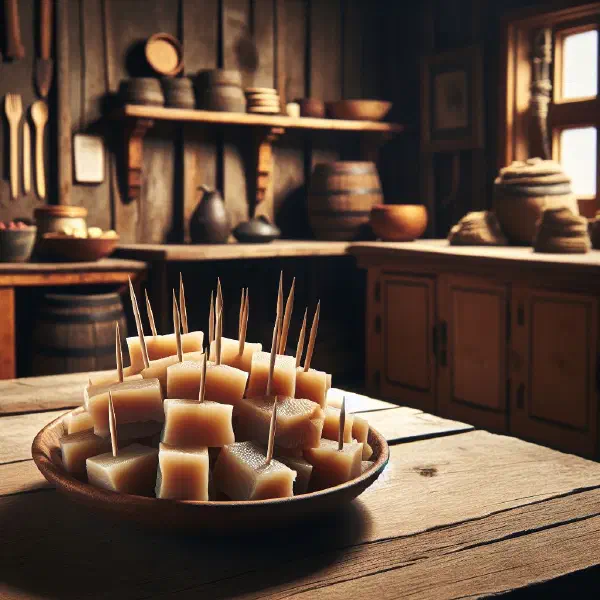
- Cut the dried meat into small cubes — at this point it is ready to eat.
- Serve Hákarl traditionally without any further cooking, ideally alongside a measure of the fiery Icelandic schnapps known as Brennivín.
Gluten-free / lactose-free version
Hákarl is naturally gluten-free and lactose-free, since it consists of nothing but shark, salt and time. Take care only with what you serve alongside it: choose a gluten-free flatbread or crispbread if you like something to nibble with the cubes, and skip any butter or cream-based dip if you are avoiding lactose. That way the dish suits guests with intolerances without any change to the recipe itself.
Tips for vegans and vegetarians
Because Hákarl is made from fish, there is no direct vegan or vegetarian version. Other fermented foods such as sauerkraut or tempeh can, however, stand in as intriguing and boldly flavoured alternatives. Both deliver the same tangy, funky character that makes fermented dishes so compelling.
More tips and tricks
- Use high-quality, coarse salt varieties to achieve the best flavour.
- The right airing space is crucial to fermentation; a well-ventilated shed works best.
- Stored cool and dry, Hákarl keeps for several months without losing its character.
Adapting the recipe to your taste
The intensity of Hákarl can be steered by the length of the fermentation and drying stages. A longer drying time produces a more pronounced flavour and a firmer consistency, while a shorter one gives a milder, softer result. Newcomers are usually best served by the gentler end of that scale.
Ingredient substitutions
Greenland shark meat is notoriously hard to come by, so fermented cod or stockfish make sensible alternatives. Both offer a comparable texture and take well to the same curing process, much as they do in a classic Saltfiskur. Substitutions like these let you explore the technique without hunting down an Arctic shark.
Drink pairing ideas
The traditional companion to Hákarl is Brennivín, a clear Icelandic schnapps distilled from fermented grain and flavoured with caraway. Dry white wines also work nicely, as does a robust beer with enough body to stand up to the aroma. Whatever you choose, serve it well chilled and in modest measures.
Serving and presentation ideas
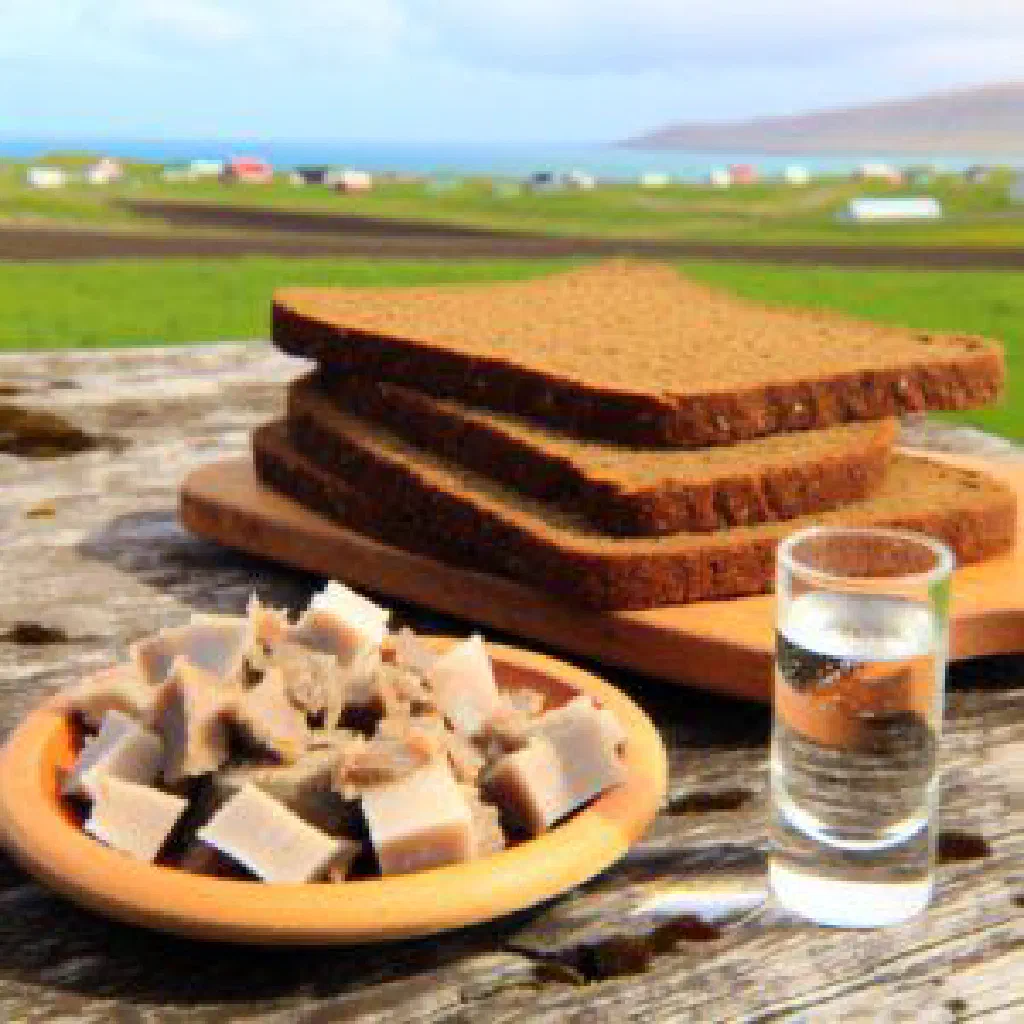
Serve Hákarl on a rustic wooden board, garnished with fresh dill and lemon slices to underline the dish’s rugged Nordic roots. A small glass of Brennivín set beside it completes the picture. A few slices of dark, sweet Rúgbrauð alongside give guests something mellow to reach for between bites.
A bit of history
Hákarl has been part of Icelandic cooking for centuries. It was originally developed to preserve meat in an age without refrigeration, and the fermentation process made the otherwise indigestible and toxic shark flesh safe to eat while greatly extending its shelf life. Today it remains the centrepiece of the midwinter Þorramatur feast and one of the most striking expressions of Icelandic cuisine.
More recipe ideas
Summary: Hákarl
Hákarl is a singular Icelandic dish that brings together tradition, history and a truly extraordinary flavour. With this guide you can attempt Iceland’s national speciality yourself and perhaps even learn to appreciate it. Experiment with different curing times and presentations to get the most out of this culinary adventure, and pour the Brennivín before you take that first bite.