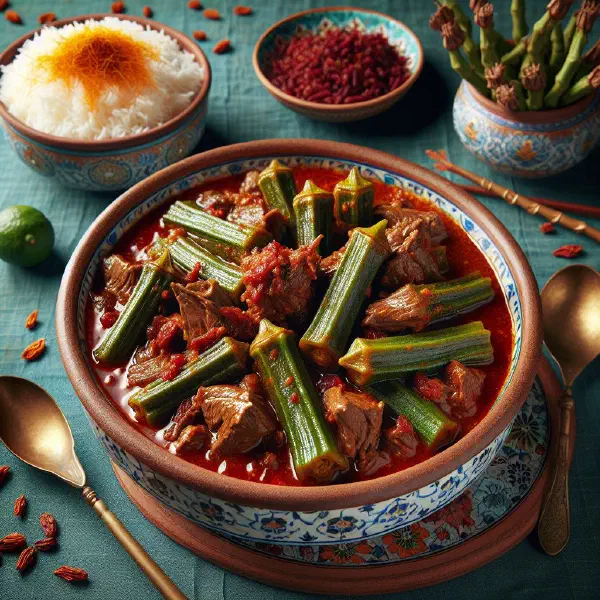
National Dish Iran: Bamieh (Recipe)

In this article
Discover Bamieh, a wonderfully fragrant vegetable stew from Iran. Tender okra pods are simmered in a rich tomato sauce spiced with turmeric and paprika until soft and full of flavour. Naturally vegan and endlessly comforting, it is the sort of dish that tastes of home cooking and hospitality in equal measure. Served with a bowl of fluffy rice, it brings the warm, aromatic spirit of Persian cooking straight to your table.
About Bamieh
Bamieh is a traditional Iranian dish that appeals to the senses with its depth and its layered aromas. The star ingredient, tender okra pods, is cooked in an aromatic tomato sauce rounded out with a generous mix of spices. This vegan dish is a perfect choice for anyone keen to explore the variety of Persian cuisine. Bamieh is traditionally served alongside rice, which turns it into a beautifully balanced and satisfying meal.
Ingredients (serves 1–2)
- 250 g fresh okra pods
- 2 medium onions, diced
- 3 tomatoes, chopped
- 2 cloves of garlic, finely chopped
- 1 tsp turmeric
- 1 tsp paprika
- 2 tbsp olive oil
- Salt and pepper, to taste
- A squeeze of lemon juice
- Fresh herbs, to garnish (such as parsley)
Shopping for the ingredients
To make Bamieh, you will want fresh, good-quality ingredients. It is best to visit a market or an organic grocery to track down the freshest okra. Look for pods that are firm and green, without any discolouration or soft spots. Choose ripe tomatoes and onions too, so they release a rich aroma as they cook down into the sauce.
Preparing the dish
Before you start cooking Bamieh, it helps to prepare all the ingredients first. Wash the okra thoroughly and trim off the ends. Finely chop the onions and garlic to draw out their aromas as fully as possible. Wash the tomatoes and chop them roughly to create a hearty sauce. Have the spices measured out and ready too, so everything is within easy reach as you cook.
Step-by-step instructions
- Heat the olive oil in a large pan over medium heat.
- Add the diced onions and fry until they turn translucent.
- Stir in the chopped garlic and the spices (turmeric and paprika) and cook for a further minute.
- Add the chopped tomatoes and let the mixture simmer for 5–7 minutes, until it thickens.
- Add the okra pods, mix everything well and season with salt, pepper and a squeeze of lemon juice.
- Cover the pan and let the dish braise over low heat for about 15 minutes, until the okra is tender.
Gluten-free / lactose-free version
Bamieh is naturally gluten-free and lactose-free, which makes it an excellent choice for anyone with intolerances. Just take care that the spices and oils you use are also free from additives. That way you can be sure the dish suits every kind of diet without any hidden surprises.
Tips for vegans and vegetarians
Bamieh is vegan and a great source of essential nutrients. To make the dish even more nourishing, you can add extra vegetables such as courgette or carrots. These add colour and bring more flavour to the pan. It also pairs beautifully with a range of side dishes, such as hummus or tabbouleh.
More tips and tricks
One handy trick for improving the texture of the okra is to toss the pods lightly in flour before cooking. This helps reduce the sliminess that okra can develop and gives the finished dish a more pleasant consistency. Take care not to overcook the okra so it keeps a little bite. Experiment with regional spices, too, to give your Bamieh a personal touch.
Adapting the recipe to your taste
The recipe for Bamieh is wonderfully adaptable. You can vary the spices to suit your own palate, adding chilli for extra heat, for instance, or trying out different fresh herbs. For a creamier sauce, a splash of coconut milk works a treat. This flexibility makes Bamieh an exciting option for any dinner party or family meal, much like a comforting bowl of Ghormeh Sabzi.
Ingredient substitutions
If you do not have okra to hand, you can swap it for aubergine or courgette. These vegetables have a similar texture and sit well alongside the flavours of the tomato sauce. The spices, too, can be replaced with your favourite blends, so you can let your creativity run free. Just remember to adjust the cooking time accordingly. For a heartier okra variation, the slow-cooked Khoresht e Bamieh is well worth a try.
Drink pairing ideas
Refreshing drinks that complement the flavour of the dish work best with Bamieh. A classic Persian pomegranate juice is an excellent choice, being both refreshing and a natural match for the food. Alternatively, you could try a minty yoghurt drink for a delicious combination. For those who prefer something alcoholic, a light white wine would also harmonise nicely.
Serving and presentation ideas
Thoughtful presentation can lift the whole Bamieh experience. Serve the dish in a beautiful bowl, garnished with fresh herbs and a squeeze of lemon juice for a colourful finish. Arrange a few lemon slices around the rim of the plate for a fresh note. You might also scatter over some unsalted nuts to add a lovely contrast in texture.
A bit of history
Bamieh has a long tradition in Iranian cooking and has been passed down through the generations. Okra travelled into the region through the exchange of culinary influences across many cultures, and the dish is a fine example of how those flavours came together. Bamieh is often served at festive occasions and reflects the hospitality at the heart of Iranian culture. It is popular in both rural and urban households and frequently appears as part of a generous feast, the sort of spread that might also feature stuffed Dolmeh.
More recipe ideas
Summary: Bamieh
Bamieh is a hearty and versatile dish that pleases vegan and vegetarian diners while winning over everyone else besides. Thanks to its tender okra and aromatic tomato sauce, every plateful offers a taste of Persian culture. With its adaptability to different preferences and its rich culinary heritage, it is sure to be a highlight at your next dinner. Enjoy Bamieh and discover the exciting flavours of Iran, one of the great treasures of Iranian cuisine.