National Dish Iran: Fesenjan (Recipe)
In this article
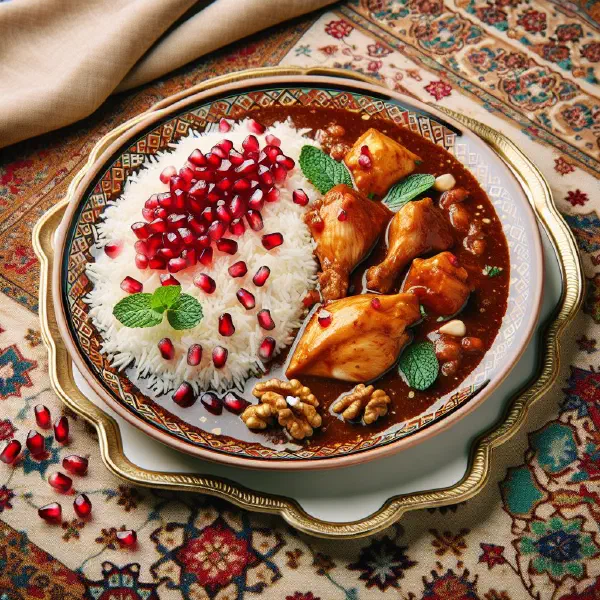
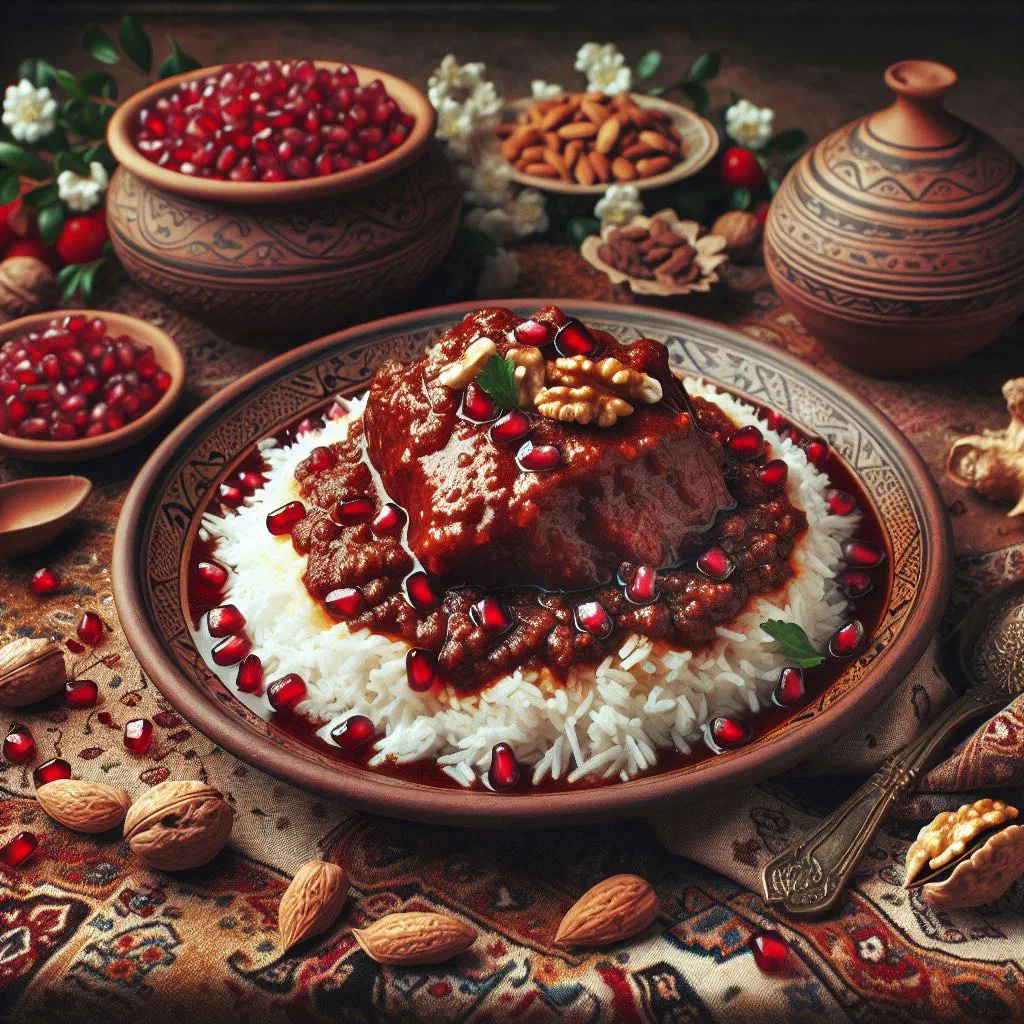
Discover Fesenjan, one of the great treasures of Persian cooking and a proud national dish of Iran. This slow-simmered stew builds its character around a velvety sauce of ground walnuts and tangy pomegranate molasses, striking a memorable balance between sweet and sour with a deep, nutty warmth. Traditionally made with chicken or duck and cooked low and slow, it is the kind of opulent, celebratory dish reserved for weddings and feast days, yet it is surprisingly achievable in your own kitchen.
About Fesenjan
Fesenjan, also known as Khoresht-e Fesenjan, is a traditional Persian dish and one of the best-loved national dishes of Iran. This stew is prized for its unique marriage of flavours and textures. At its heart lies a rich sauce made from walnuts and pomegranate molasses, which lends the dish a sweet-sour tang alongside a pronounced nutty depth. It is usually served with duck or chicken and cooked slowly to draw out an intense, layered flavour. The balance between sweetness and acidity makes Fesenjan a memorable pleasure and a fine reflection of the refinement of Iranian cuisine.
Ingredients (serves 1–2)
- 300 g chicken breast or duck breast
- 100 g walnuts, finely ground
- 4 tablespoons pomegranate molasses
- 1 small onion, diced
- 1/2 teaspoon turmeric
- 1/4 teaspoon ground cinnamon
- 1 pinch of nutmeg
- Salt and pepper, to taste
- 2 tablespoons olive oil
- 400 ml water or poultry stock
- 1 tablespoon sugar (optional, depending on the sweetness of the pomegranate molasses)
Shopping for the ingredients
For an authentic Fesenjan experience, it pays to use good-quality ingredients. Fresh walnuts and a high-quality pomegranate molasses are essential to the dish’s characteristic flavour. You can find these at Middle Eastern grocers or well-stocked delicatessens. It is also important to choose fresh poultry. If pomegranate molasses is hard to come by, you can reduce pomegranate juice with a little sugar to achieve a similar consistency and sweetness, much the same trick that gives depth to a pomegranate soup like Aash E Anar.
Preparing the dish
Careful preparation is the first step towards a successful Fesenjan. Begin by grinding the walnuts until they reach the texture of coarse sand, take care not to grind them too finely, or they will turn into a paste. Dice the onion finely to keep the sauce evenly textured. It is also wise to cut the chicken or duck into bite-sized pieces so it cooks through evenly.
Step-by-step instructions
- Heat the olive oil in a large pan and sauté the onions until translucent.
- Add the meat and brown it all over until lightly coloured.
- Stir in the turmeric, cinnamon, nutmeg, salt and pepper and mix well.
- Add the ground walnuts and let them cook briefly with the other ingredients.
- Pour in the pomegranate molasses and the water or poultry stock, then stir everything together.
- Cover the pan and let it simmer over low heat for about 1.5 hours, until the meat is tender and the sauce has thickened, stirring occasionally to prevent it catching.
- If needed, adjust with a little sugar to achieve a pleasant balance between sweet and sour.
Gluten-free / lactose-free version
Fesenjan is naturally gluten-free and lactose-free, which makes it a wonderfully inclusive dish. Its sauce relies on walnuts and pomegranate rather than flour or dairy, so there is no need to make substitutions for guests with a gluten intolerance or lactose sensitivity. Just double-check that any stock or shop-bought pomegranate molasses carries no hidden gluten, and serve it with plain rice for a meal everyone can enjoy without a second thought.
Tips for vegans and vegetarians
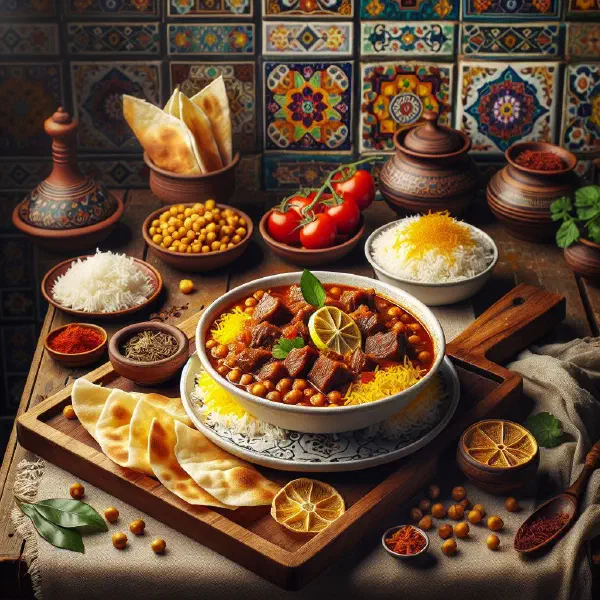
Fesenjan adapts beautifully to a vegetarian or vegan table. Simply replace the poultry with chickpeas, butternut squash or roasted vegetables, and use a good vegetable stock in place of the poultry version. The walnut-and-pomegranate sauce carries the dish entirely on its own, so the result stays rich and satisfying. Take care to choose a molasses and stock free of animal products, and you have a plant-based feast worthy of any celebration.
More tips and tricks
Patience is a key ingredient when cooking Fesenjan. It is essential to give the dish enough time for the flavours to unfold fully. A long, slow braise allows the walnuts and the meat to absorb the aroma of the spices and the pomegranate molasses. Fesenjan can also be made a day ahead, as it grows even deeper in flavour after a night in the fridge.
Adapting the recipe to your taste
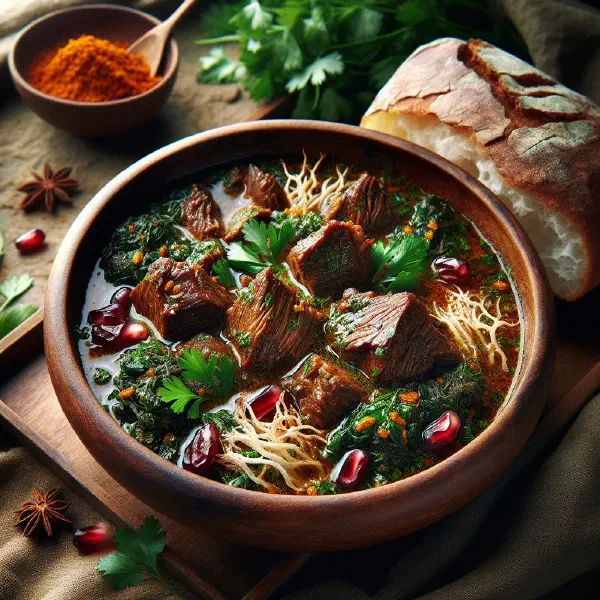
Fesenjan is a versatile dish that is easily tailored to personal preference. For a vegetarian version, use chickpeas or roasted vegetables in place of the poultry. To vary the intensity of the sauce, play with the ratio of walnuts to pomegranate molasses, some prefer a thicker sauce with more nuts, while others like to bring the tang of the pomegranate to the fore. If you enjoy this style of hearty stew, you may also like the herb-laden Ghormeh Sabzi.
Ingredient substitutions
If certain ingredients are not to hand, there are practical alternatives. In place of pomegranate molasses, a mixture of cranberry juice and lemon juice can create a similar acidity. Other varieties of nut can stand in for walnuts to give a different note, though walnuts have the advantage of lending the sauce its signature creamy consistency.
Drink pairing ideas
A crisp, acidic white wine pairs especially well with Fesenjan, complementing the tang of the pomegranate. A light red can also be a good choice, particularly when the dish is made with duck. For an alcohol-free option, a refreshing pomegranate juice or a glass of lemon water works beautifully. A savoury yoghurt drink such as Mast O Khiar alongside makes a lovely cooling contrast.
Serving and presentation ideas
For an appealing presentation, Fesenjan is traditionally served with rice. Fresh pomegranate seeds and chopped herbs such as parsley or coriander make an ideal garnish. A few drops of pomegranate molasses or scattered walnut pieces can also be placed on the rice as a decorative and flavourful touch beside the stew. A saffron-scented Tahchin makes a striking accompaniment for a festive table.
A bit of history
The history of Fesenjan reaches far back into the Persian past, and it is thought to have graced tables since the Sasanian Empire. Over the centuries the dish became established as a festive dish, served especially often at weddings and important celebrations. Fesenjan brings together traditional Iranian produce such as pomegranates and walnuts, and in doing so reflects the agriculture and trade of the region.
More recipe ideas
Summary: Fesenjan
Fesenjan is a magnificent dish that mirrors the culinary diversity and cultural history of Iran. With its pronounced flavours and its rich sauce, it offers a truly unique tasting experience. The thoughtful steps of its preparation and the careful choice of ingredients are what make this national dish something quite special. Give it a try. This Persian classic will reward you with depth, warmth and a taste of centuries of tradition.