National Dish Iran: Kaleh Pacheh (Recipe)
In this article
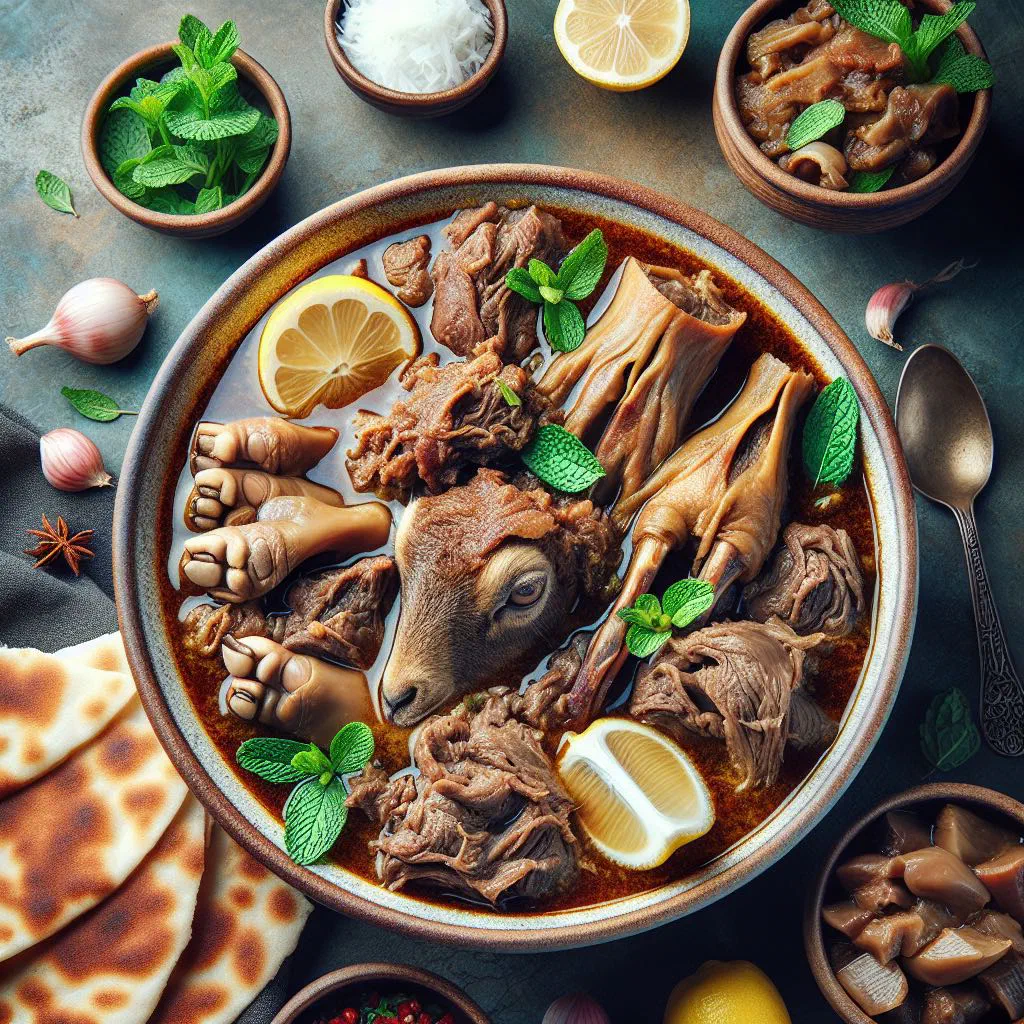
Meet Kaleh Pacheh, one of Iran’s most storied breakfast dishes and a true test of a cook’s patience. Made from sheep’s head and trotters gently simmered for hours, it yields a deep, restorative broth that Iranians have long treasured as a hearty morning meal. Fragrant with turmeric, garlic and fresh herbs, this is a dish steeped in tradition, a real delicacy for anyone keen to explore the bolder corners of Persian cooking.
About Kaleh Pacheh
Kaleh Pacheh is a traditional Iranian dish celebrated above all for its unusual ingredients and its intense, satisfying flavour. It is built mainly around sheep’s head and trotters, cooked low and slow to draw out a rich, gelatinous broth. A popular choice for breakfast, it is regarded as a genuine delicacy in Persian cuisine. The interplay of warming spices and fresh herbs gives Kaleh Pacheh its unmistakable character, one that has won over countless lovers of Iranian food.
Ingredients (serves 1–2)
- 1 sheep’s head
- 2 sheep’s trotters
- 1 onion, chopped
- 2 garlic cloves, crushed
- 1 teaspoon turmeric
- 2 teaspoons salt
- 1 teaspoon black pepper
- Fresh herbs, such as coriander and parsley
- Water, as needed
Shopping for the ingredients
When shopping for Kaleh Pacheh, it is important to choose fresh, good-quality produce. Sheep’s head and trotters are specialist ingredients, most easily found at Iranian or Turkish butchers and grocers. Fresh herbs such as coriander and parsley are essential to the flavour of the dish, so pick out only the best bunches. A trip to a weekly market can also pay off, giving you access to the freshest ingredients around.
Preparing the dish
Before you start cooking Kaleh Pacheh, it is well worth prepping every ingredient thoroughly. Begin by cleaning the sheep’s head and trotters carefully. This means removing any remaining hair and residue completely. The onion and garlic should be prepared too, chopped and crushed ready to go. This groundwork makes the cooking itself far more efficient and lets everything come together smoothly.
Step-by-step instructions
- Place the sheep’s head and trotters in a large pot.
- Add the chopped onion and the crushed garlic.
- Stir in all the spices — turmeric, salt and pepper.
- Pour in enough water to cover everything generously.
- Bring the pot to the boil, then reduce the heat.
- Let the dish simmer for at least 4–6 hours, until the meat is meltingly tender.
- Just before serving, stir through the freshly chopped herbs.
Gluten-free / lactose-free version
Kaleh Pacheh is naturally free from gluten and lactose, which makes it an excellent choice for anyone with those intolerances. When serving, simply take care not to offer any gluten-containing side dishes. The focus stays on the broth and the meat, both of which stand as nourishing, flavour-packed options in their own right. The generous use of fresh herbs and spices further supports how easily the dish sits with most diets.
Tips for vegans and vegetarians
For vegans and vegetarians, Kaleh Pacheh presents a real challenge, since it is built entirely on animal products. One possible workaround is to lean on a robust vegetable stock and to replace the meat with hearty, meaty vegetables. Roasted mushrooms, for example, or other substantial vegetables can deliver a similar depth of flavour. Spices and fresh herbs should be used liberally too, to bring out that savoury, umami quality.
More tips and tricks
When cooking Kaleh Pacheh, a few tips can help you perfect the dish. A slow, unhurried cooking method is key to developing the fullest possible flavour, much as it is with a classic Abgoosht. A squeeze of lemon or lime just before serving brings a welcome brightness. Serving it with traditional Iranian flatbreads such as Naan E Barbari rounds off the whole eating experience beautifully.
Adapting the recipe to your taste
Every cook has their own preferences when it comes to flavour and ingredients. With Kaleh Pacheh, you can adjust the amount of spice, for instance, to make it milder or bolder. Experiment with different herbs and seasonings to arrive at a version that is truly your own. In this way the dish becomes all the more personal and tailored to exactly what you enjoy.
Ingredient substitutions
If you struggle to find the ingredients for Kaleh Pacheh, there are a few alternatives worth knowing. Instead of mutton, for example, you can use lamb to achieve a similar flavour, as in a rich Dizi. For a vegetarian version you might add beans or lentils, which serve as protein-rich stand-ins. Swaps like these let you make the dish more accessible without sacrificing its character.
Drink pairing ideas
A hearty dish like Kaleh Pacheh pairs beautifully with a whole range of drinks that round out its flavour. A traditional Iranian black tea makes a wonderful companion. Alternatively, a refreshing yoghurt drink such as doogh (or ayran) can balance the dish’s richness nicely. It is worth trying a few different drinks to discover your own perfect match.
Serving and presentation ideas
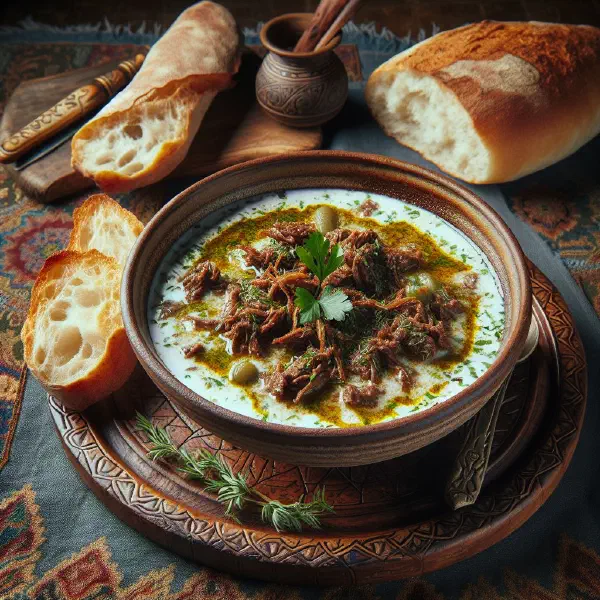
The way you present Kaleh Pacheh can make all the difference in appealing people to the table. Serve the broth in an attractive bowl and garnish the dish with fresh herbs. A few traditional Iranian touches can also help create an inviting atmosphere. Remember to serve it warm, so you capture the very best of its flavour and aroma.
A bit of history
Kaleh Pacheh has a history within Iranian culture and has been prepared for centuries. It originally comes from the rural regions of Iran, where sheep and goats were widely kept. It is often served as a feast or on special occasions, which only heightens its significance in Persian tradition. The long, slow cooking also reflects a culture of communal living, in which food demands both time and devotion.
More recipe ideas
Summary: Kaleh Pacheh
In summary, Kaleh Pacheh is a remarkable example of the culinary traditions of Iran, and one of the standout dishes of Iranian cuisine. It brings together wholesome ingredients with a rich, aromatic flavour. Its many possible preparations and adaptations make it a versatile dish that appeals to both traditional and modern palates. Kaleh Pacheh is sure to offer an one-of-a-kind experience.