National Dish Iran: Khoresht-e Bamieh (Recipe)
In this article
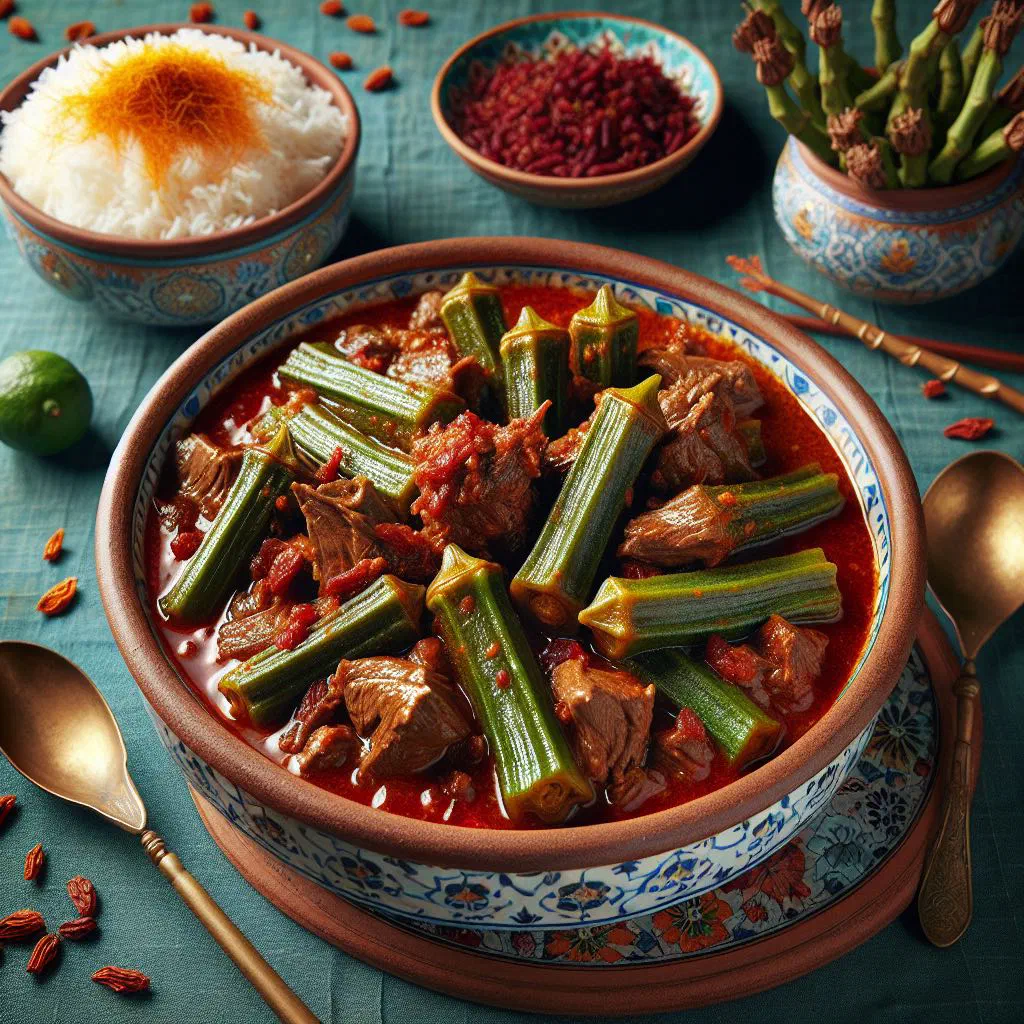
Discover Khoresht-e Bamieh, one of Iran’s most comforting stews. This fragrant dish brings together tender okra pods, succulent meat and a warming blend of spices for a bowl that feels both homely and celebratory. Rich with turmeric, cinnamon and ripe tomatoes, it is a wonderful way to bring a taste of Persian hospitality to your own table. Serve it over fluffy rice and let its gentle aromas fill the kitchen.
About Khoresht-e Bamieh
Khoresht-e Bamieh is a traditional Iranian stew celebrated for its aromatic ingredients and the pairing of tender okra pods with juicy meat. It holds a special place in Persian home cooking and is often served at festive gatherings. If you would like to experience a piece of Iranian culture on your plate, this is exactly the recipe for you.
Ingredients (serves 1–2)
- 250 g beef or lamb
- 200 g fresh okra pods
- 1 large onion
- 2 tomatoes
- 2 tablespoons tomato purée
- 1 teaspoon turmeric
- 1 teaspoon cinnamon
- Salt and pepper, to taste
- Oil, for frying
- Water or stock
- Fresh coriander or parsley, to garnish
Shopping for the ingredients
Before you start cooking Khoresht-e Bamieh, it is worth choosing the right ingredients. Visit your local market or supermarket to find fresh okra pods, good-quality meat and aromatic spices. Pay particular attention to the quality of the fresh produce, as it has a decisive influence on the flavour of the finished dish. Once you have everything to hand, nothing stands between you and a delicious meal.
Preparing the dish
Preparing Khoresht-e Bamieh is straightforward, though it does call for a little time and care. Start by finely chopping the onion and dicing the tomatoes. The okra pods should be washed well and their ends trimmed to keep the texture tender. Working carefully through these steps helps you achieve a harmonious balance of flavours right from the start.
Step-by-step instructions
- Heat the oil in a large pot and add the chopped onion, cooking until golden brown.
- Add the meat and brown it on all sides until lightly coloured.
- Stir in the turmeric, cinnamon, salt and pepper and mix well.
- Add the tomatoes and tomato purée and cook everything for a few minutes.
- Gradually pour in water or stock and simmer until the meat is tender (about 1 to 1.5 hours).
- Around 20 minutes before the end of cooking, add the okra pods and let everything simmer together.
Gluten-free / lactose-free version
Khoresht-e Bamieh is naturally lactose-free and easily made gluten-free, provided you check that none of your ingredients contain traces of gluten. Use suitable alternatives to any traditional additives if needed to keep the dish within your dietary requirements. If you serve it with rice, for example, simply choose a gluten-free variety. Enjoy this stew with complete peace of mind, whatever your dietary restrictions.
Tips for vegans and vegetarians
For a vegan or vegetarian version of Khoresht-e Bamieh, the meat can be replaced with tofu or seitan. Be sure to adjust the spices carefully to preserve the full depth of flavour. An extra splash of vegetable stock helps intensify the aroma. These simple swaps can make the dish just as satisfying as the traditional version.
More tips and tricks
For the best results, use fresh ingredients and don’t be afraid to experiment with different spices. Add a little paprika or chilli to give your Khoresht-e Bamieh an extra kick of heat. Another handy piece of kit is a pressure cooker, which cuts the cooking time considerably. That way the stew comes together faster without losing any of its flavour, much like the slow-simmered richness of a classic Ghormeh Sabzi.
Adapting the recipe to your taste
The recipe for Khoresht-e Bamieh offers plenty of room for adaptation. Depending on your preferences, you might fold in extra vegetables such as carrots or aubergines. The choice of meat can vary too, from lamb to chicken to beef, so everyone can suit their own palate. Let your tastes guide you to create the perfect Khoresht-e Bamieh for you.
Ingredient substitutions
If you can’t find fresh okra pods, frozen okra makes a good alternative. You can also swap the beef or lamb for turkey or chicken to create a lighter version of the dish. Tomato purée can be replaced with fresh or tinned tomatoes to make the stew even juicier, a trick that works well in the pomegranate-rich Fesenjan too.
Drink pairing ideas
Light, refreshing drinks are the perfect match for a delicious Khoresht-e Bamieh. Persian mint tea or a cool glass of a yoghurt drink such as doogh complement the dish beautifully and round off the whole experience. A refreshing salad on the side can also help balance the flavours. Let your imagination run free and pick the drink that appeals to you most.
Serving and presentation ideas
The way you present your Khoresht-e Bamieh can lift the entire meal. Use attractive bowls and garnish the dish with freshly chopped coriander or parsley for a splash of colour. Serve it with fragrant, fluffy rice and perhaps a scattering of pomegranate seeds for an extra pop of colour, just as you might dress up a jewelled Zereshk Polo. Remember, we eat with our eyes first.
A bit of history
Khoresht-e Bamieh has a history in Iranian cooking and reflects the many cultures that have shaped the region over the centuries. The dish embodies the warmth and hospitality of the Iranian people and is often served at celebrations. It also showcases the aromatic diversity of a region rich in spices and fresh produce. Over time the recipe has evolved, yet it remains an enduring favourite of Iranian cuisine.
More recipe ideas
- Fesenjan — an aromatic stew with walnuts and pomegranate.
- Ghormeh Sabzi — a traditional stew with herbs and beans.
- Zereshk Polo — rice with barberries and chicken.
- Dolmeh — stuffed vine leaves with a variety of fillings.
Summary: Khoresht-e Bamieh
Khoresht-e Bamieh is an essential dish of Iranian cuisine, one that appeals to with its tenderness and depth of flavour. Combining tender okra pods, succulent meat and fragrant spices, it captures the very essence of Persian cooking. Whether for a festive feast or a cosy dinner at home, this stew brings a piece of Iranian culture to the table.