National Dish Iran: Khoresht-e Fesenjan (Recipe)
In this article
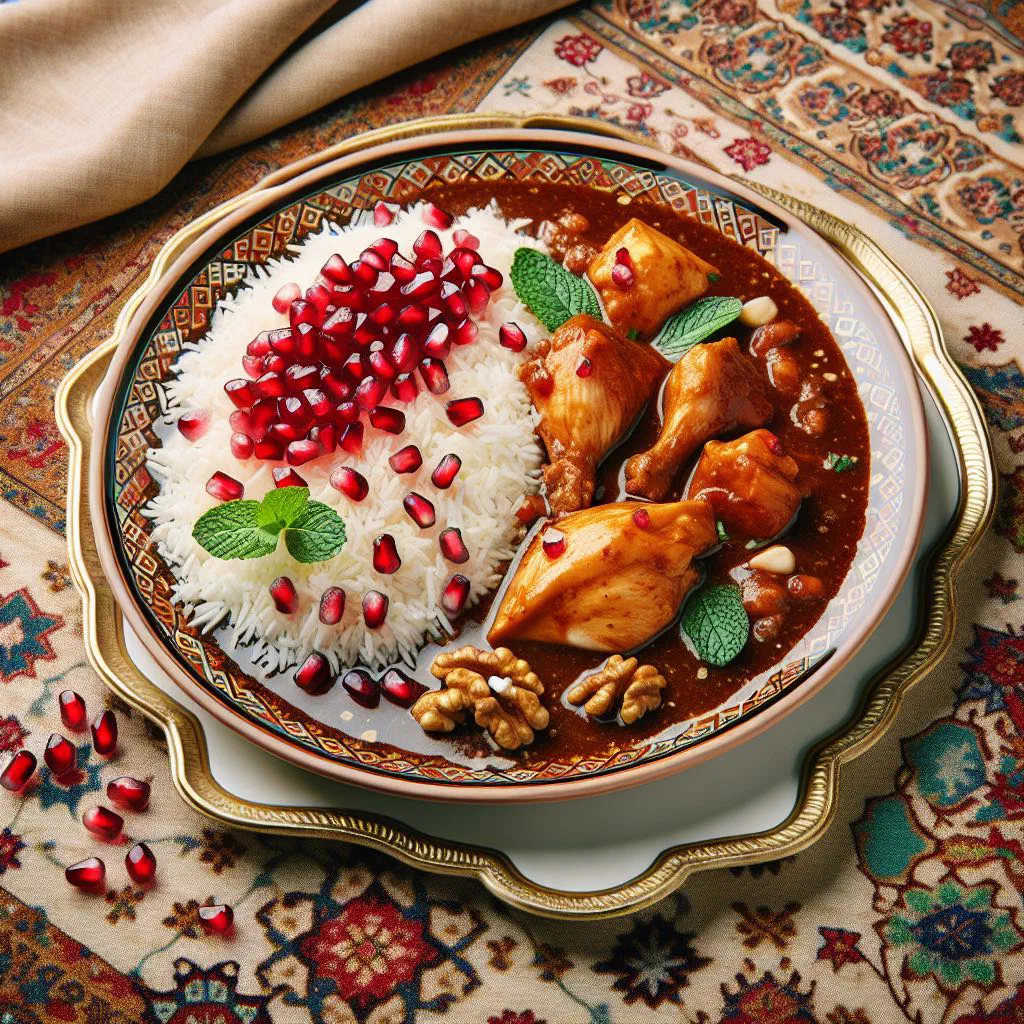
Discover Khoresht-e Fesenjan, one of Iran’s most treasured dishes and a true feast for the senses. This velvety Persian stew brings together tender meat, ground walnuts and tangy pomegranate for a flavour that is at once sweet, sour and wonderfully rich. It is the kind of dish reserved for special occasions, yet comforting enough for a relaxed family supper. Bring a taste of Persia to your own kitchen with this timeless classic.
About Khoresht-e Fesenjan
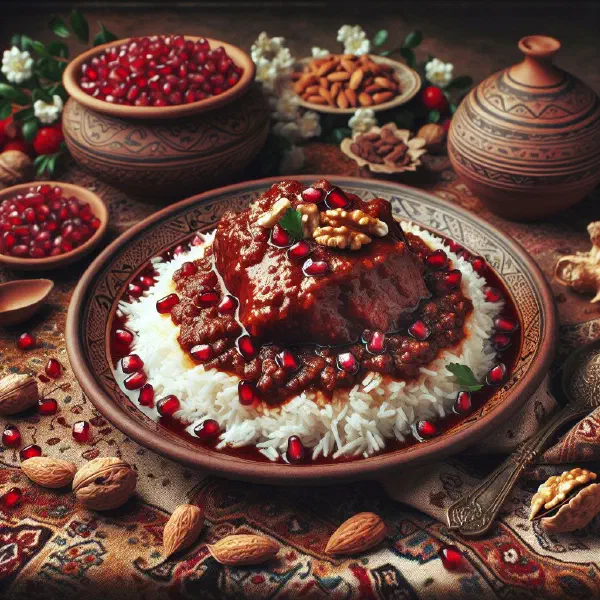
Khoresht-e Fesenjan is a traditional Persian stew celebrated for its distinctive aroma and the harmonious balance of sweetness and acidity. Often regarded as one of the national dishes of Iran, it is an absolute must for anyone keen to explore Persian cooking. The main components of this luxurious stew are tender meat, ground walnuts and glorious pomegranate, which gives the dish its unmistakable character. Fesenjan is perfect for festive gatherings as well as a cosy evening meal with the family.
Ingredients (serves 1–2)
- 500 g chicken breast or lamb, diced
- 200 g walnuts, finely ground
- 1 large onion, diced
- 2 cups pomegranate juice
- 1 teaspoon cinnamon
- 1 teaspoon turmeric
- 2 tablespoons sugar or honey (to taste)
- Salt and pepper to taste
- Oil for frying
- Fresh pomegranate, to garnish
Shopping for the ingredients
When shopping for Khoresht-e Fesenjan, it is important to choose fresh, high-quality produce. Look for fresh pomegranate juice or make your own, as it delivers the very best flavour. The walnuts should also be fresh and unsalted to support the dish’s delicate aromas. For an authentic result, seek out the required spices at a specialist grocer or a Persian market, where you will find everything you need to capture the true taste of Iranian cuisine.
Preparing the dish
Before you begin cooking Khoresht-e Fesenjan, a little careful preparation goes a long way. Start by dicing the onion into small pieces and cutting the meat into bite-sized chunks. Grinding the walnuts is easily done in a food processor or with a pestle and mortar until you reach a fine consistency. Keep the pomegranate juice close to hand, along with a spoonful of sugar to adjust the sweetness to your own taste.
Step-by-step instructions
- Heat a little oil in a large pot and sauté the diced onion until golden brown.
- Add the diced meat and brown it on all sides until lightly coloured.
- Stir in the ground walnuts and mix everything together well.
- Pour in the pomegranate juice and bring the mixture to the boil.
- Add the spices, sugar, salt and pepper, then reduce the heat to let the dish gently simmer.
- Cover the pot and let the khoresht simmer for around 1 to 1.5 hours, until the meat is tender.
- Serve the fesenjan hot, garnished with fresh pomegranate.
Gluten-free / lactose-free version
Khoresht-e Fesenjan is naturally gluten-free and lactose-free, as it contains no wheat products or dairy. This makes it an ideal choice for anyone with intolerances. To be sure the dish stays entirely free of gluten or lactose, take care that every product you use, especially the spices and any added sweeteners, is likewise free of gluten.
Tips for vegans and vegetarians
For a vegan or vegetarian version of Khoresht-e Fesenjan, you can replace the meat with tofu or seitan. These ingredients absorb the flavours of the dish beautifully and provide a similar texture. You might also use a mushroom-based stock to add extra umami depth. The traditional sweetness and creamy consistency provided by the walnuts and pomegranate juice remain intact, so plant-based eaters will not miss out in the slightest.
More tips and tricks
A crucial tip for a perfect Khoresht-e Fesenjan is to let the dish simmer as gently and as long as possible. This allows the flavours to develop fully and makes the meat especially tender. You can also prepare the dish a day in advance, as the flavours intensify overnight and the fesenjan tastes even better the next day. A splash of extra pomegranate juice just before serving lends a lovely fresh note.
Adapting the recipe to your taste
Everyone has different tastes, and that holds true in Persian cooking too. You can adjust the sweetness of Khoresht-e Fesenjan simply by varying the amount of sugar in the recipe. Some prefer it more tart, while others like it sweeter. You might also add extra spices such as ginger or saffron to give the dish a personal touch.
Ingredient substitutions
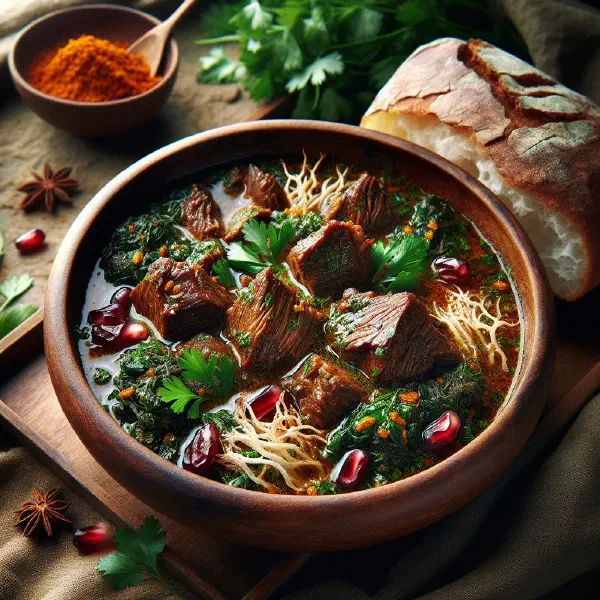
If you would rather leave out certain ingredients, there are plenty of alternatives you can use in your Khoresht-e Fesenjan. In place of pomegranate juice, for example, you could use plum juice, which brings a pleasant sweet-and-sour note. For the walnuts, you might try almond flour as a gluten-free alternative, though the flavour will vary slightly. Adjustments like these help you fine-tune the dish to your needs, much as you would with a hearty Ghormeh Sabzi.
Drink pairing ideas
The right drink can beautifully round off the experience of Khoresht-e Fesenjan. A Persian tea or a glass of pomegranate juice pairs perfectly with this delicious dish. For something alcoholic, a red wine or a lightly sparkling rosé brings out the sweet and savoury aromas of the stew wonderfully. Take care to serve the drinks at the right temperature to achieve the most complete flavour experience.
Serving and presentation ideas
The presentation of Khoresht-e Fesenjan can be lifted with simple yet effective touches. Serve the dish in a deep bowl and garnish it with fresh pomegranate seeds and chopped parsley or mint for a beautiful splash of colour and contrast. Saffron rice is the traditional accompaniment and should be arranged just as prettily, a natural partner in the same way as a fragrant Zereshk Polo. After all, we eat with our eyes first, and an inviting presentation makes the meal all the more memorable.
A bit of history
Khoresht-e Fesenjan has a long history, deeply rooted in Iranian culture. It is often said to be a dish that was already served in antiquity. Historically, fesenjan was frequently prepared for festive occasions and made with many different kinds of meat, including duck and beef. Today it can be found in every Persian household, symbolising hospitality and tradition at family celebrations.
More recipe ideas
Summary: Khoresht-e Fesenjan
In summary, Khoresht-e Fesenjan is not only a delicious dish but a culturally rich one too. The combination of walnuts and pomegranate offers an unmistakable flavour experience that is truly unique to Iranian cooking. It suits a range of dietary needs, adapts easily to personal taste, and remains a celebration of tradition. Let the magic of this dish enchant you and bring a piece of Iran into your kitchen.