National Dish Iran: Khoresht-e Rivas (Recipe)
In this article
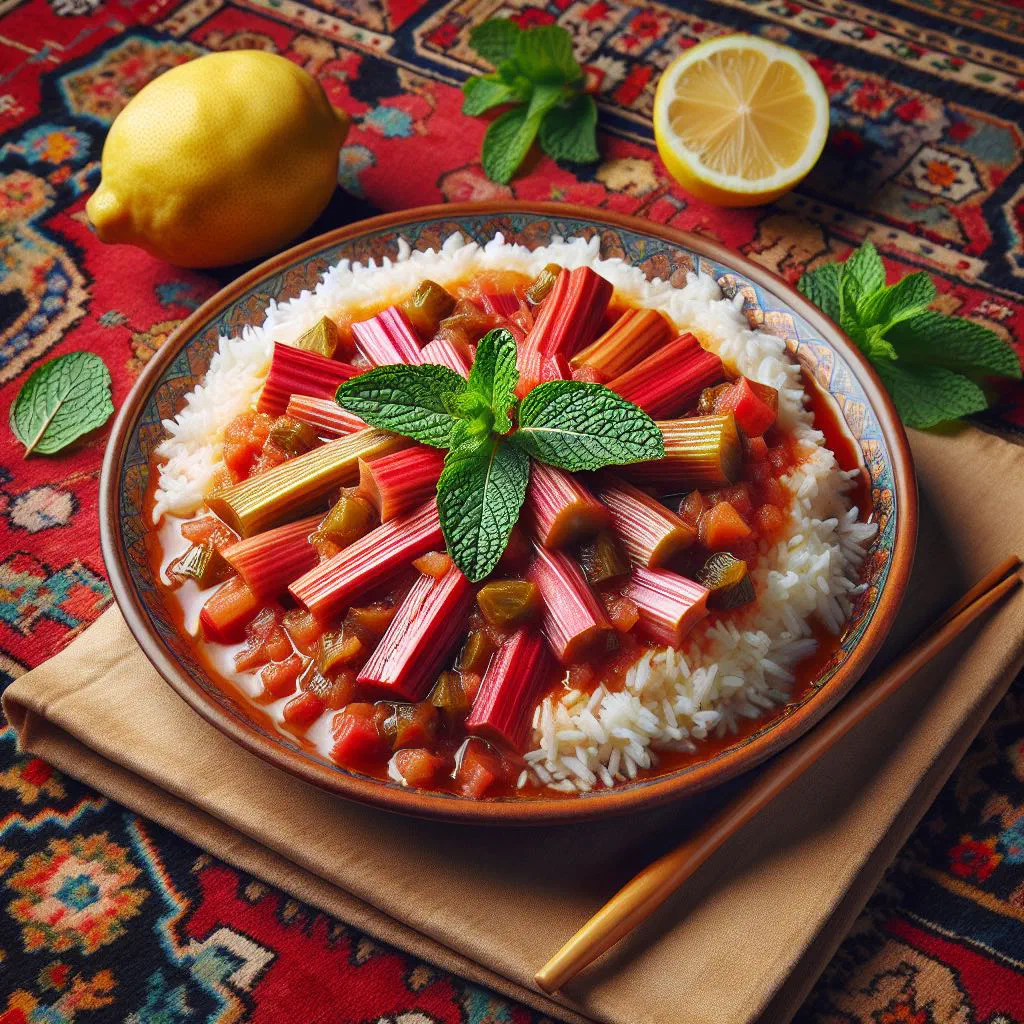
Discover Khoresht-e Rivas, a wonderfully aromatic rhubarb stew from Iran. This dish brings together tender pieces of meat, warming spices and the bright, tangy note of fresh rhubarb. Rooted in the Persian love of balancing sweet and savoury flavours, it is comfort food with real character. Served alongside a mound of fragrant rice, it makes a memorable centrepiece for any table.
About Khoresht-e Rivas
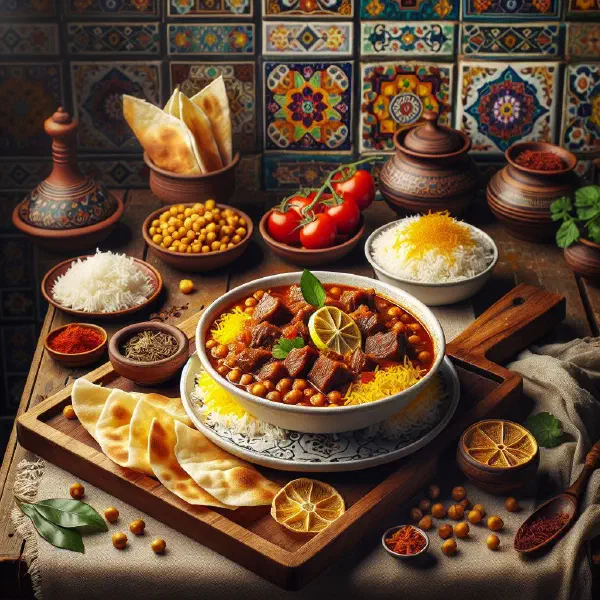
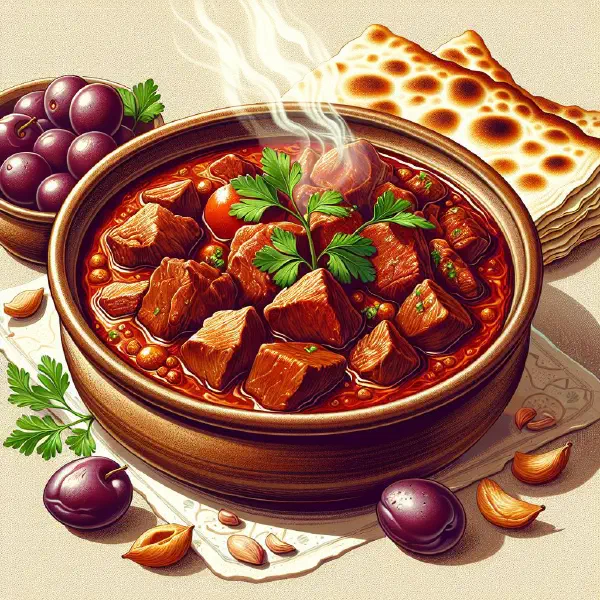
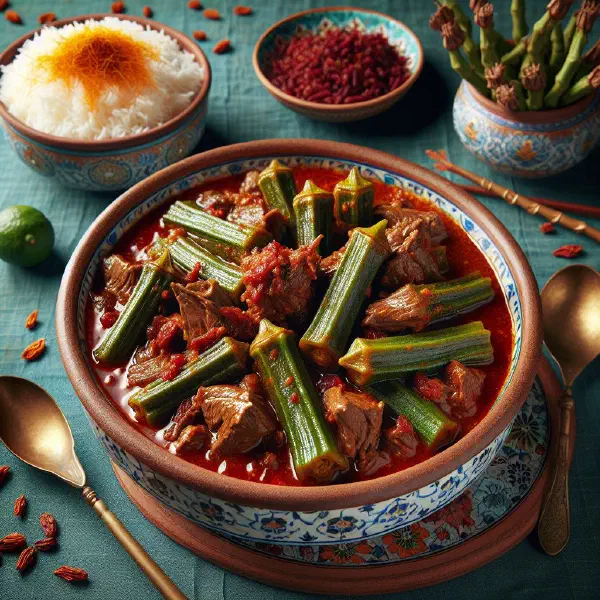
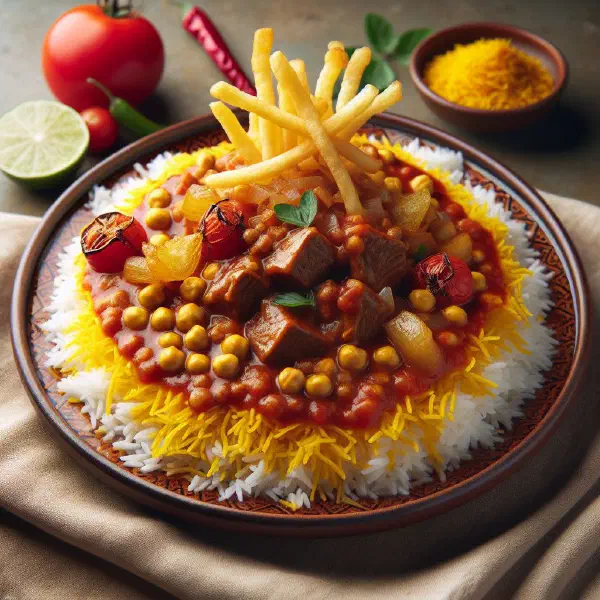
Khoresht-e Rivas is a fascinating Iranian dish, best known for the way it pairs tender meat with the unmistakable flavour of rhubarb. The rhubarb lends the stew a refreshing tartness and an intriguing texture. In Iranian cooking, the harmony between sweet and savoury aromas plays an important role, and this dish is a perfect example of that balance. It is most often served with fragrant rice, which complements the flavours beautifully.
Ingredients (serves 1–2)
- 300 g lamb or beef
- 200 g fresh rhubarb
- 1 large onion
- 2 tablespoons tomato purée
- 1 teaspoon turmeric
- 1 teaspoon cinnamon
- 2 cups water
- Salt and pepper, to taste
- Fresh herbs (such as mint and parsley)
- Fragrant rice, to serve
Shopping for the ingredients
When shopping for the ingredients for Khoresht-e Rivas, freshness matters most, especially with the herbs and the rhubarb. Fresh rhubarb has a crisp texture and a bright green to reddish-purple colour that signals good quality. The meat, too, should be tender and well marbled to guarantee the best flavour. Many of the spices used here, such as turmeric and cinnamon, are easy to find in Asian grocery shops or a well-stocked supermarket.
Preparing the dish
To prepare Khoresht-e Rivas, first gather all your ingredients and finely chop the onion. The rhubarb needs to be washed and cut into roughly 2 cm lengths. It also helps to cut the meat into evenly sized cubes so that it cooks through uniformly. Once everything is ready, you can begin cooking and enjoy the full aroma of the dish as it develops.
Step-by-step instructions
- First, sauté the onion in a large pot with a little oil until golden brown.
- Add the meat and brown it on all sides.
- Stir in the tomato purée, turmeric and cinnamon and mix well.
- Pour in the water, season with salt and pepper, then reduce the heat.
- After about 1–1.5 hours of gentle cooking, add the rhubarb and let it simmer for a further 20 minutes.
- Taste and adjust the seasoning as needed, then garnish with fresh herbs.
Gluten-free / lactose-free version
Khoresht-e Rivas is naturally gluten-free and lactose-free, as long as you have not added any gluten-containing ingredients such as bread. When cooking, take care that everything you use is certified gluten-free, particularly if you reach for blended spice mixes. This makes the dish an excellent choice for anyone following a gluten-free diet. The combination of fresh ingredients and spices also lends itself wonderfully to healthy, wholesome eating.
Tips for vegans and vegetarians
Vegans and vegetarians can adapt Khoresht-e Rivas by replacing the meat with cooked vegetables or pulses such as lentils. A mixture of different vegetables, carrots, potatoes and peppers, for example, works well to provide both texture and flavour. The rhubarb stays, since it delivers such an important note to the dish. Spices such as cinnamon and turmeric continue to add their aromatic depth, much as they do in a hearty Ghormeh Sabzi.
More tips and tricks
To intensify the singular flavour of Khoresht-e Rivas, it helps to prepare the dish a few hours before serving and let it cool. This gives the aromas more time to develop and harmonise. Another useful tip is to make it the day before, as it often tastes even better the next day. Serve it with fresh herbs and, if you like, some onion rings for an extra bit of crunch and flavour.
Adapting the recipe to your taste
The recipe for Khoresht-e Rivas is easy to adjust to suit different palates. You might try different cuts of meat, or even wholesome protein alternatives, depending on your preference. The spices can be tuned to taste too, more cinnamon for a sweeter note, or more turmeric for extra colour and flavour. It is worth tasting as you cook and making adjustments where needed.
Ingredient substitutions
If you do not have certain ingredients to hand, there are a few alternatives you can use in Khoresht-e Rivas. In place of rhubarb, for instance, a tart apple or a little tamarind can provide the sourness you are after. If lamb or beef is not to your liking, try chicken or a poultry alternative. The herbs can vary as well, fresh basil or coriander give the dish a distinctive twist, while a sweeter option like Zereshk Polo shows how versatile Persian flavours can be.
Drink pairing ideas
A range of drinks pairs nicely with Khoresht-e Rivas and complements its flavours. A sparkling mineral water with lemon is refreshing and balances the aromas well. Alternatively, you could serve a wholesome, homemade pomegranate juice, whose sweetness and tartness make a perfect match for the sourness of the rhubarb. For those who prefer something more traditional, a classic Iranian tea is an excellent choice alongside this dish.
Serving and presentation ideas
Presentation can greatly enhance the enjoyment of Khoresht-e Rivas. Serve the dish in an attractive, deep bowl and garnish it with fresh herbs such as mint or parsley. The scent and colour of the herbs make the dish look all the more inviting. Arrange the fragrant rice in a separate bowl, which lifts the overall look of the meal, a technique that works equally well for a celebratory Shirin Polow.
A bit of history
Khoresht-e Rivas has deeply rooted traditions in Iranian cuisine and is a fine example of the flavour combinations this region produces. Rhubarb, regarded in many parts of the world as a vegetable, holds a special place in Iranian cooking as an ingredient in both sweet and savoury dishes. This stew is plenty of flavour and tells a story about the use of local produce and culture. Many families in Iran have their own versions of the dish, passed down over generations, much like the celebrated Fesenjan that anchors so many tables across Iranian cuisine.
More recipe ideas
Summary: Khoresht-e Rivas
Khoresht-e Rivas is an exceptional dish that reflects the complexity and variety of Iranian cuisine. The combination of savoury, meaty aromas and the striking sweetness of rhubarb creates a harmonious taste experience. Served with fragrant rice and freshly chopped herbs, this dish is a feast not only for the palate but for the senses. Dive into the delicious world of Iranian cooking and rediscover the joy of preparing and sharing a meal.