National Dish Israel: Baklava (Recipe)
In this article
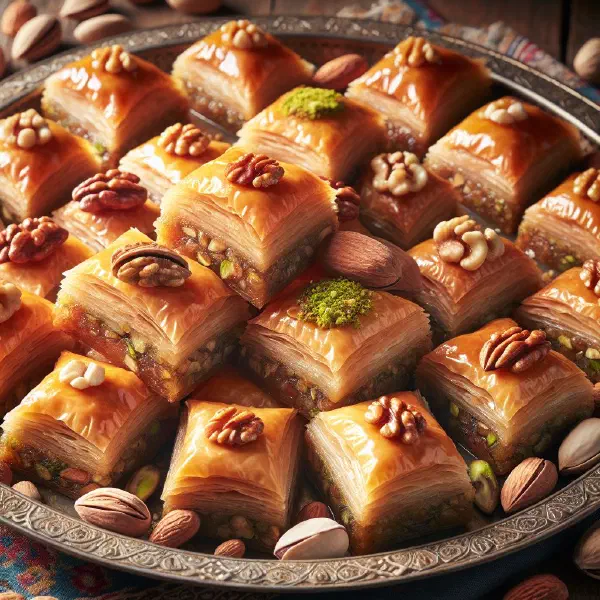
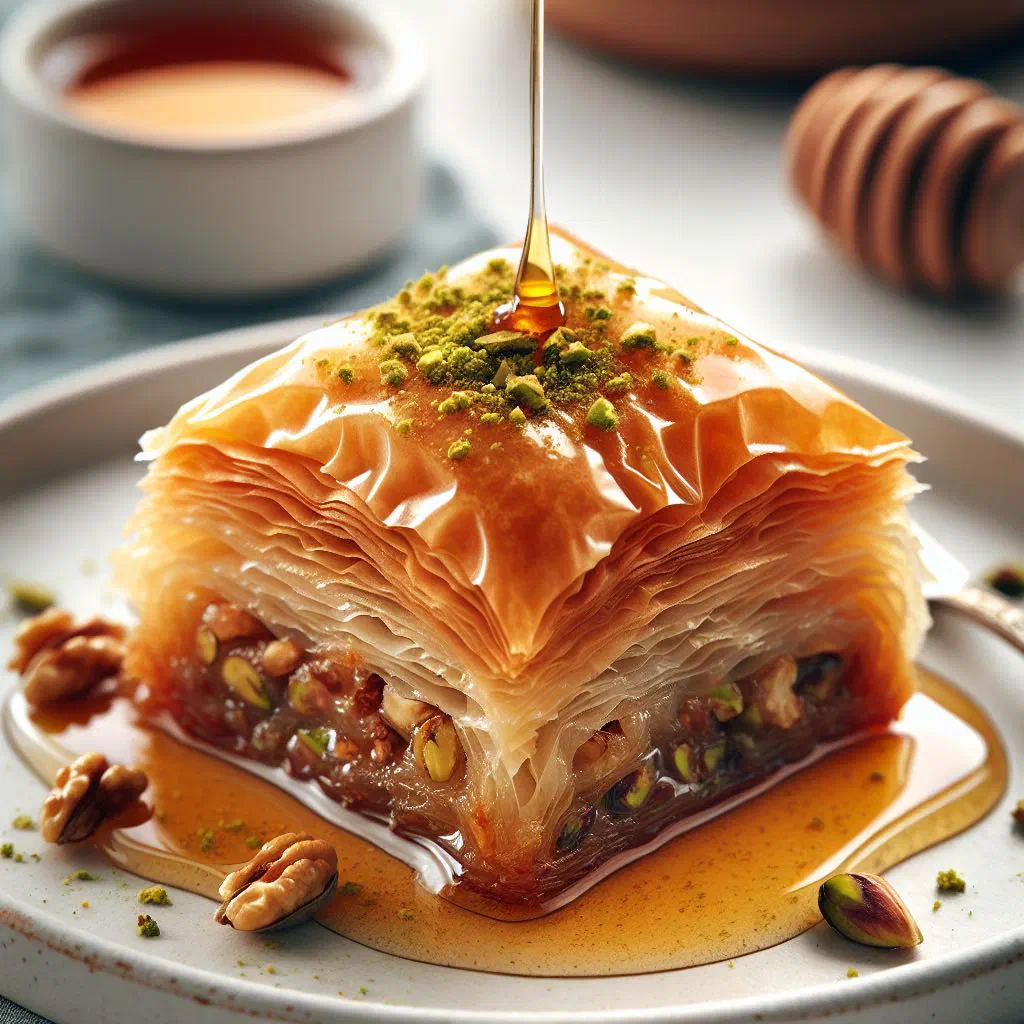
Sink your teeth into Baklava, a jewel of Middle Eastern baking that has long held a treasured place on Israeli festive tables. Crisp, paper-thin layers of filo pastry are stacked with a fragrant mixture of chopped nuts and cinnamon, then bathed in a glossy honey syrup that makes every bite sweet, sticky and utterly moreish. Rich with tradition yet surprisingly simple to master at home, this is the kind of treat that turns an ordinary afternoon into a small celebration.
About Baklava
Baklava is far more than a simple dessert; it is a tradition rooted deep in the history of the Middle East. This exquisite pastry is built from many layers of filo dough, filled in turn with chopped nuts and sugar. The secret to perfect baklava lies in the aromatic syrup, which lends the pastry its sweet, gently sticky finish. In Israel especially, baklava is a much-loved festive pastry that no celebration would be complete without.
Ingredients (serves 1–2)
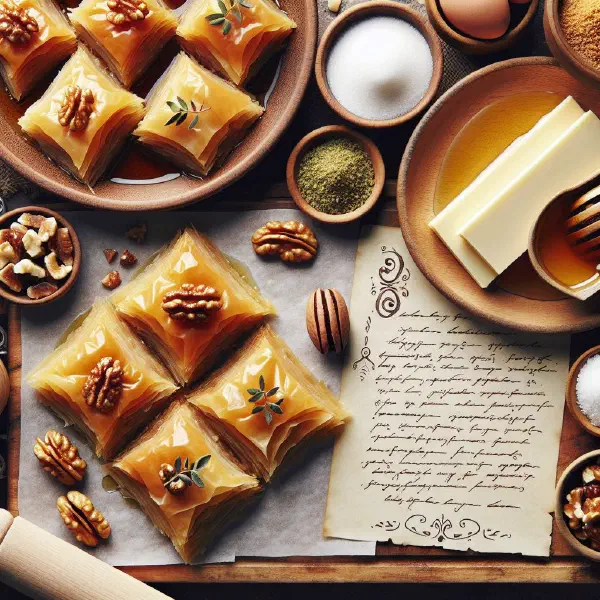
- 200 g filo pastry
- 150 g mixed nuts (walnuts, pistachios)
- 100 g butter, melted
- 100 g sugar
- 1 tsp cinnamon
- 200 ml water
- 50 ml honey
Shopping for the ingredients
When shopping for the ingredients for baklava, it is important to use fresh nuts to achieve the best flavour. Make sure the nuts are unsalted and, ideally, sold loose from the bag or by weight. The filo pastry should be fresh too; check the use-by date, especially if you are buying frozen dough. Let a well-stocked supermarket or an oriental grocery inspire your choices.
Preparing the dish
Careful preparation is the key to a successful baklava. Begin by roughly chopping the nuts in a food processor and stirring through the cinnamon. Meanwhile, unwrap the filo pastry and keep it well covered so it does not dry out. It is important to have every ingredient ready to hand, as the assembly needs to move quickly once you start layering the dough.
Step-by-step instructions
- Preheat the oven to 180°C.
- Grease a baking tin with a little melted butter.
- Layer the filo pastry in the tin, brushing each sheet with butter.
- After 6–7 sheets, spread an even layer of the nut-and-cinnamon mixture on top.
- Repeat the process until all the nuts and dough are used up.
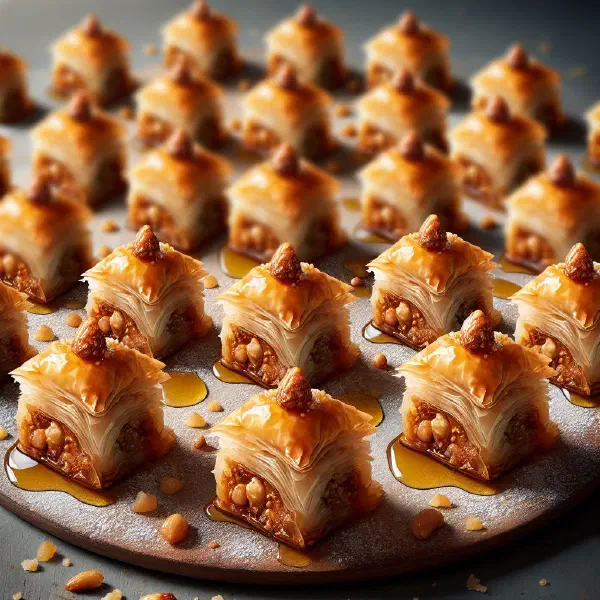
- Cut the top of the assembled pastry into diamonds or squares.
- Bake the baklava for about 30–40 minutes, until golden brown.
- Meanwhile, prepare the syrup from water, sugar and honey, and simmer until thickened.
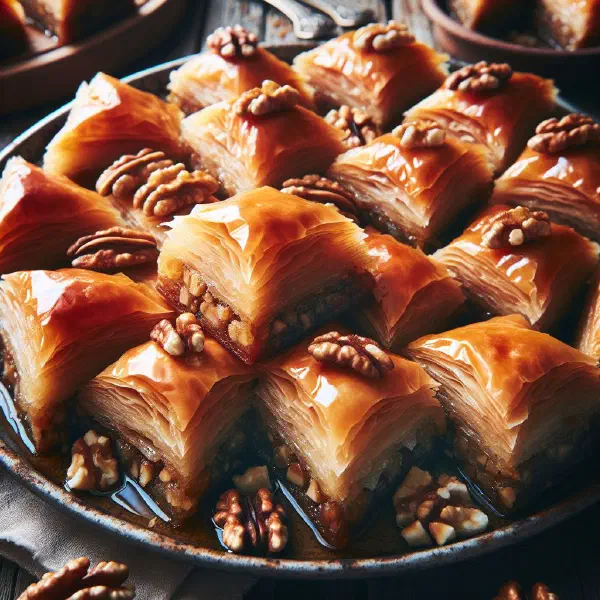
- Once baked, pour the cooled syrup over the hot baklava and leave it to cool.
Gluten-free / lactose-free version
For a gluten-free version of baklava you can use gluten-free filo pastry, now available in many shops. Alternatively, a special dough made from rice or corn flour works well too. When it comes to replacing the butter, a good-quality plant-based coconut or vegetable oil can be used without any trouble. These small adjustments let everyone enjoy the traditional flavours of baklava without having to rely on particular ingredients.
Tips for vegans and vegetarians
Vegans can make baklava simply by swapping out all the animal products. The syrup can be prepared with agave nectar or another plant-based sweetener. In place of butter, it is worth using a plant-based margarine. These little tweaks make baklava accessible to all, without compromising on its delicious taste.
More tips and tricks
To make your baklava even more aromatic, you can enhance the syrup with a hint of lemon juice or orange blossom water. These flavours give the pastry a refreshing note that harmonises beautifully with the sweetness. It is also worth letting the baklava rest for several hours, or even overnight, so it can fully absorb the syrup. That way every bite becomes a real treat.
Adapting the recipe to your taste
The beauty of baklava lies in its versatility. You can use different nut combinations depending on what you like best or have to hand. The classic walnuts are often paired with pistachios or almonds to vary the flavour, much as you might swap the fillings in a batch of Maamoul. Experiment with extra spices such as cloves or nutmeg to create your very own baklava.
Ingredient substitutions
When it comes to the nuts, there are countless ways to replace or vary the traditional filling. For those with allergies, sunflower or pumpkin seeds can make a safe alternative. The sweetener can be varied to taste too, from brown sugar to honey or agave syrup, the same natural sweetness that shines in a spoonful of Halva with Pistachios. Changes like these let baklava be tailored to every palate without losing the essence of the dish.
Drink pairing ideas
A variety of drinks pair wonderfully with a good baklava. Traditionally it is often served with Turkish coffee or aromatic tea, which lend the sweet pastry a special note. Alternatively, you might offer a minty herbal tea, whose freshness provides a lovely balance. If you prefer non-alcoholic options, a chilled pomegranate juice makes a refreshing accompaniment.
Serving and presentation ideas
The presentation of your baklava can be decisive for that first impression. Serve the pieces on an attractive plate, decorated with a few chopped nuts or a pinch of cinnamon. A squeeze of lemon juice or a couple of fresh mint leaves can add visual accents too. A thoughtful presentation makes the experience all the more memorable for your guests and shows just how much you value the art of baking. It sits proudly alongside other jewels of Israeli cuisine such as a creamy Malabi.
A bit of history
The roots of baklava reach back to antiquity, where it was enjoyed in various forms across many cultures. Historians believe the pastry originated in the lands of the Greek and Roman Empires. Over the course of history baklava evolved across the different regions of the Middle East and Mediterranean, with each area developing its own secret recipes and variations. In Turkish and Arab cuisine especially it took on a special place, and in Israel it has become a symbol of hospitality.
More recipe ideas
Summary: Baklava
In short, baklava is more than just a dessert; it is a part of cultural identity, passed down from generation to generation. With the right technique and the right ingredients, you can make this delicious pastry yourself. Enjoy the process and let yourself be inspired by the flavours and traditions that make baklava so special. Create your own piece of this sweet temptation, and bring a taste of the Middle East to your table.