National Dish Israel: Shakshuka (Recipe)
In this article
Discover Shakshuka, the bright, spice-laden dish often crowned as Israel’s national favourite. Eggs are gently poached in a rich sauce of tomatoes, peppers and warming spices, striking a perfect balance between sweet fruitiness and a gentle kick of heat. Colourful, comforting and wonderfully simple, it works just as beautifully for a lazy breakfast as it does for a quick supper. Bring a taste of the sun-soaked Mediterranean straight to your own table.
About Shakshuka
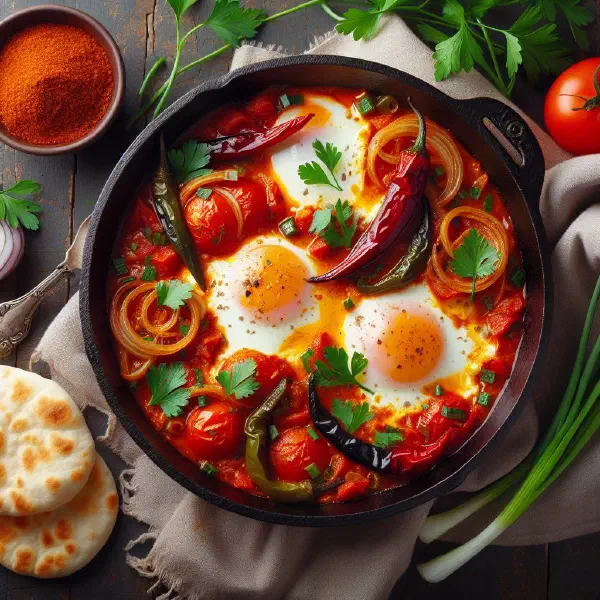
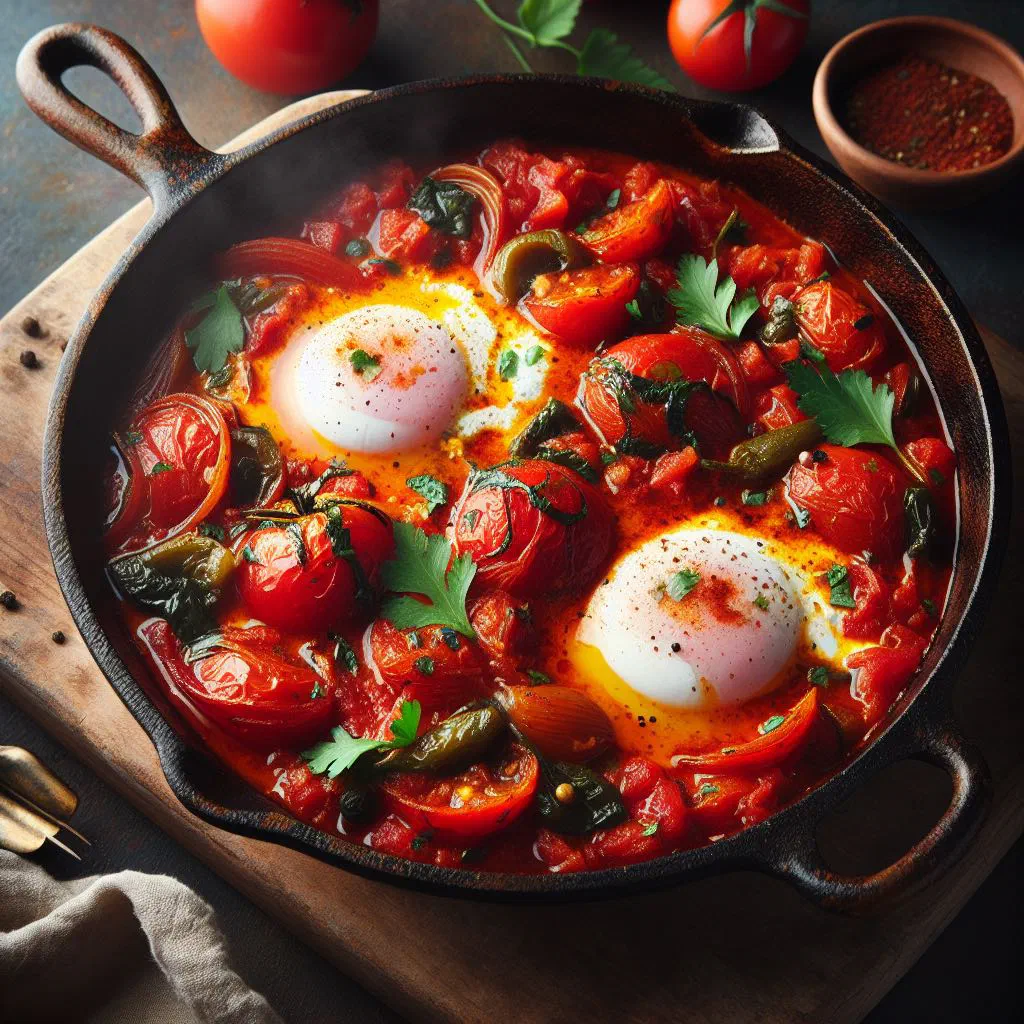
Shakshuka is a spicy, deeply aromatic dish that is often described as Israel’s national dish, even though its roots lie in North Africa, Tunisia in particular. At its heart are poached eggs set in a sauce of tomatoes, chillies, onions and a generous mix of spices. Its enduring popularity comes from its versatility: it can be served for breakfast, lunch or dinner with equal success. What makes it truly special is the perfect balance between the sweet fruitiness of the tomatoes and the piquant warmth of the spices.
Ingredients (serves 1–2)
- 2 tbsp olive oil
- 1 small onion, diced
- 1 red pepper, diced
- 2 garlic cloves, finely chopped
- 1 tsp paprika
- 1 tsp cumin
- 1/4 tsp cayenne pepper
- 400 g tinned chopped tomatoes
- A splash of water, if needed
- Salt and pepper, to taste
- 4 eggs
- Fresh parsley, to garnish
Shopping for the ingredients
For an authentic shakshuka, the quality of the tomatoes is crucial, so choose ripe, flavourful ones wherever possible. When buying spices such as paprika and cumin, look for freshness and buy them in smaller quantities, as they lose their aroma over time. A good-quality olive oil rounds off the whole flavour profile. Many of these staples are also central to other classics of Israeli cuisine.
Preparing the dish
To make cooking shakshuka as smooth as possible, it helps to chop and measure out all your ingredients before you begin. A good cast-iron or non-stick pan works best, allowing the eggs to cook evenly and preventing anything from catching and burning.
Step-by-step instructions
- Heat the olive oil in a deep pan over a medium heat.
- Add the onion and pepper and sauté until softened.
- Stir in the garlic, paprika, cumin and cayenne pepper and cook briefly to release their aromas.
- Add the chopped tomatoes, stir, and let the sauce simmer until it thickens. Add a splash of water if needed.
- Season to taste with salt and pepper.
- Reduce the heat and make four wells in the sauce. Carefully crack the eggs and slide one into each well.
- Cover with a lid and cook the eggs for 10–15 minutes, depending on how runny you like the yolks.
- Serve garnished with fresh parsley.
Gluten-free / lactose-free version
Shakshuka is naturally gluten-free and lactose-free, which makes it a brilliant choice for anyone with dietary restrictions. The sauce and eggs contain no gluten or dairy at all, so the only thing to watch is what you serve alongside it. Swap the traditional bread for a gluten-free loaf or pita, and you have a dish everyone at the table can enjoy without a second thought.
Tips for vegans and vegetarians
Shakshuka is already vegetarian, and it adapts easily to a vegan diet too. Simply replace the eggs with cubes of firm tofu or a handful of chickpeas, letting them warm through in the simmering sauce. Vegetarians can also enrich the dish with extra vegetables such as spinach or mushrooms. Fresh produce and good spices are the key to keeping every version full of flavour.
More tips and tricks
For a smokier flavour, add a pinch of smoked paprika to the sauce. A swirl of cream will make the tomato base even richer and more velvety, though it is entirely optional. Letting the sauce reduce slowly over a gentle heat concentrates the flavours beautifully, so resist the urge to rush this stage.
Adapting the recipe to your taste
Shakshuka is easily tailored to suit different palates. For a milder result, leave out the cayenne pepper or swap it for sweet paprika. Those who like extra heat can add fresh chillies to taste. Vegetarians can bulk it out with additional vegetables such as spinach or mushrooms, in much the same way that a hearty Matbucha leans on slow-cooked peppers and tomatoes for depth.
Ingredient substitutions
If fresh tomatoes are not available, tinned chopped tomatoes make an excellent stand-in and are ideal for the long, gentle simmer this dish needs. Instead of parsley, you could garnish with coriander or chives for a slightly different note. The same forgiving, tomato-rich base underpins dishes like Chraime, so feel free to improvise with what you have to hand.
Drink pairing ideas
A crisp, refreshing white wine or a light beer pairs well with the Mediterranean flavours of shakshuka. For an alcohol-free option, freshly squeezed orange juice or a cooling mint tea is an excellent choice. Both cut through the richness of the sauce and refresh the palate between mouthfuls.
Serving and presentation ideas
Serve shakshuka straight from the pan and garnish it with a sprig of fresh herbs for a rustic, welcoming look. A few slices of crusty bread or warm Pita are perfect for scooping up the sauce and mopping the plate clean. A crisp Israeli Salad alongside adds colour and a fresh contrast.
A bit of history
Although shakshuka is often associated with Israeli cooking, its origins lie in North Africa. It was brought to Israel by immigrants from countries such as Tunisia, Libya and Algeria, and it quickly became a staple. The name shakshuka roughly translates as “a mixture”, a fitting nod to the many culinary influences that have shaped the dish over the years.
More recipe ideas
Summary: Shakshuka
Shakshuka is a simple, endlessly flexible dish that can be enjoyed at any time of day. It is healthy, nourishing and easy to adapt to your own tastes, from mild and comforting to fiery and bold. This North African classic, now beloved across Israel, is guaranteed to bring warmth and colour to the table. Give it a try, and let its bright, spiced flavours win you over.