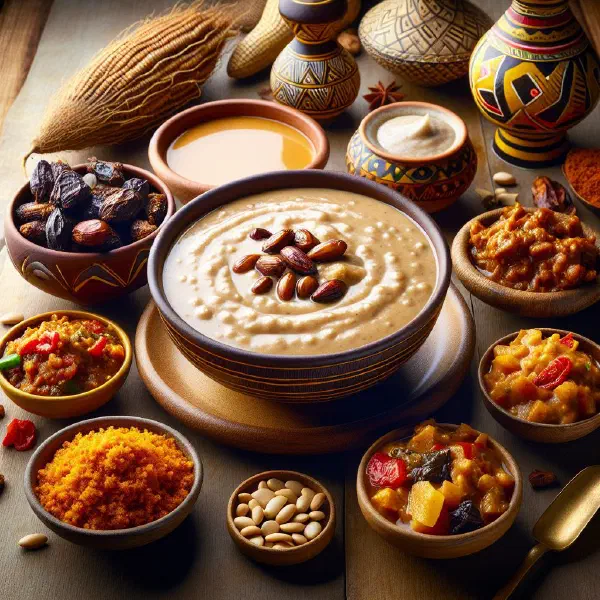
National Dish Ivory Coast: Lait Caillé avec Riz (Recipe)

In this article
Meet Lait Caillé avec Riz, a deceptively simple Ivorian classic that pairs tangy fermented yoghurt with warm, fragrant rice. It is the kind of everyday comfort food that quietly does everything right: cooling and creamy on one side, gently nutty and filling on the other. Easy on the budget, kind to the gut and ready in barely half an hour, it makes a wonderfully restorative lunch or a light, satisfying supper.
About Lait Caillé avec Riz
The national dish of the Ivory Coast, known as Lait Caillé avec Riz, is a delicious combination of fermented yoghurt and fragrant rice. It is a treat for the palate and brings real nutritional benefits. The fermented yoghurt is rich in probiotics, which support digestion, while the rice supplies plenty of slow-release carbohydrate energy. That balance makes Lait Caillé avec Riz an ideal meal to set you up for a busy day.
Ingredients (serves 1–2)
- 250 ml fermented yoghurt (lait caillé)
- 300 g rice (long-grain or basmati)
- 1 teaspoon salt
- 1 tablespoon vegetable oil
- Water, as needed
Shopping for the ingredients
To make Lait Caillé avec Riz you need fresh ingredients, most of which are readily available in an ordinary supermarket. Visit your local market or an African or Asian grocery to track down good-quality fermented yoghurt. When buying the rice, choose long-grain or basmati for the best results. Fresh, high-quality ingredients are the single biggest factor in how good the finished dish tastes.
Preparing the dish
Before you start cooking Lait Caillé avec Riz, gather everything you need and clear your work surface. Begin by tipping the rice into a sieve and rinsing it thoroughly to wash away the excess starch. This is what keeps the grains light and separate rather than sticky. Set a pan of water on to boil for the rice, and have any vegetables or side dishes you plan to serve alongside ready to go.
Step-by-step instructions
- Cook the rice according to the packet instructions in a pan of salted water.
- Heat the vegetable oil in a small pan.
- Add the cooked rice to the warm oil and fold the two together carefully.
- Spoon the rice onto a plate and pour the fermented yoghurt generously over the top.
Gluten-free / lactose-free version
Lait Caillé avec Riz is very easy to make gluten-free and lactose-free. Rice is naturally free from gluten, so you only need to check that the yoghurt you choose contains no lactose. Plenty of lactose-free yoghurt alternatives based on almonds or coconut are now on the shelves. That way anyone with an intolerance can still enjoy this traditional dish exactly as it is meant to be eaten.
Tips for vegans and vegetarians
For vegans, Lait Caillé avec Riz adapts effortlessly if you swap in a plant-based yoghurt. Coconut yoghurt or soya yoghurt are excellent choices, both mimicking the creamy character of the traditional version. Look for an unsweetened variety so the authentic savoury-tangy flavour is preserved. Vegans can also scatter fresh vegetables over the top to boost the nutrients, much as you would with Tchep aux Légumes.
More tips and tricks
One tip worth remembering is to let the rice rest for a few minutes after cooking. This gives the grains time to settle and reach the ideal texture. You can also experiment with spices such as cumin or paprika to add a distinctive note. Getting the balance of seasoning right makes a surprising difference to this otherwise understated dish.
Adapting the recipe to your taste
The beauty of Lait Caillé avec Riz is how readily it bends to personal preference. Add different vegetables, for instance, to bring in more flavour and nutrients. If you like a bit of heat, stir in chilli powder or a few fresh chillies, the same warmth that runs through a bowl of Riz Gras. Trying different styles of yoghurt is another good way to find your own ideal flavour profile.
Ingredient substitutions
If fermented yoghurt is nowhere to be found, Greek yoghurt makes a workable stand-in. It has a similar consistency and a pleasantly savoury tang, even though it has not been fermented in the same way. In place of rice, quinoa is a good option that makes the dish more nourishing and higher in protein. Bear in mind that these substitutions shift the authentic flavour slightly, though they open up interesting new variations.
Drink pairing ideas
Several drinks complement Lait Caillé avec Riz beautifully. A fresh fruit tea or a minty herbal tea offers lovely refreshment and underlines the flavours of the food. For something alcohol-free, homemade lemonade is a fine choice, as is a chilled glass of Bissap. If you prefer something with a bit of fizz, an alcohol-free shandy also works well.
Serving and presentation ideas
Presentation matters more than you might expect with Lait Caillé avec Riz. Serve it in attractive bowls to play up the contrast between the white yoghurt and the golden rice. A garnish of fresh herbs or brightly coloured vegetables lifts the visual appeal considerably. Serving on a wooden board or with a rustic napkin turns a simple plate into something rather more inviting.
A bit of history
Lait Caillé avec Riz has its roots in the traditional cooking of the Ivory Coast, where fermentation has long been a standard method of preserving food. The use of yoghurt across West Africa goes back generations and remains a valued part of the daily diet. The dish reflects both the culinary range of Ivorian cuisine and the importance of eating together in Ivorian culture. Sharing a plate of Lait Caillé avec Riz stands for hospitality and community.
More recipe ideas
Summary: Lait Caillé avec Riz
In short, Lait Caillé avec Riz is far more than a nourishing plate of food. It is an expression of Ivorian cultural identity. Its pairing of fermented yoghurt and fragrant rice delivers a distinctive taste experience that is easy to prepare and simple to adapt to your own preferences. With fresh, local ingredients you can enjoy this dish whenever you like and take part in a rich West African tradition. Give Lait Caillé avec Riz a try and bring a piece of the Ivory Coast to your table.